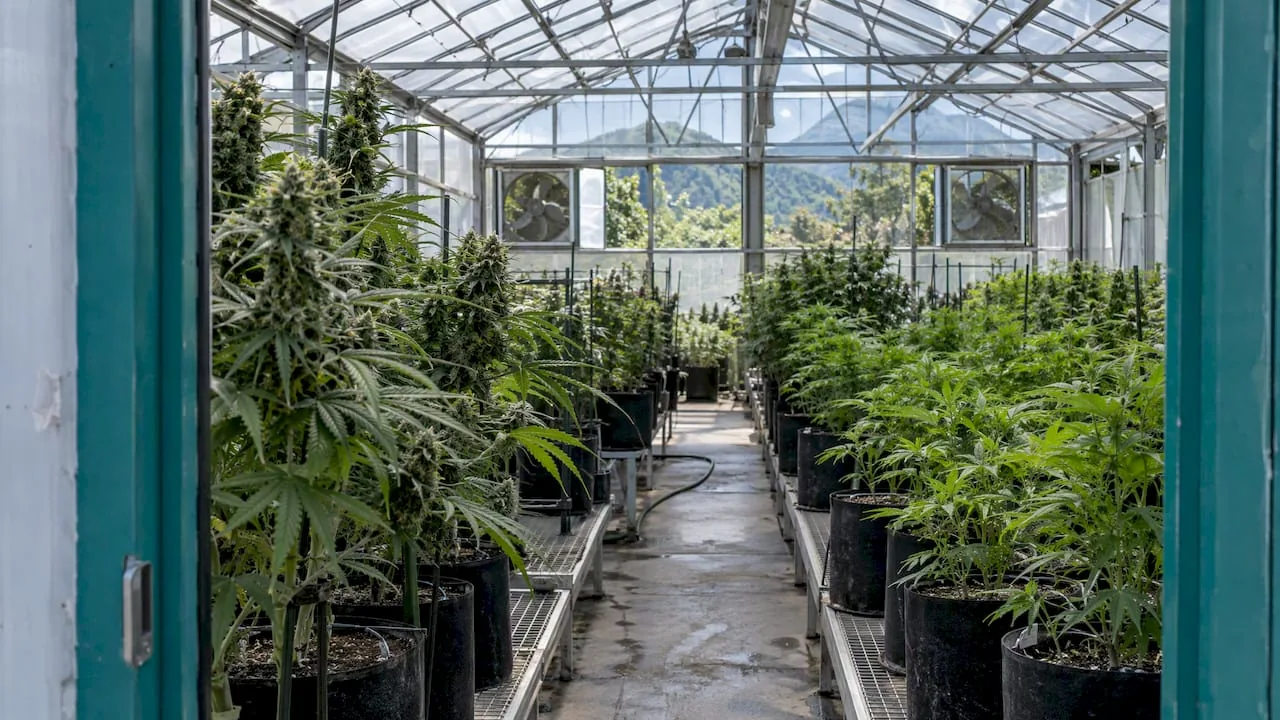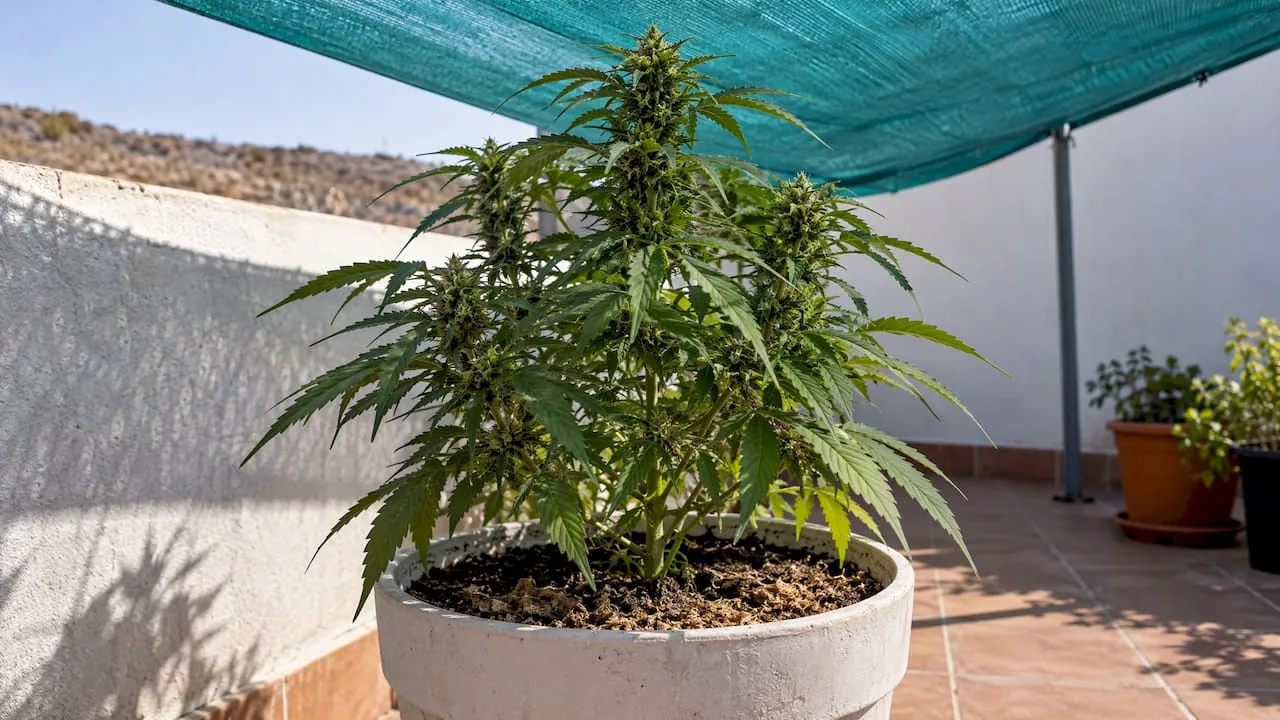


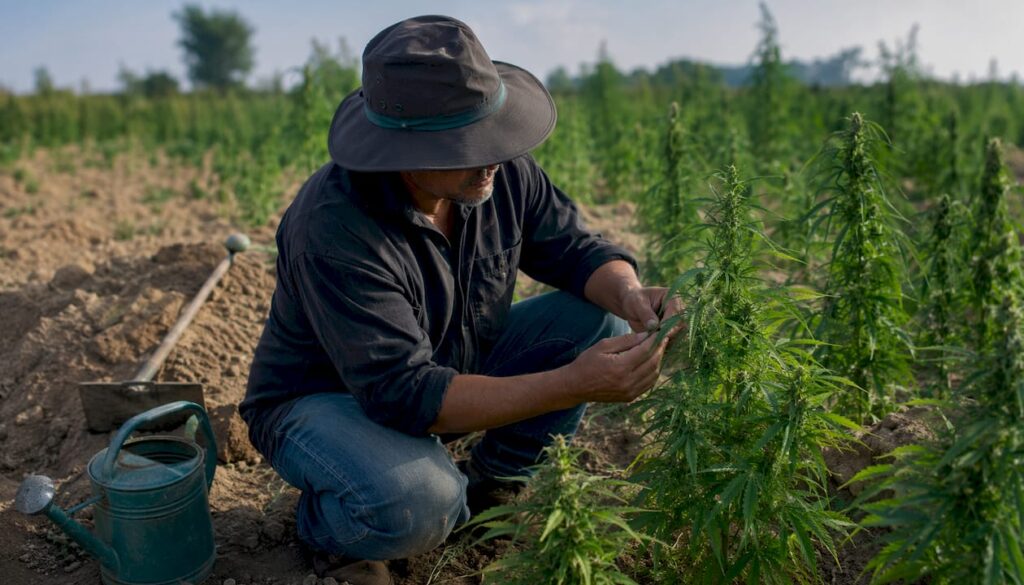
Heritage varieties, also called landraces, are cannabis populations adapted to a specific geographical region and maintained for generations with minimal outside hybridisation. They are, in essence, the first stage of domestication between the wild plant and the modern hybrid: grown and selected by local farmers, shaped by the climate, soil and altitude of their place of origin. If you have ever wondered what lies behind names like Hindu Kush, Durban Poison or Acapulco Gold, the answer is thousands of years of coevolution between the plant and its environment.
The traits that set a landrace apart from any other variety are:
- Defined geographical origin: the name usually indicates the region (Afghan, Thai, Durban).
- Relative genetic stability: high natural heterozygosity, but with morphological characteristics recognisable as a group.
- Characteristic terpenoid profile: aromas and effects linked to local adaptation, not to commercial selection.
- Minimal documented hybridisation: no intentional crosses with foreign genetics throughout its growing history.
Robert Clarke, an undisputed authority on cannabis genetics, has spent decades documenting how these populations act as reservoirs of biological diversity that modern hybrids have gradually been losing. Bluedoggenetics works with this same philosophy: understanding genetic origin is the first step to growing with good judgement.
What exactly does “landrace” mean in genetics?
A landrace is not simply an old variety. It is a population that has gone through natural and human selection for centuries in an isolated territory, without the systematic intervention of modern breeding.
The process works like this: traditional farmers removed the individuals with the poorest adaptation, scent or vigour, and let the fittest reproduce. That rudimentary breeding, carried out in open fields with multiple males and females, produced populations with a broad gene pool. Each ovule could be pollinated by a different male, which explains the high heterozygosity in the genotype of landraces.
To understand the difference between genotype and phenotype in cannabis, think of the genotype as a building’s blueprint and the phenotype as the building constructed under specific weather conditions. A landrace has a broad, flexible blueprint; a modern hybrid has a narrow, very precise one.

“Genetic stability” in a landrace does not mean total uniformity. It means that the offspring share recognisable morphological traits, although with considerable individual variation. That variation is precisely its value for serious breeding: it contains options that commercial hybrids no longer have.
Geographical origins: where the most important landraces were born
Cannabis is one of the oldest cultivated plants in human history. According to research on domestication and dispersal, the ancestor of cannabis is placed on the north-eastern Tibetan Plateau during the middle Oligocene, and its domestication is debated between Neolithic centres in central China and the Caucasus.

What is clear is that, as the plant spread across the planet, local populations adapted to radically different conditions. This is how the great landrace regions emerged:
Hindu Kush and Afghanistan: altitudes of up to 3,200 metres above sea level, an arid climate, high UV radiation. Afghan varieties developed dense buds and abundant resin as protection against the extreme environment. There is a hypothesis, supported by the botanist Richard Evans Schultes, that the afghana variety could be the mother of all indicas.
Thailand and Southeast Asia: equatorial climate, long, humid days and very long flowering cycles. Thai varieties are pure sativas with tall, airy structures, adapted to months of rain and constant heat.
Mexico and Central America: from the mountains of Oaxaca to the coasts of Acapulco and the Colombian valleys, Mexican and Central American cannabis adapted to medium altitudes, volcanic soils and tropical photoperiods. Acapulco Gold and Colombian Gold are the best-known examples.
South Africa (Durban): coastal subtropical climate, sandy soils, pronounced dry seasons. Durban Poison developed an energetic, stimulating profile that sets it apart from almost any other landrace.
Malawi: African highlands, red lateritic soils, altitudes of 1,000–1,500 metres. Malawi Gold is a long-cycle sativa with exceptional resin quality.
Panama: tropical jungle, extreme humidity, equatorial light. Panama Red was one of the first landraces to reach Europe and North America during the 1960s and 70s.
The history of cannabis strains documents how these genetics travelled with traders, explorers and collectors, and how they fuelled the Western breeding revolution from the 1970s.
Profiles of the most famous landraces: traits, aroma and effect
Before going through each strain, an important warning: today it is hard to find pure landraces in their original environment. Many local populations have been altered by the introduction of foreign seeds since the 1960s and 70s. The “landraces” circulating in seed banks may be stabilised versions or selections with greater or lesser fidelity to the original. Always check the breeder’s history.
Hindu Kush
- Origin: Hindu Kush mountain range, Afghanistan/Pakistan, 2.500–3.200 m altitude.
- Morphology: compact plant, broad dark leaves, dense buds covered in resin.
- Effect: deeply relaxing, sedating, typically body-focused.
- Dominant terpenes: myrcene, caryophyllene, earthy and spicy notes.
Afghani
- Origin: Afghan valleys, a first cousin of Hindu Kush with greater regional variation.
- Morphology: robust structure, short internodes, fast flowering for a landrace (8–9 weeks).
- Effect: relaxing and euphoric, with high sedative potential.
- Dominant terpenes: myrcene, linalool, sweet and earthy aroma.
Thai
- Origin: Thailand, lowland and medium-altitude tropical growing.
- Morphology: pure sativa, very tall plants, narrow leaves, flowering cycle of 14–16 weeks.
- Effect: cerebral, stimulating, energetic. One of the most “sativa” landraces in terms of effect profile.
- Dominant terpenes: terpinolene, ocimene, citrus and floral notes.
Acapulco Gold
- Origin: Acapulco region, Mexico, medium altitudes with a warm, dry climate.
- Morphology: golden and orange buds at maturity, elongated sativa structure.
- Effect: euphoric, creative, energetic and long-lasting.
- Dominant terpenes: terpinolene, myrcene, notes of earth and tropical fruit.
Durban Poison
- Origin: Durban, South Africa, subtropical coastal climate.
- Morphology: medium-tall sativa, resinous and compact buds for a pure sativa.
- Effect: stimulating, focused, no sedation. Highly valued for daytime use.
- Dominant terpenes: terpinolene, ocimene, sweet and aniseed aroma.
Malawi Gold
- Origin: Malawi highlands, East Africa, 1,000–1,500 m altitude.
- Morphology: very long-cycle sativa (16–20 weeks), large plants with elongated buds.
- Effect: intense, cerebral and psychoactive, with notes of energy and mental clarity.
- Dominant terpenes: caryophyllene, myrcene, earthy aroma with sweet nuances.
Colombian Gold
- Origin: Sierra Nevada de Santa Marta, Colombia, at altitudes between 1,000 and 2,000 m.
- Morphology: classic sativa, golden buds at maturity, airy structure.
- Effect: euphoric and social, with sustained energy and mental clarity.
- Dominant terpenes: terpinolene, limonene, citrus and herbal notes.
Oaxacan
- Origin: Sierra de Oaxaca, Mexico, medium altitudes with volcanic soils.
- Morphology: medium-structure sativa, elongated buds with reddish pistils.
- Effect: uplifting and creative, with a more earthy profile than other Mexican strains.
- Dominant terpenes: myrcene, caryophyllene, spicy and earthy notes.
Panama Red
- Origin: Panama, humid tropical rainforest, equatorial climate.
- Morphology: tall sativa with reddish buds at maturity, long cycle of 14–16 weeks.
- Effect: euphoric, psychoactive, with the cerebral energy typical of tropical sativas.
- Dominant terpenes: ocimene, terpinolene, floral and fruity aroma.
For more context on how these types and effects of cannabis relate to the real chemistry of each plant, the distinction between sativa and indica is less relevant than the profile of cannabinoids and terpenes.
Why landraces smell and act differently: the role of terroir
Terroir, a concept borrowed from viticulture, describes how the combination of environmental conditions in a place shapes the chemical expression of a plant. In cannabis, the key parameters are temperature, relative humidity, soil type, altitude and light rhythm (photoperiod).
An Afghan grown at 3,000 metres of altitude, with high UV radiation and cold nights, produces more resin because the plant uses it as a shield against environmental stress. That same genotype grown in a Dutch greenhouse at sea level will produce fewer trichomes and a different terpene profile. It’s not the same phenotype, even though it’s the same seed.
Terpenes are especially sensitive to terroir. Myrcene, dominant in Afghan varieties, is expressed more intensely under moderate water stress. Terpinolene, characteristic of Durban Poison and Thai, tends to develop better with high daytime temperatures and cool nights. The chemistry that drives a variety’s effect depends as much on the genotype as on the conditions in which it is grown.
For a grower in Central Europe, this has a direct implication: reproducing the terroir of origin is just as important as getting the right seed. Without the right conditions, a tropical landrace can lose much of its characteristic phenotypic expression.
Landrace, heirloom and hybrid: practical differences for growers
These three categories are often confused, but they have very different implications for growing and breeding.
| Category | Definition | Genetic stability | Yield | Adaptability | Breeding value |
|---|---|---|---|---|---|
| Landrace | Native population adapted to its environment, basic human selection | Medium (high heterozygosity) | Moderate | High natural hardiness | Very high (genetic diversity) |
| Heirloom | Variety inherited and stabilised outside its wild environment, maintained by breeders | Medium-high | Moderate-high | Varies by origin | High (preserved genetics) |
| Modern hybrid | Intentional cross between two or more selected genetics | High (homozygosity in key traits) | High | Lower hardiness | Limited (narrow gene pool) |
The difference between heirloom and landrace is subtle but real: an heirloom is a landrace or old variety that has been maintained and stabilised by breeders outside its original environment, whereas a pure landrace remains a population adapted to its region of origin.
When should you choose a landrace? When your goal is breeding, genetic conservation or exploring uncommon effect profiles. High-potency hybrids are the option when you prioritise yield, flowering speed and harvest uniformity. The hybrid vigour offered by modern crosses is hard to match in raw production, but not in genetic richness.
How to grow landraces in Central Europe: adjustments and checklist
Growing a tropical landrace in Central Europe is a real challenge. The photoperiod, temperatures and humidity are radically different from those of Durban, Oaxaca or Thailand. These are the adjustments that make the difference:
-
Control the photoperiod from the start. Tropical landraces are adapted to 12-hour days all year round. Indoors, simulate that rhythm from week 1. Outdoors in Central Europe, the long summer can delay flowering until autumn, with a risk of frost.
-
Simulate the night-time temperature of the origin. For mountain landraces (Hindu Kush, Malawi Gold), lower the night-time temperature to 15–18 °C. That temperature difference triggers resin and terpene production in a similar way to the original environment.
-
Adjust humidity according to the region of origin. Afghan and Hindu Kush types tolerate low humidity (30–40 % in flowering). Tropical ones such as Thai or Panama Red prefer 50–60 %, although in Central Europe you need to watch for mould in the final weeks.
-
Choose your substrate carefully. Mountain landraces prefer sandy, well-drained substrates. Tropical ones respond better to soils richer in organic matter. A universal substrate is not the best option for either of them.
-
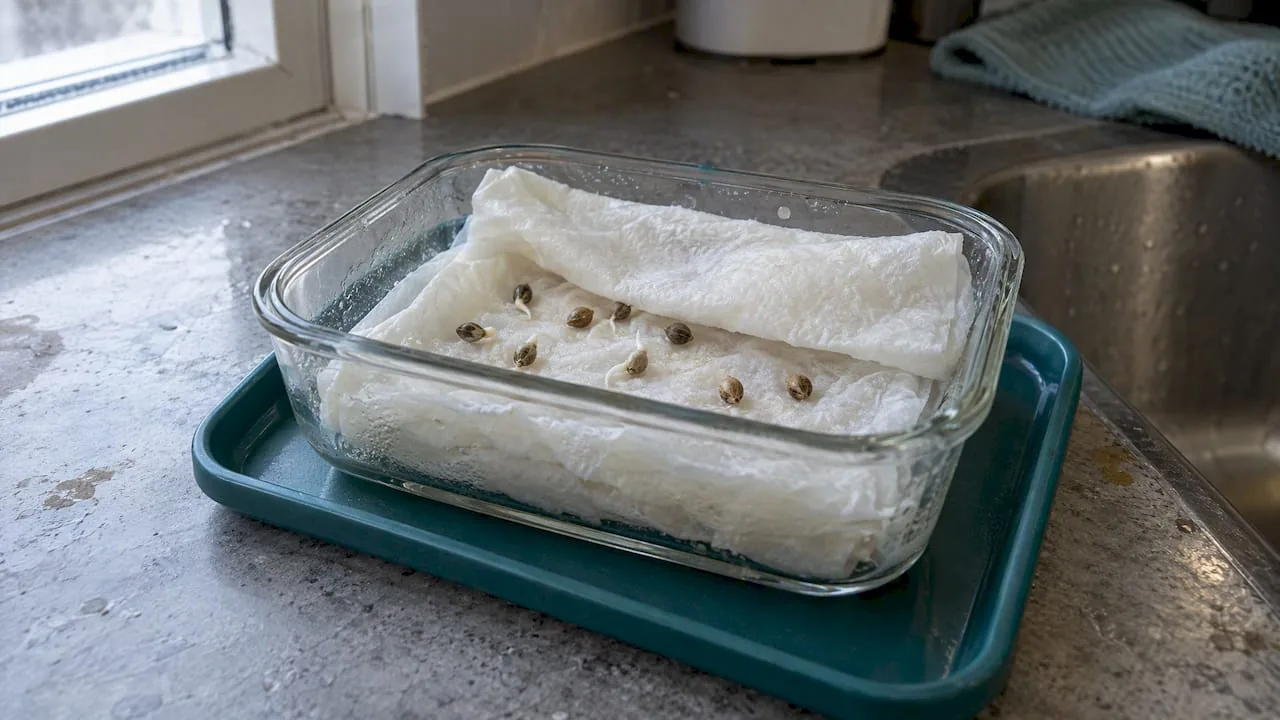
Start with a few plants and select phenotypes. The high heterozygosity of landraces creates variation between individuals. Germinate 6–10 seeds, observe their development and select the plants that best express the traits you want.
-
Document everything from the first generation. Record morphology, flowering time, aroma and effect. That information is the basis for any later stabilisation work.
-
Use backcrossing if you want to stabilise. Crossing the selected plant with its verified mother over several generations is the most effective way to fix traits without losing the original genetic base. The backcross guide for breeders explains the process step by step.
-
Consider the type of seed. For breeding work with landraces, regular seeds as opposed to feminised ones have clear advantages: they let you work with males and females for selection and crossing.
Pro tip: Controlling the photoperiod and simulating altitude with cooler night-time temperatures is often more decisive than increasing light power when you want to reproduce the phenotype of a mountain landrace. Before investing in more watts, adjust your night-time thermostat.
Conservation and ethics: why landraces are in danger
The globalisation of the seed market has paradoxically been a threat to landraces. Since the 1960s–70s, the mass introduction of foreign seeds into regions of origin has altered populations that took centuries to form. Many “landraces” circulating today in seedbanks are hybridised versions or selections with questionable genetic fidelity.

There are three main threats: mass hybridisation with commercial genetics, the loss of traditional agricultural habitat, and the indiscriminate marketing of seeds labelled as «landrace» with no verifiable history.
To verify the authenticity of a seed, look for these indicators: the breeder’s documented track record, provenance traceable to original collections, and consistency between the traits described and those the plant shows in the first generation. Seed banks with a solid reputation usually publish the lineage and the selection generations.
As a grower, you can make a real contribution. Store seeds from your best plants in controlled conditions: low humidity (below 8 %), a stable temperature between 4 and 8 °C, and total darkness. Keep duplicates in more than one place. Proper seed storage is the most direct way to protect germplasm against genetic loss. Taking part in documented seed exchange networks and local germplasm banks also helps.
The importance of maintaining a genetic collection goes beyond personal growing: it is about preserving the living history of thousands of years of coevolution between cannabis and humans.
What geneticists and breeders say about landraces
The scientific literature on cannabis domestication clearly supports the value of landraces as reserves of genetic diversity. Clarke and Merlin’s work on domestication, breeding history and genetic diversity is the most cited reference in this field.
Modern geneticists add another layer: today’s hybrids are designed for specific traits such as high THC or fast flowering, while landraces offer consistent chemical profiles tied to their evolutionary history. That consistency is not uniformity, but fidelity to an ecosystem.
Landraces fuelled sinsemilla breeding and modern hybrids during the 1960s to 1980s. Without Afghan, 80 % of the indicas on today’s market wouldn’t exist. Without Thai or Colombian Gold, modern sativa hybrids would be genetically much poorer.
Key points
Landrace varieties are the genetic foundation of all modern cannabis, and actively conserving them is the responsibility of every grower who works with them.
| Point | Details |
|---|---|
| Landrace definition | Regionally adapted population with minimal hybridisation, high heterozygosity and a geographical name. |
| Genetic value | They act as genetic libraries with a diversity that modern hybrids have lost. |
| Terroir and expression | The climate, soil and altitude of the origin shape terpenes and cannabinoids; reproducing them matters in outdoor growing. |
| Growing in Central Europe | Adjusting photoperiod, night-time temperature and substrate is key to maintaining the original phenotypic expression. |
| Bluedoggenetics | It offers seeds with a verifiable history, discreet shipping and technical support for growers in Central Europe. |
Legal note: laws on the growing, possession and sale of cannabis vary significantly between Central European countries. Always check the regulations in force in your country before acquiring or growing seeds.
Landraces are not just history: they are the future of responsible breeding
There is a tendency in the growing world to treat landraces as museum pieces, something to be admired but not grown. That is an error of perspective.
Landraces are active tools. When a serious breeder wants to introduce mould resistance into a high-THC line, or recover a terpenoid profile that modern hybrids have lost, they go back to the landraces. Not out of nostalgia, but because that is where the genetic solution they need lies. Afghan remains the most widely used parent in indica breeding precisely because its genetics are robust, predictable where it matters and rich in what hybrids have sacrificed.
What worries me is the proliferation of seeds labelled as “landrace” with no proof of origin whatsoever. A grower who buys a “Thai landrace” with no verifiable history may be buying a stabilised sativa with some Thai in the pedigree, not a native population. The difference in the growing and in the result is enormous. That is why the breeder’s track record and the traceability of the seed are not minor details: they are the guarantee that what you are growing is what you think it is.
My practical recommendation: if you are going to work with landraces, start with one that suits your climate reasonably well. A Hindu Kush or an Afghan is much more manageable in Central Europe than a Thai or a Malawi Gold. Learn how the plant behaves in your environment before trying to reproduce the terroir of the tropics.
Where to find seeds with verified provenance in Central Europe
If after reading this guide you want to start working with landrace or heirloom genetics, the choice of seed bank makes the difference between a serious project and a disappointment. Not all sources offer the same level of traceability or the same support when growing questions come up.
Bluedoggenetics maintains a curated selection of varieties with a documented track record, discreet shipping across Central Europe and personalised support for growers of every level. It is not a generic catalogue: every variety available at Bluedoggenetics has gone through a selection process that prioritises quality and genetic consistency. If you are looking for seeds to explore genetics close to their origin, or you simply want to make sure that what you grow has real backing, have a look at their catalogue and talk to the team before deciding.
Reading and sources to go deeper
These are the most useful references for anyone who wants to go beyond this guide:
-
Razas puras locales o «landraces» | Cáñamo: the most complete source in Spanish on technical definition, genetic stability and value for breeding. A must-read starting point.
-
Cannabis domestication, breeding history, present-day genetic diversity and future prospects (Clarke & Merlin): the key academic work on the domestication and genetic history of cannabis. Dense but essential for anyone who wants to understand the origin of landraces from a scientific perspective.
-
What exactly is cannabis landrace? | Leafwell: an accessible explanation of the definition and chemical profiles of landraces, focusing on effects and terpenes.
-
Introducción a las variedades landrace cannábicas | Cannabis Magazine: a practical guide to growing landraces away from their place of origin, with acclimatisation tips.
-
What are heirloom cannabis seeds? | CannaConnection: clarifies the difference between heirloom and landrace, useful for not confusing categories when buying seeds.
-
Origin, early expansion, domestication and anthropogenic diffusion of Cannabis | DIGITAL.CSIC: academic study on the biogeography and dispersal of cannabis, with an emphasis on Europe and the Iberian Peninsula.
-
Landraces: historia viva del cannabis | Cannabis Magazine: a narrative article that places landraces in their historical and cultural context, very useful for understanding why they matter beyond growing.
Suggested slug: cannabis-heritage-strains-guide