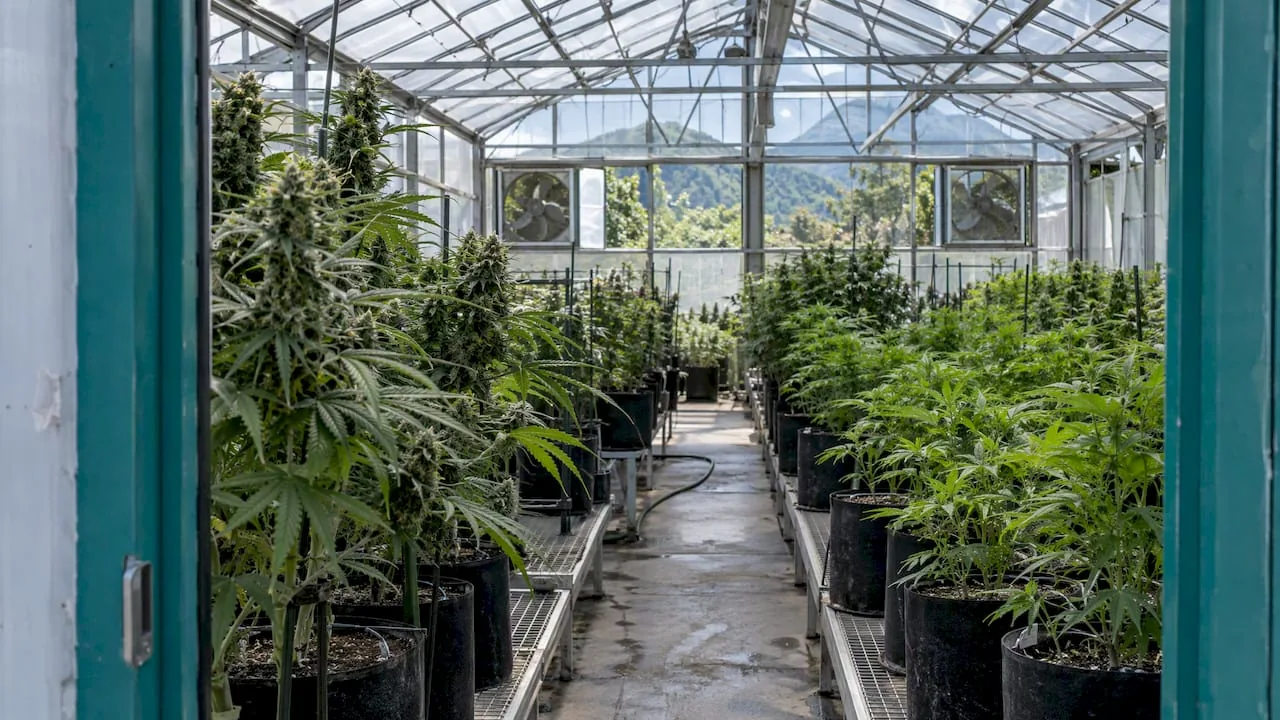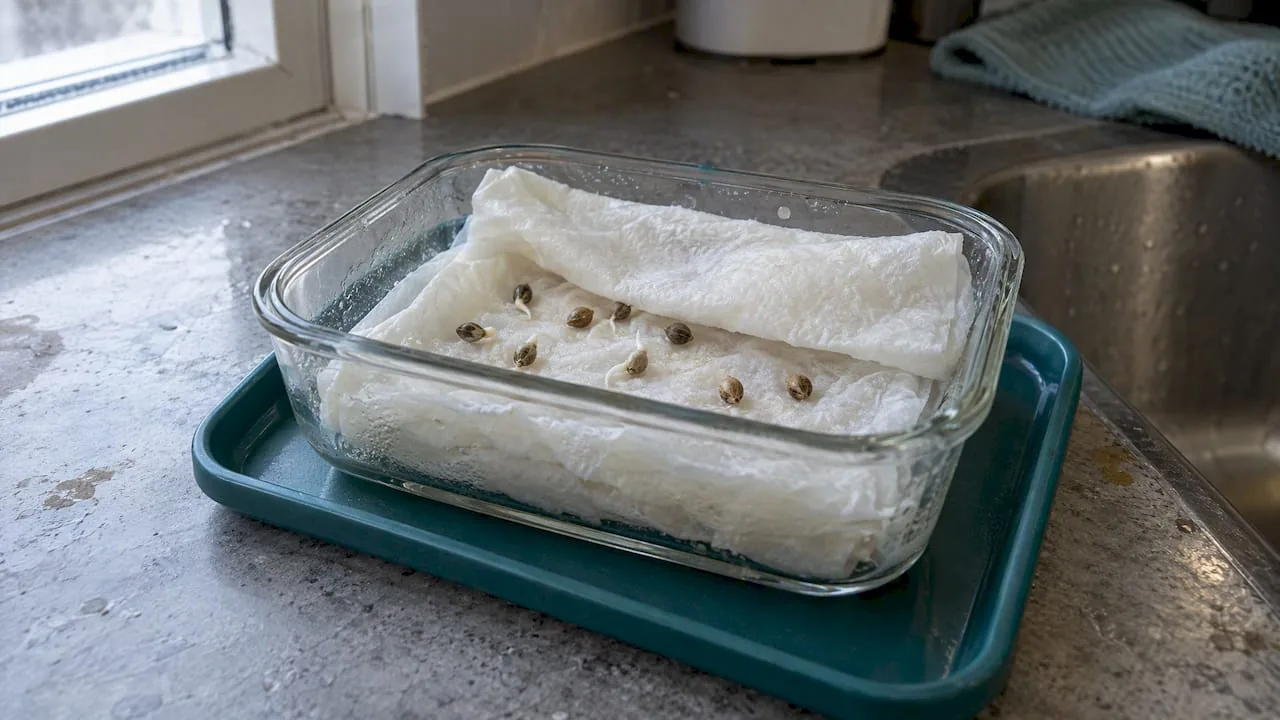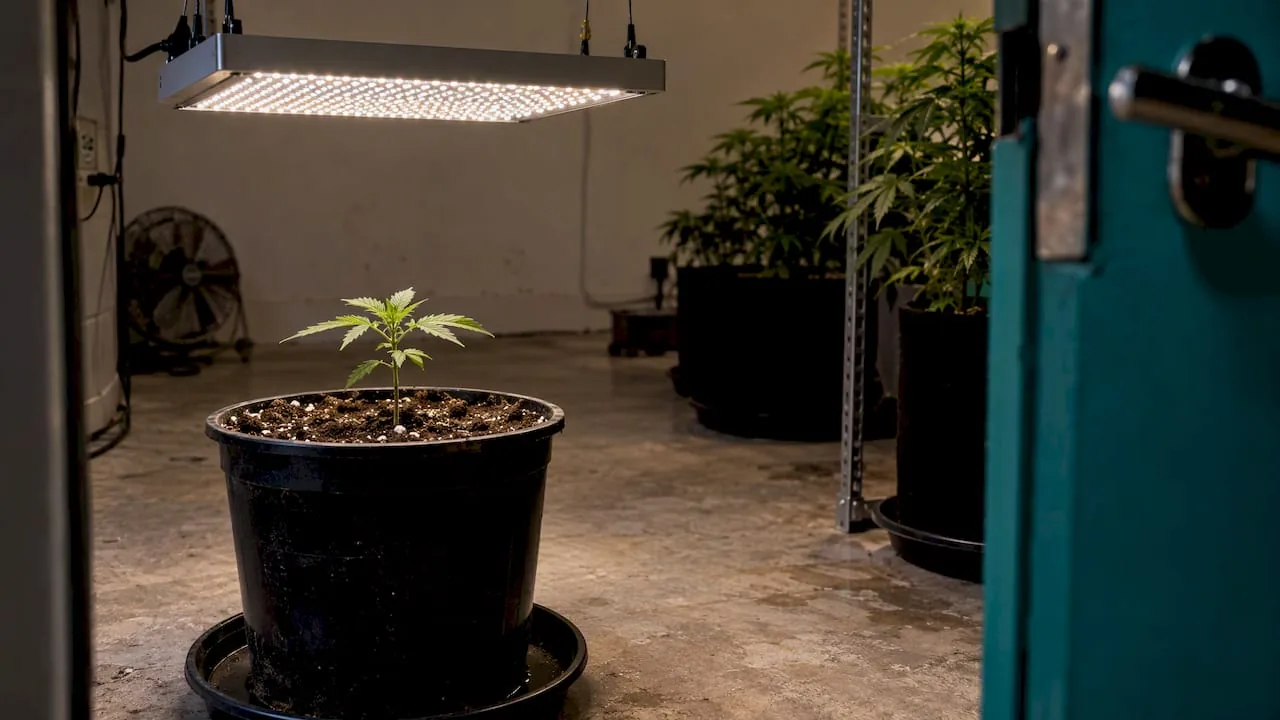


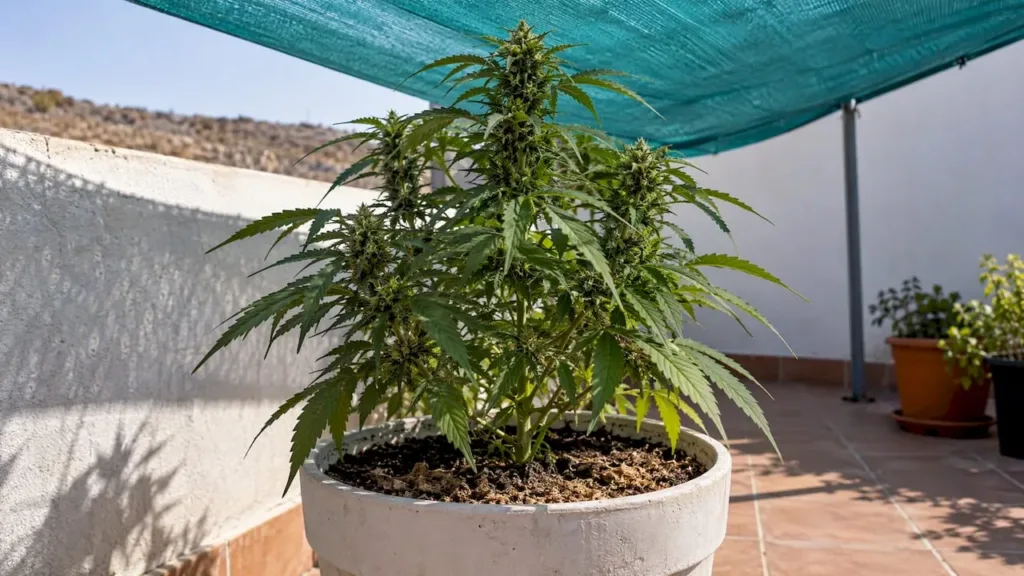
There is no such thing as a “drought-proof” seed. What does exist are genetics that cope better with heat, strong sun and weeks without rain, and a way of managing them that gives them an advantage. If you grow outdoors in the south or east of Spain, the choice comes down to three things: the variety’s cycle, its tolerance to water stress, and how you water and plant it. Here we explain how to decide sensibly, without miracle promises.
In short
- Drought resistance is not a single gene: it is a set of traits (root, architecture, cycle) and it always involves a trade-off with yield.
- In a Mediterranean climate, short- or medium-cycle genetics, plants of moderate size and good heat response win out over those that merely promise a high yield.
- Autoflowering plants dodge part of the harshest summer weather thanks to their fast cycle; feminised ones give you more control over when and where to plant.
- The substrate, pot size, mulch and planting time matter as much as the seed.
- Choose the variety based on your plot and your calendar, not the label.
What science says: there are no miracle genes
European agricultural research has spent years studying drought tolerance, almost always in cereals such as maize, and its conclusions are useful for any grower who wants to think things through. We extrapolate them with caution: cannabis has its own biology, but the logic of genetics and environment is the same.
The researcher François Tardieu, of INRAE, insists that there are no miracle genes for tolerating drought and that choosing a seed is always a compromise between protecting the plant and maintaining its productivity. A plant that closes its stomata too early to save water also slows down photosynthesis, and that is paid for at harvest.
Another useful idea comes from the European DROPS project: traits of resilience to water stress depend on specific combinations of alleles, and farmers can reduce the impact of the climate by choosing genotypes adapted to their regional temperature and water availability. Translated to your terrace or your plot: the best seed is the one that suits your site.
Finally, the European network EU CAP Network reminds us that a variety’s yield depends on its genetics and on the conditions of the land: soil, water, nutrients and climate. It isn’t enough to buy the most expensive or most heavily advertised variety.
💡 Pro tip: be wary of any spec sheet that says “drought resistant” without explaining why. Ask about cycle, height, origin of the genetics and performance in heat.
What “drought resistant” means in cannabis
When a grower talks about drought resistance, they usually mean several different things, and it helps to separate them:
- Tolerance to heat and intense sun: leaves that don’t burn or curl at the first sign of trouble.
- Water-use efficiency: the plant keeps growing with more widely spaced watering.
- Vigorous root system: a root that explores the substrate well copes better with a day of forgetfulness. That said, root development costs the plant energy, so it is not always synonymous with a bigger harvest, as the INRAE researchers explain.
- Adapted cycle: make sure flowering doesn’t coincide with the peak of extreme heat, or that it finishes before the autumn rains arrive.
Notice that almost all of this is genetics plus management. That is why the same seed can do wonderfully in a 40-litre pot with mulch and struggle in a bed of compacted soil with no shade.
What the Mediterranean climate is like and what it demands of the plant
The Mediterranean climate has long, hot, dry summers, plenty of sunshine and, in general, low humidity during flowering. That’s an advantage over humid climates, where mould is the enemy (if that’s your situation, we have a guide to seeds for humid climates and another on mould-resistant seeds). But sustained heat brings its own problems:
- Water and heat stress in midsummer: July and August can slow growth or force the plant to close its stomata.
- Rapid substrate evaporation: dark pots in the sun dry out within hours.
- Dry-environment pests: spider mites and thrips take advantage of heat and dryness.
- Rushed or stressed flowering: the plant may produce less resin or even develop male flowers under intense stress, a risk known as hermaphroditism.
If you want to go deeper into managing this environment, we have an article on Mediterranean cannabis growing: conditions and techniques and another on seeds for warm climates.
How to choose genetics for a dry climate
Look at the cycle first
The cycle is your first tool. A variety that finishes in mid-October avoids some of the risk of late rains, but if its flowering falls right at the peak of the heat, you’ll have to compensate with shade and watering. A shorter-cycle variety or an autoflowering one lets you sow in spring and harvest before summer really bites, or even do two rounds.
Habit and structure
Medium-sized plants with open branching ventilate better and lose less water through crowded leaves. Very tall, dense plants suffer more from dry wind and need more water. If you grow on a terrace or balcony and want to stay discreet, a compact size is an ally.
Sativa, indica or hybrid heritage
Broadly speaking, genetics inherited from warm regions tolerate intense sun better, while those of colder origin become stressed sooner. It is not a mathematical rule: within each family there are very different phenotypes. When a product page describes a variety, look for real information about its parents and how it behaves in heat, and remember that quality seeds and genetic stability matter: here we explain what genetic stability is and how to ensure it.
Quick decision table
| Your situation | What suits you | Why |
|---|---|---|
| First outdoor harvest | Autoflowering | Short cycle, fewer weeks exposed to the worst heat |
| Sunny plot and good substrate | Medium-cycle feminised | More margin for size and yield |
| Terrace with plenty of direct sun | Compact variety in a large pot | Less leaf surface, more control |
| You want two harvests a year | Autoflowering or Fast version | Quick turnaround between sowings |
| You want to breed your own line | Regular | Allows you to select and cross |
Autoflowering, feminised and Fast: what each one offers
Autoflowering
Their greatest virtue in a dry climate is time: they flower by age, not by photoperiod, and complete their cycle in a few weeks. That lets you sow after the last frosts and harvest before the most extreme part of summer, or do it again. In return, they have less room to recover from heavy stress, because their vegetative phase is short. If that’s your case, regular watering and the final pot from the start are key. Take a look at our guide to the advantages of autoflowering plants for beginners or go straight to the autoflowering seeds section.
Feminized
They give you more control: you can extend the vegetative stage, prune, train and adapt the size to your space. With good roots and mulch, a mid-cycle feminised plant copes better with heat spikes, because it has time to recover. If you can’t decide between feminised and regular seeds, this practical guide to feminised vs regular seeds will clear it up. The catalogue is at feminised seeds.
Fast version
Fast version varieties shorten the flowering time of a photoperiod genetic. In the south of Spain they are useful for avoiding the end of summer or the autumn rains. You can see them in the fast version section.
The Bluedog perspective: what we see in real-world growing
In our experience with growers from all over Europe, the question about drought almost always hides another: “how much work is this going to be?”. And the honest answer is that good genetics saves you scares, but it doesn’t replace judgement. That’s why at Bluedog we work with a curated selection of varieties from recognised and exclusive seed banks, rather than an endless, unfiltered catalogue.

Our recommendation for anyone growing in a dry climate is to start from the reality of your space. If you have little experience, start with an autoflowering: it is more forgiving with the calendar. If you already have a couple of harvests behind you and a spot with good soil, a mid-cycle feminised plant gives you a bigger harvest. And if you are unsure which to choose, our team will help you personally before you buy.
We also like to be clear about what we don’t promise: no strain withstands everything. What we do is help you choose genetics that suit your climate, and make sure your order arrives discreetly and with tracking.
Handling: what really makes the difference
The seed sets the ceiling, but how you manage the grow decides whether you reach it. These are the points that matter most in a dry climate.
Pot and substrate
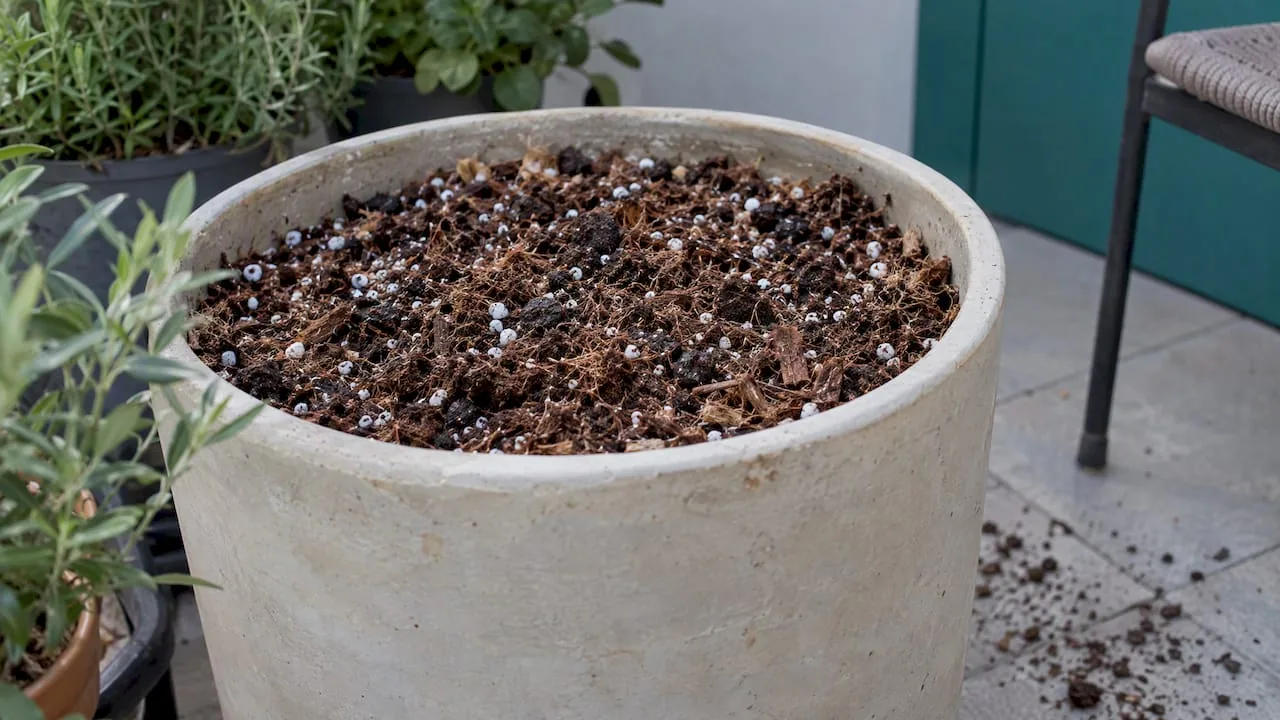
A large pot (for example, 30 to 50 litres for photoperiod plants outdoors) buffers changes in moisture and temperature. Use an airy substrate with good retention: coco fibre or peat mixed with perlite and some humus. Avoid black pots in full sun: either protect them with side shade or wrap them in light-coloured material.
Mulched
A layer of straw, bark or mulch over the substrate reduces evaporation and keeps the root zone cool. It’s one of the cheapest and most effective things you can do.
Smart watering
- Water early in the morning or at dusk, never during the middle of the day.
- One deep, spaced-out watering is better than many short ones: it encourages the roots to go down.
- Weigh the pot or push your finger in five centimetres: water by need, not by the calendar.
- If you go away, a timer-controlled drip system avoids the most damaging stress, the kind that comes and goes.
Mind the balance: as the research points out, cutting water consumption too much comes at a cost in yield. Putting up with thirst is not the same as growing well.
Shade and orientation
A 30 % shade net during the harshest hours of July and August protects leaves and flowers. If you can position the plant so that it gets morning sun and some shade in the afternoon, even better.
Pests
A dry environment favours red spider mite. Check the underside of the leaves every week and keep good ventilation. A crop stressed by thirst is more vulnerable.
💡 Pro tip: if you see drooping leaves at midday that recover by the afternoon, it is a response to heat and not necessarily a lack of water. Check the substrate before watering.
Guideline calendar for Mediterranean outdoor growing
Dates vary by region and altitude, so treat them only as a starting point:
- March to April: germination and the first few weeks indoors or in a sheltered spot.
- April to May: transplant into the final pot and, in the case of autoflowering plants, sow directly once the risk of cold has passed.
- June to July: vegetative phase of the photoperiod plants, with mulching and shade as temperatures rise.
- August to September: start and development of flowering, watching out for pests.
- October: harvest of medium-cycle varieties, before the heavy rains.
A legal note before planting
Cannabis regulations in Spain distinguish between consumption and possession in private spaces and what happens in public places. According to this legal summary, the Criminal Code does not punish possession for personal use, but there are administrative penalties for consumption or possession in public, and commercialisation remains prohibited. The rules may vary and change, so before growing, consult a lawyer or the official information for your region. Our shop is intended only for adults.
Where to find seeds for dry climates
At Bluedog Genetics you’ll find feminised and autoflowering seeds from well-known seed banks, as well as regular, CBD and Fast versions. You can browse the whole seed catalogue and filter by type to suit your project. We offer discreet shipping, order tracking, regular promotions and personal support, so if you’re not sure which variety suits your plot, you can ask us before deciding. If you’d rather work with a particular seed bank, take a look at the Kannabia Seeds page. And if your priority is filling the bed, the high yield section brings together genetics built to perform.
Common mistakes in dry climates
- Buying based only on the resistance label. Without information on cycle and size, the label tells you nothing.
- Small pots. They dry out too quickly and force you to water every day.
- Watering by routine. Too much water in a poorly drained substrate does as much harm as too little.
- Transplanting in the full heat. Do it on cool days or at dusk.
- Sowing too late. A photoperiod plant sown in July reaches flowering with autumn already upon it.
- Ignoring the microclimate. A wall that reflects the sun can add several degrees to your plant.
Frequently Asked Questions
Are there cannabis seeds that are completely drought-resistant?
No. Drought tolerance depends on many traits at once and, according to INRAE, there are no miracle genes. The realistic approach is to choose genetics that perform well in heat and give them suitable watering and substrate management.
Which is better in a Mediterranean climate: autoflowering or feminised?
It depends on your experience and your space. Autoflowering is simpler and has a short cycle, ideal for getting started or for doing two rounds. A medium-cycle feminised plant offers more size and control if you already have some practice.
When should you sow for outdoor growing in southern Spain?
The usual approach is to germinate between March and April and transplant into the final pot between April and May, although this varies by area. Autoflowering plants allow somewhat more flexible sowing once the risk of cold has passed.
How much should I water in summer?
There is no fixed figure: it depends on the pot, the substrate and the temperature. Water thoroughly when the top few centimetres are dry, first thing in the morning or at dusk, and use mulch to reduce evaporation.
Our recommendation to get started
If you want a safe bet for a dry climate, start with the autoflowering varieties: short cycle, easy handling and fewer weeks under the harshest sun. If you already have plenty of space and some experience, take a look at the feminised ones with a medium cycle and plants of moderate size. In both sections you can compare product sheets and write to us if you need help deciding.