

If you prioritise speed and simplicity, choose autoflowering seeds. If you want total control over plant size and the maximum possible yield per plant, go for photoperiod feminised seeds. That is the short answer to how to choose seeds, and everything else in this article explains why.
Quality autoflowering plants complete their cycle in around 9 to 12 weeks from germination and do not depend on a change in photoperiod, which makes them ideal if you grow at home and want results without complicated light schedules. Photoperiod feminised plants, on the other hand, respond to the change in light cycle (from 18/6 to 12/12) and give you more room to train the plant and maximise your harvest. At Bluedog Genetics you will find both categories with discreet shipping and clear data sheets, something you will appreciate when you are choosing between dozens of varieties.
Three quick recommendations based on your profile:
- Beginner: start with an autoflowering strain; it is more forgiving of watering and feeding mistakes.
- Intermediate: a feminised seed gives you room to apply training techniques and get more grams per plant.
- Breeder or collector: look for regular or feminised seeds from seed banks with stable lineages, ideal for keeping mother plants.
In short:
- The right choice between autoflowering and feminised depends on your experience, your available space and whether you prioritise speed or maximum yield per plant.
- Autoflowering plants complete their cycle in 9 to 12 weeks without depending on the photoperiod, whereas feminised ones require you to control the switch to 12/12 in order to flower.
- Before buying, it’s worth requiring the germination percentage, flowering weeks, lineage and expected yield on the data sheet.
- Autoflowering plants need minimal handling, whereas feminised plants tolerate aggressive training such as LST, SOG or SCROG.
- Bluedog Genetics offers clear data sheets, discreet shipping, a quality guarantee and order tracking in both categories.
Key points
The right choice between autoflowering and feminised depends on your experience, your available space and whether you prioritise speed or maximum yield per plant.
| Point | Details |
|---|---|
| Profile determines the type | Beginners do better with autoflowering varieties; experienced growers get more out of feminised ones. |
| Cycle and planning | Autos take 9 to 12 weeks; feminised plants add a vegetative period plus their own weeks of flowering. |
| Technical sheet as a filter | Insist on a stated germination rate, flowering weeks, lineage and yield before buying. |
| Different handling by type | Autos need minimal handling; feminised plants tolerate aggressive training and strict light control. |
| Bluedog Genetics as a reliable choice | It offers clear product sheets, discreet shipping, a quality guarantee and order tracking in both categories. |
Autoflowering vs feminised: practical differences that affect your choice
The fundamental difference lies in what triggers flowering. Autoflowering plants carry Cannabis ruderalis genetics, which starts flowering by age, not by light: it makes no difference if you give them 18 hours of light a day, they will flower on their own when the time comes. Photoperiod feminised plants need you to switch the cycle to 12 hours of light and 12 of darkness to induce flowering, both indoors and when the days shorten outdoors.
That difference in mechanism has consequences that really matter when buying. Autoflowering plants usually complete their cycle in 9 to 12 weeks from breaking the soil, whereas feminised plants depend on how long you leave them in vegetative growth plus their own flowering weeks, which usually range from 8 to 12 weeks or more depending on the variety. This also determines your margin for error: an autoflowering plant does not forgive late transplanting or early stress because its genetic clock never stops, whereas a feminised plant lets you extend the vegetative stage to make up for a poor start.
Size control also changes radically. With feminised plants you can apply aggressive training techniques such as LST, SOG or SCROG without fear of stunting development, because you have plenty of time for the plant to recover. With autoflowering plants, any invasive technique (late topping, transplanting, strong physical stress) can cost you yield, so it’s best to stick to gentle bending or light defoliation.
| Best for | Total cycle | Size control | Stress sensitivity | Indoor vs outdoor | Expected yield |
|---|---|---|---|---|---|
| Beginner, fast growing | 9-12 weeks | Low | High | Both, discreet outdoors | By time, moderate |
| Intermediate/expert grower | Vegetative + 8-12+ weeks | High | Medium/low | Both, better in controlled indoor growing | Per plant, high |
💡 Pro tip: if you want the best of both worlds, try a feminised autoflowering variety. It combines automatic flowering with the guarantee of no male plants, although you will still have less room for training than with a pure photoperiod feminised variety.
Choosing between autos and feminised seeds isn’t about which is “best overall”, but about which specific constraint limits you most: the time available, control of the photoperiod or the space you’re working with.
What questions should I ask myself before buying seeds?
Before adding anything to your basket, answer these five questions. They’ll save you money and frustration.
- What is your main goal? If you’re after something quick for personal use, go for autoflowering. If you want to maximise yield or get started in breeding, feminised or regular seeds give you more control.
- How much space do you really have? A small pot on a balcony calls for a compact autoflowering plant. A one-square-metre grow tent or a large outdoor plot justifies a feminised plant that you can train horizontally.
- What climate or season are you working with outdoors? If your area has short summers, an autoflowering plant that finishes in three months saves you from autumn rains ruining your harvest.
- How much experience do you have and how much margin for error can you handle? If it’s your first grow, autoflowering is more forgiving. If you’ve already mastered watering and nutrition, a feminised plant rewards the extra effort with more grams.
- Need discretion or staggered harvests? Being smaller and faster, autos lend themselves better to discreet growing and to sowing in batches almost every month.
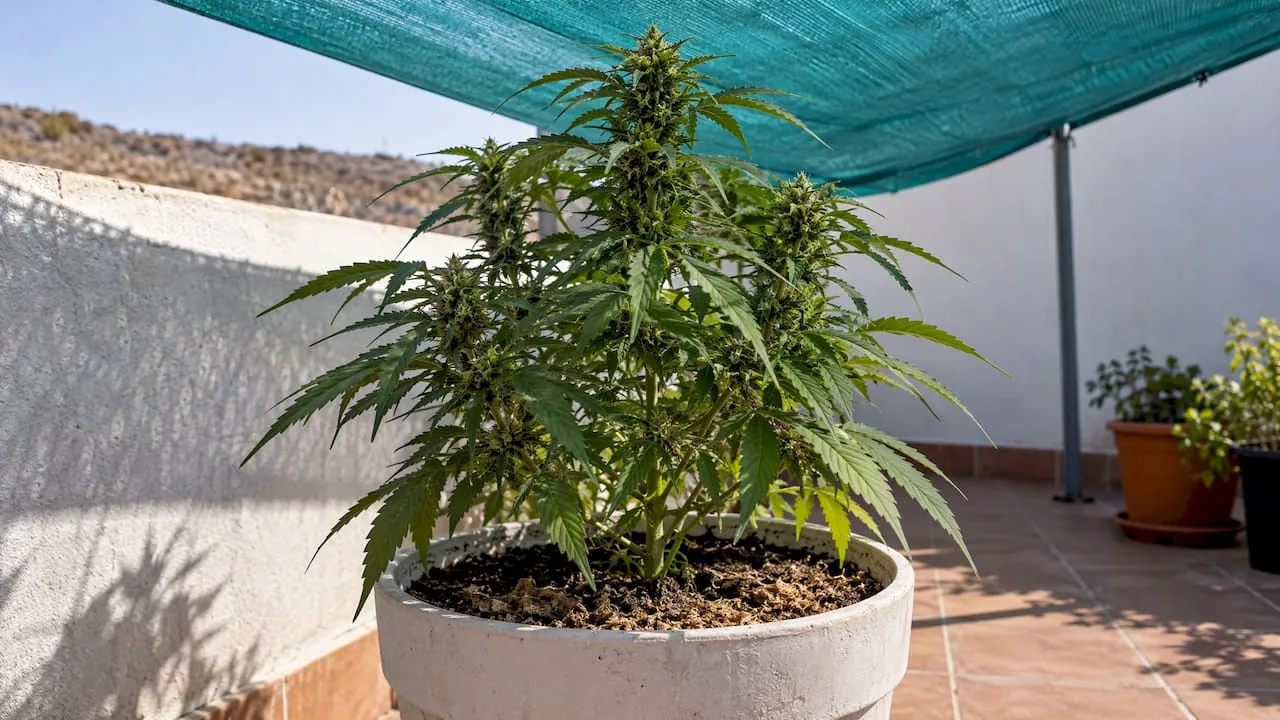
In real-life terms: on a small urban balcony with little space, a compact autoflowering plant gives you flower in about 10 weeks without drawing attention. In a one-metre grow tent, a feminised plant with SCROG makes the most of every centimetre of light surface. On a large outdoor plot with a long season, a regular feminised plant lets you extend the vegetative stage and reach yields that an autoflowering plant cannot match.
If your situation fits the first case, take a look at this guide to autoflowering for beginners before deciding on the exact pack.
How to read a seed’s data sheet before buying
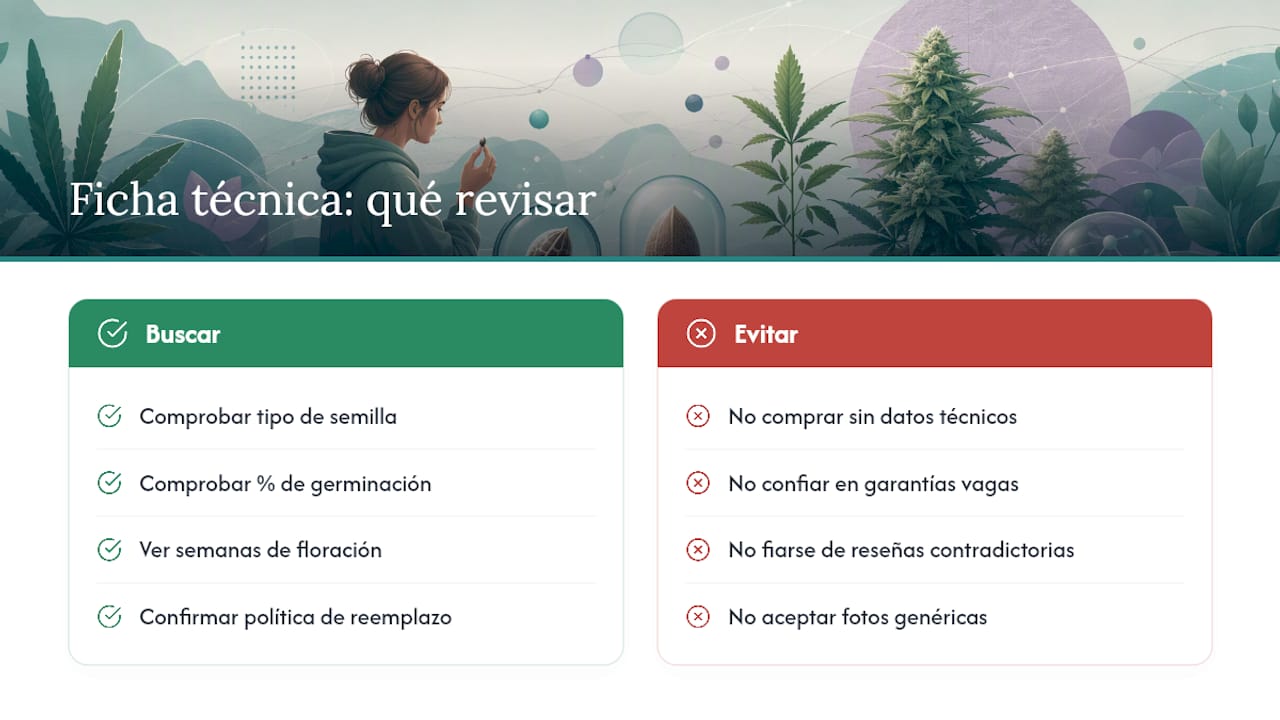
A well-made product page tells you almost everything you need to know before spending a euro. Look for these fields as a minimum: seed type (autoflowering, feminised or regular), stated germination rate, weeks of flowering or total weeks from seed to harvest, expected height, estimated yield, THC/CBD and terpene profile, and the lineage or original breeder.
When information is missing, be suspicious. The most common warning signs include a complete lack of technical data, vaguely worded guarantees (“satisfaction guaranteed” without explaining what it covers), reviews that are non-existent or contradict each other, low-quality generic photos, and shipping policies that don’t make clear what happens if the order doesn’t arrive or germination fails.
Before buying from a seed bank you don’t know, ask for real photos of phenotypes, ask about the packing date and how they store the seeds, and check whether there is a replacement policy when germination doesn’t live up to what was promised. Translating “weeks of flowering” into your real calendar is simple: add them to the vegetative time you plan to give the plant and you’ll know, almost to the day, when you’ll harvest.
At Bluedog Genetics every product page explicitly includes the germination percentage, the weeks of flowering and lineage data, as well as order tracking and a quality guarantee, something many online shops still don’t offer with the same clarity. If you’d like to go deeper into how to evaluate specific varieties before buying, this seed selection checklist sums up the key points.
Practical tips depending on the type of seed you choose
Each type of seed needs different handling from day one. Getting the handling right protects the investment you have just made.
If you chose autoflowering:
- Sow directly into the final pot; a late transplant costs them days of growth that they will not recover.
- Avoid invasive training techniques after the third week.
- Keep watering steady and consistent, with no abrupt substrate changes mid-cycle.
- Stagger your sowing every 3 or 4 weeks if you want continuous harvests all year round.
If you chose feminised seeds:
- Plan the vegetative time according to the final size you want.
- Keep the darkness strict during flowering: any light leak during the 12/12 cycle can cause hermaphroditism.
- Apply SCROG, LST or topping in the first weeks of the vegetative stage to maximise flowering sites.
- If you’re interested in breeding, keep cuttings of your best phenotypes before inducing flowering.
Before germinating any seed, check how you have stored it: humidity and storage temperature directly affect the germination percentage. This guide to seed storage explains how to do it properly.
Our final recommendation: what to buy and why
If we had to sum it all up in one sentence: beginners, go for autoflowering; experienced growers, bet on feminised; collectors or future breeders, look for regular or boutique feminised seeds from seed banks with stable lineage. The breeder’s reputation matters as much as the type of seed: unstable genetics ruin months of work no matter how well you look after them.
At Bluedog Genetics we work with exclusive, well-known seed banks, offer discreet shipping on every order and a quality guarantee with real shipment tracking, not empty promises. Every product page is signed off with agronomic expertise, so you know the germination and flowering data you read is reliable.
Points to remember before you decide:
- Confirm your profile (beginner, intermediate, breeder) before looking at specific varieties.
- Check that the data sheet gives the germination percentage, weeks of flowering and lineage.
- Prioritise shops with a replacement guarantee and order tracking.
If you are looking for feminised varieties with total control over the photoperiod, the photoperiod feminised category is your starting point. And if you are going for your first grow, take a look at our full shop to compare autoflowering packs by size and budget.
Author’s perspective
I have seen more than one beginner get frustrated after choosing a feminised strain that was too ambitious for their first attempt. The perfect genetics do not exist in the abstract: there are the ones that fit your space, your patience and your climate. Bluedog Genetics is here to help you get that combination right, not to sell you the most expensive variety in the catalogue.
Find your ideal seed at Bluedog Genetics
Bluedog Genetics is the direct alternative to buying blind on generic marketplaces: here every variety comes with a verified data sheet, germination percentage and detailed flowering weeks, plus discreet shipping and real tracking of your order. We work with exclusive, well-known seed banks, so you don’t pay for unstable genetics or unsupported promises.
If you already know you want to start simple, our autoflowering varieties are designed to minimise beginner mistakes. If you are after maximum yield with full control of the photoperiod, our boutique feminised seeds give you the training margin we mentioned earlier. Head to the Bluedog Genetics shop, look through the page for each variety and add your pack to the basket when you find the one that suits your space and your goal.
If you’re just starting out, we recommend taking a look at the exclusive autoflowering variety in our catalogue, with a short cycle and a profile that’s easy to handle; see its full description here. If you already have experience and are looking for a feminised variety with high yield potential, explore our category of photoperiod feminised seeds and choose the one that best suits your growing space.
Sources
If you want to dig deeper before buying, take a look at our step-by-step germination guide, the article on why low-quality seeds ruin harvests and our selection of seeds for beginners. They all link straight to our shop so you can compare varieties.