


Poor-quality seeds are the most direct cause of production losses in any cannabis grow, because they compromise germination, initial vigour and the uniformity of the plants from day one. When you sow a defective seed, you don’t just risk it failing to germinate: you risk the whole cycle. Recent studies confirm that using uncertified seeds can reduce yield per hectare by up to 40% compared with authorised seeds. That’s no small margin. It’s the difference between a profitable harvest and months of wasted work. Understanding why bad seeds ruin your harvest is the first step to not repeating that mistake.
What characteristics identify bad seeds and how do they affect growing?
A poor-quality seed doesn’t always look different to the naked eye. The real problem lies in its internal parameters: a low germination rate, reduced vigour and nutritional reserves that are too small to sustain emergence. These three factors determine whether your plant starts off strong or lags behind from the beginning.
Defective seeds show recognisable patterns when growing, which are worth knowing about:
- Slow or uneven germination: Seeds with low germination power take longer to emerge, which exposes them for longer to soil pathogens such as Pythium and Fusarium.
- Uneven emergence: When plants don’t emerge at the same time, the batch becomes uneven. Some plants dominate and others are suppressed, reducing overall yield.
- Plants with little initial vigour: Small cotyledons, thin stems and underdeveloped roots are signs that the seed didn’t have the reserves needed for a solid start.
- Genetic or phytosanitary contamination: Seeds without purity control can carry fungi, bacteria or even unwanted genes that affect the final phenotype of your cannabis.
The international ISTA (International Seed Testing Association) standards set specific parameters for assessing quality: thousand-seed weight, genetic purity, germination percentage and speed of emergence. If your supplier cannot give you this information, the seed is not certified.
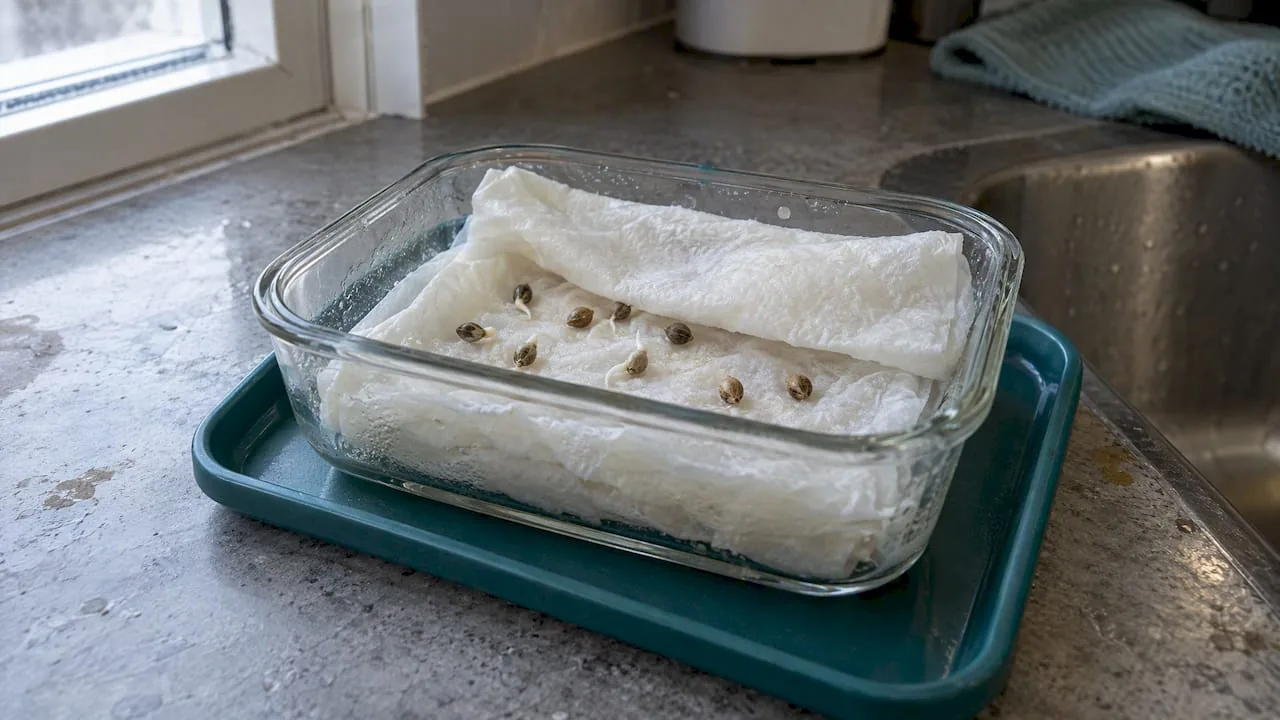
💡 Pro tip: Before sowing, run a home germination test with 10 seeds on damp paper at 25°C for 5 days. If fewer than 8 germinate, the rate is below the minimum acceptable standard of 80% recommended by ISTA.

Defective seeds in your grow don’t just affect the individual plant. They affect the logic of your whole growing system: watering, feeding and pest control are all designed for a uniform batch. When that batch is uneven, every agronomic decision loses efficiency.
How do certification and quality control help avoid bad seeds?
Seed certification is not bureaucracy. It is the only mechanism that guarantees that what you sow is what you expect to harvest. A formal certification process includes analysis of specific purity, counting, germination percentage and thousand-seed weight under ISTA standards, with ENAC accreditation in the European case. Each of these parameters has a minimum threshold. If the seed doesn’t pass it, it isn’t certified.
The verification process before buying seeds follows a clear logic:
- Check the supplier’s registration. In Colombia, the ICA 15141-2024 regulation requires buying from registered establishments with an official invoice. In Spain and Mexico, equivalent regulations exist. A supplier without registration cannot guarantee traceability.
- Check the packaging. Certified seeds include an official label with the batch, analysis date, germination percentage and variety name. If the packaging doesn’t have this information, the seed is unofficial.
- Ask for the certificate of analysis. Reputable seed banks issue a document with the laboratory results. Ask for it before buying.
- Check the genetic purity. For cannabis, this means knowing whether the variety is feminised, autoflowering or regular, and which dominant phenotype it expresses.
- Confirm phytosanitary health. Certification ensures genetic health and protects against diseases that can compromise your entire harvest.
| Certified seeds | Uncertified seeds |
|---|---|
| Germination guaranteed by ISTA analysis | Unknown or unverified germination |
| Documented genetic purity | Risk of contamination or variety mix-ups |
| Controlled plant health | Possible pathogens or latent pests |
| Legal backing and traceability | No invoice or official record |
| Predictable yield | Yield losses of up to 40% |
Using uncertified seeds also generates extra costs in agrochemicals and can lead to the product being rejected in regulated markets. The initial saving from buying informal seed turns into a net loss once you add up the additional inputs, the lost time and the damaged harvest.

💡 Pro tip: Always keep the purchase invoice and the original packaging label. If you ever need to prove the origin of your plant material, those documents are your only legal protection.
What effects does using low-vigour seeds have on cannabis productivity?
Vigour is the most underrated quality parameter. A seed can have a 90% germination rate in the laboratory and still produce a weak crop if its vigour is low. The reason is simple: the germination percentage measures whether the seed can germinate under ideal conditions. Vigour measures whether it can do so quickly, uniformly and under real stress conditions.
Seeds with low vigour have uneven emergence, which is slow and carries a higher risk of pathogen attack. Every extra hour the seedling spends underground is an hour of exposure to soil fungi, temperature fluctuations and competition with microorganisms. In cannabis, this translates into plants that start out weak, with fewer trichomes, lower resin production and less dense floral structures.
The specific effects of low vigour on your grow are:
- Uneven batch: Plants that emerge on different days result in a staggered crop. While some plants are flowering, others are still in the vegetative stage. That makes it impossible to optimise the light cycle or the nutrients for the whole batch at the same time.
- Greater vulnerability to pathogens: Seedlings that are slow to emerge are exposed to the soil for longer, where Botrytis, Pythium and other fungi lie in wait. A vigorous seed gets through that risk window in 24 to 48 hours. A weak seed can take 5 to 7 days.
- Lower watering and fertilising efficiency: Without uniform emergence, the application of nutrients and watering is less efficient, weakening the crop as a whole. You water for the big plants and the small ones drown, or you water for the small ones and the big ones suffer water stress.
- Insufficient nutritional reserves: Seeds with fewer nutritional reserves emerge slowly, so biostimulation techniques and biological fungicides are recommended to make up for that initial shortfall.
Failures in sowing quality cause losses of up to 19% of a crop’s potential yield. That percentage represents weeks of work and hundreds of euros or dollars in supplies that you never get back.
Vigour assessment should include speed and uniformity of emergence, not just the raw germination percentage. If your supplier only gives you the germination figure without mentioning vigour, you’re making a decision with incomplete information.
How do you choose and handle high-quality cannabis seeds to avoid losing your harvest?
Choosing the right seed is the most important decision of the whole growing cycle. Everything that comes afterwards, the substrate, the nutrients, the lighting, depends on the starting genetic material being solid. Here is a clear process to help you get it right.
Checklist for selecting quality seeds:
- Buy only from seed banks with a verifiable track record and a documented catalogue, such as those offered by Bluedoggenetics with curated and selected varieties.
- Check that the seed is feminised or autoflowering depending on your growing goal. Premium cannabis genetics have documented phenotypic stability.
- Check the physical appearance: mature seeds are dark brown with spots or stripes, hard to the touch and with a shiny outer layer. Green, soft or very small seeds are a sign of immaturity.
- Store the seeds in a cool (between 6°C and 8°C), dark place with relative humidity below 20%. An airtight container with silica gel is enough to maintain viability for months.
- For germination, use the damp paper method with distilled water at room temperature. Avoid chlorinated tap water, which can inhibit germination.
- Apply a root biostimulant at transplanting to make up for any initial lack of vigour and speed up root establishment.
Seed quality also determines final profitability. A premium seed may cost twice as much as an informal one, but if it delivers a 40% higher yield with lower spending on agrochemicals, the return on investment is clear. It’s not an expense: it’s the foundation of your business or personal project.
For growers who want consistency in every cycle, strains such as the feminised OG genetics or the high-yielding autoflowering varieties available in the Bluedoggenetics catalogue offer exactly that stability. Each variety goes through a selection process that guarantees vigour, genetic purity and adaptation to different growing environments.
Key points
Poor-quality seeds ruin yield from germination onwards, and no later input can make up for that initial shortfall if the genetic base is faulty.
| Point | Details |
|---|---|
| Vigour matters more than germination | Assess the speed and uniformity of emergence, not just the laboratory germination percentage. |
| Losses are quantifiable | Uncertified seeds can reduce yield by up to 40% and lead to extra costs for agrochemicals. |
| Certification protects your investment | Only buy seeds with ISTA analysis, an official label and a registered supplier to guarantee traceability. |
| Uneven plants multiply the problems | An uneven batch makes watering, feeding and pest control inefficient throughout the whole cycle. |
| Genetic quality is the foundation of yield | Premium seeds with documented phenotypic purity produce more uniform, denser and more profitable harvests. |
What I learnt growing with bad seeds
I have seen experienced growers lose entire cycles because of a decision they made in five minutes: buying cheap seeds without checking where they came from. The problem doesn’t show up on day one. It shows up two weeks later, when the batch is uneven, when some plants have three pairs of leaves and others are barely peeking out. By then, there’s no going back.
What surprised me most when analysing these cases is that most of those growers knew something was wrong from germination. The seeds took longer than normal, some didn’t open, others opened with a weak root. But they carried on, hoping the problem would correct itself. It doesn’t. Low vigour is a condition that stays with the plant throughout its whole cycle.
My most direct recommendation is this: treat the seed as the most critical input of your grow, not the cheapest. You can have the best substrate, the best LED lighting and the most precise irrigation system, but if the seed doesn’t have the right vigour and genetics, you’re building on an unstable foundation. Seed quality is not a detail. It is the starting point for everything that comes after.
Premium seeds for a harvest without surprises
If you’ve made it this far, you already know that the origin of your seed determines the result of your harvest. At Bluedoggenetics you’ll find a curated catalogue of feminised and autoflowering seeds with stable genetics, documented vigour and discreet shipping. Every variety is selected for growers who don’t want to leave yield to chance. From classic OG genetics to fast-cycle autoflowering varieties, you have options for indoor and outdoor growing with real quality assurance. If you’re ready to take the next step, you can browse the full catalogue and complete your order with complete peace of mind.
FAQ
Why do bad seeds ruin the harvest from the start?
Poor-quality seeds have low vigour and insufficient reserves, which leads to slow emergence, exposure to pathogens and uneven plants that reduce the final yield by up to 40%.
How can you spot bad seeds before sowing?
Look for seeds that are green, soft to the touch or very small, as these are signs of immaturity. Run a germination test on damp paper: if fewer than 80% germinate within 5 days, the quality is below the ISTA standard.
What is the difference between germination and vigour in a seed?
Germination measures whether the seed can sprout under ideal conditions. Vigour measures whether it can do so quickly and uniformly under real field conditions, which determines the seedling’s resistance to pathogens and stress.
Is it worth paying more for certified cannabis seeds?
Yes. Certified seeds guarantee genetic purity, plant health and predictable yields. The extra cost is more than recovered by avoiding yield losses, additional spending on agrochemicals and failed cycles.
How do you store cannabis seeds to maintain their quality?
Store them in an airtight container with silica gel, at a temperature of between 6°C and 8°C and with relative humidity below 20%. In these conditions, the seeds keep their viability and vigour for several months without deterioration.