


An elite seed is one that shows verifiable signs of high viability, vigour and genetic stability, attributes that experts assess using reliable methods ranging from visual inspection to artificial intelligence technologies. Knowing what makes a seed elite and the signs experts look for makes the difference between a mediocre harvest and a high-yielding batch of cannabis. At Bluedoggenetics we work with growers who already know that not all seeds are equal, and this article explains exactly why. Here you’ll find the physical, physiological and genetic criteria that define the real quality of a seed before it touches the substrate.
Which physical characteristics indicate that a seed is elite?
The most accessible signs of elite seeds are the ones you can see with the naked eye, and learning to read them properly is the first quality filter every grower should master. A premium seed has an intact shell, with no cracks, dents or discoloured patches. The texture should be smooth or slightly textured depending on the variety, but always firm to the touch. A seed that gives way under light pressure has already lost its viability.
Colour is another key indicator. High-quality cannabis seeds show shades ranging from dark brown to slate grey, often with a characteristic mottled or marbled pattern. Green or very pale seeds are immature and rarely germinate successfully. Black, opaque seeds with no sheen may indicate advanced ageing or moisture damage.
The surface sheen also tells you a lot. A healthy seed has a natural waxy lustre that indicates the outer protective layer is intact. This coating protects the embryo from external moisture and pathogens. Losing it, whether through excessive handling or incorrect storage, directly compromises the germination rate.
- Intact shell: no cracks, breaks or soft spots to the touch
- Dark, even colour: brown, grey or mottled; never green or completely opaque black
- Superficial waxy shine: a sign that the protective layer is in good condition
- Consistent size and weight: small or very light seeds tend to have underdeveloped embryos
- No deformities: symmetry indicates complete embryonic development
💡 Pro tip: Place the seeds on a white surface under natural light or white LED light. The contrast will let you spot discolouration, fine cracks and differences in sheen that go unnoticed under yellow light.
Mechanical damage, diseases and malformations produce specific signs in the tissues that directly affect the establishment and vigour of the seedling. Visual inspection is the first filter, but not the only one. For a complete assessment, see our seed selection guide with detailed criteria.

How do you assess the viability and vigour of an elite seed?
Outward appearance says a lot, but the real viability of a seed can only be confirmed with physiological tests. Seed selection experts use two main methods: the formal germination test and the tetrazolium test, each with specific advantages depending on the time available and the level of precision required.
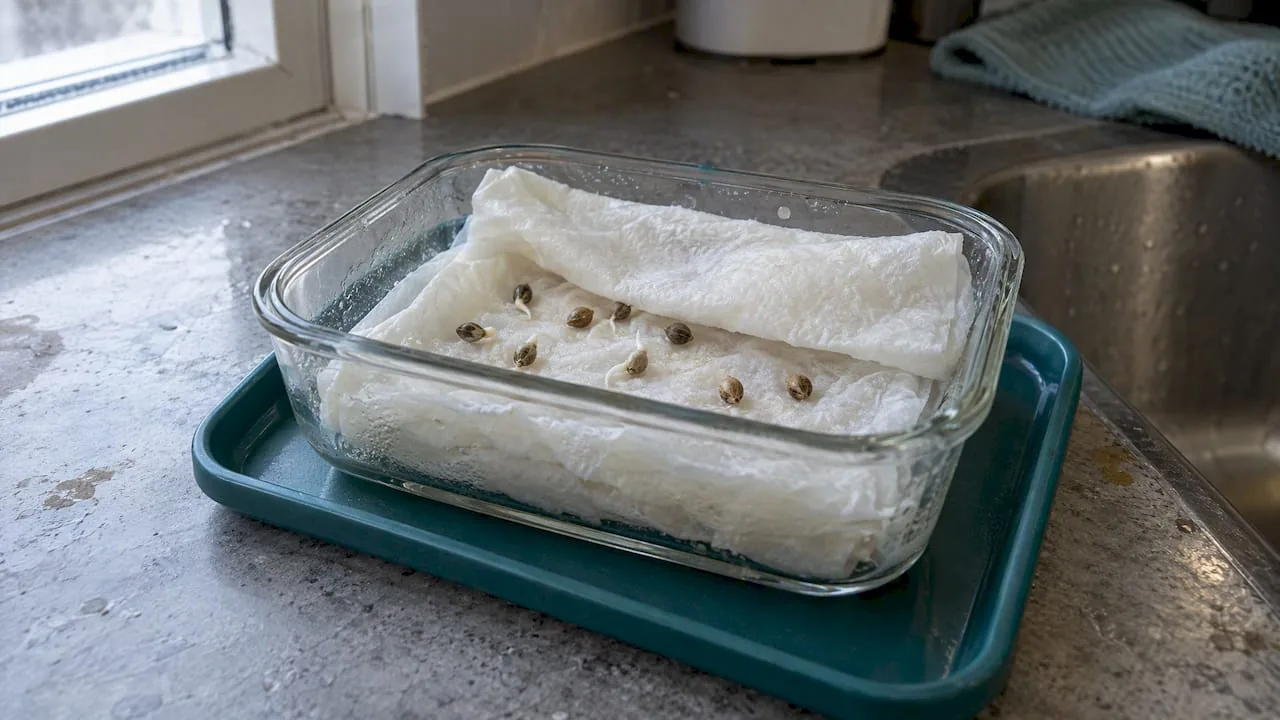
- Standard germination test: Place the seeds between two layers of damp kitchen paper, inside an airtight bag or closed container, at a temperature of between 21 and 25 °C. Check after 48 hours and record how many have produced a radicle. A rate above 90% indicates an elite batch. This method is the most reliable for home growers because it replicates real sowing conditions.
- Tetrazolium test: The tetrazolium test detects metabolic activity within 24 to 48 hours, estimating viability as a complement to the traditional germination test. The chemical reduction of tetrazolium produces a reddish colouration in the living tissues of the embryo, visible when the seed is cut open. Dead tissues stay white or yellowish. This method is especially useful when you need quick results before a large-scale sowing.
- Float test: Submerge the seeds in room-temperature water for 2 hours. Seeds that float are more likely to be unviable due to an incomplete embryo or internal damage. Those that sink tend to have greater density and a higher content of nutrient reserves. This test is a guide, not definitive.
- Seedling vigour assessment: Germinate a representative sample from the batch and measure the speed of emergence of the radicle and hypocotyl. Elite seeds produce uniform seedlings in under 72 hours. Variability in emergence times within the same batch is a sign of genetic instability or physiological damage.
- Analytical certification: The ISTA rules regulate procedures for seed analysis that include purity, counting, germination and thousand-seed weight. Asking your supplier for an ISTA certificate is the most objective way to verify the quality of a batch before buying it.
💡 Pro tip: For the homemade tetrazolium test, you can find the reagent in agricultural supply shops or soil analysis laboratories. A concentration of 0.1% to 1% is enough to get visible colouring within 24 hours at room temperature.
You can complement these tests with additional resources on viability of old seeds to understand how storage time affects the results.

How does genetic stability affect the quality of premium seeds?
Genetics is the blueprint of the building. The phenotype is the finished building. A seed can look perfect and pass the germination test, but if its genetics are unstable, the result in the grow will be unpredictable. Genetic stability ensures uniformity in phenotype, flowering times and effects, and is the differentiating factor between regular seeds and elite seeds with reproducible results.
Homozygosity, that is, the alleles of each gene being identical on both chromosomes, is the technical indicator of genetic stability in seeds. A highly homozygous batch produces plants with almost identical characteristics: the same height, the same flowering time, the same terpene and cannabinoid profile. For the grower, this means predictable planning and consistent harvests.
The genetic differences between regular seeds and elite seeds are clear:
- Phenotypic uniformity: an elite batch shows minimal variation between plants from the same batch; regular seeds can produce very different phenotypes
- Consistent flowering times: plants from the same elite batch flower within a window of 3 to 5 days of each other; wide variation points to instability
- Aroma and sensory consistency: the terpene profile remains stable between plants from the same genetically stable batch
- No spontaneous hermaphroditism: quality elite feminised seeds show hermaphroditism rates below 1% under normal growing conditions
- Predictable response to stress: plants with stable genetics respond uniformly to changes in photoperiod, temperature or nutrition
Spotting genetic signs with basic tools is possible. Germinate between 5 and 10 seeds from the same batch and observe the speed of emergence, the colour of the cotyledons and the structure of the first pair of true leaves. If you see significant variation at these early stages, the batch has low homozygosity. Minimal variation in those first weeks predicts a uniform, manageable crop.
What technologies do experts use to select cannabis seeds?
Artificial intelligence uses machine vision, X-rays and hyperspectral analysis to assess the internal integrity, viability and vigour of seeds, overcoming the limitations of traditional visual analysis. These technologies are already used in agricultural seed selection on an industrial scale and are gradually arriving in the cannabis sector.
| Technology | What it assesses | Main advantage | Limitation |
|---|---|---|---|
| Computer vision | External morphology, size, colour, symmetry | Fast, non-invasive, processes thousands of seeds per hour | It doesn’t detect internal damage or real viability |
| X-rays | Embryo integrity, internal cavities, mechanical damage | Reveals invisible defects without destroying the seed | Requires specialised and expensive equipment |
| Hyperspectral analysis | Biochemical composition, moisture content, proteins | Predicts vigour and metabolic quality without contact | Interpretation requires trained machine learning models |
| Machine learning | Correlating physical and biochemical data with real-world results | Improves predictive accuracy with every batch analysed | Needs large volumes of historical data to be reliable |
Models based on machine learning correlate physical and biochemical patterns with real results in the field, which means that selection based on measurable data significantly increases the accuracy and speed of classification. For the independent grower, this means that seed banks that invest in these technologies can guarantee batches with greater consistency and traceability.
Integrating these methods turns invisible signals into measurable data, combining biology and technology to maximise results. You do not need direct access to these technologies: what you need is to choose suppliers who use them in their batch selection and certification process.
Recommended practices when selecting and handling elite seeds
Having access to high-quality seeds doesn’t guarantee results if pre-sowing management is poor. Controlling the microclimate and substrate in the nursery has a decisive influence on plant development and stability, even when using the same genetics. Standardising humidity, temperature and substrate conditions optimises the real expression of each seed’s potential.
- Choose the right substrate: peat favours better agronomic performance in germination, biomass and leaf area in Cannabis sativa up to the V3 stage, while vermiculite improves root development. Combining both in a 70/30 ratio is a common practice among experienced growers.
- Control how you handle them: handle the seeds with nitrile gloves or fine-tipped tweezers. The natural oils on your skin and mechanical pressure can damage the shell and compromise the germination rate.
- Check traceability: ask your supplier for information on the genetic origin, the seed bank and the production batch. Elite seeds have documented traceability.
- Store them properly: a temperature between 6 and 8 °C, relative humidity below 8% and total darkness. An airtight container with silica gel is enough to preserve viability for years.
- Check the quality certificate: batches certified under ISTA or equivalent standards guarantee that the germination, purity and weight parameters have been verified by an independent laboratory.
To understand why ignoring these signs can ruin your entire harvest, read this detailed analysis of low-quality seeds and their real impact on growing.
Key points
An elite seed is defined by the combination of physical integrity, verified physiological viability and documented genetic stability: three pillars that no serious grower can ignore.
| Point | Details |
|---|---|
| Visible physical signs | Look for a dark colour, waxy sheen and intact shell as a first quality filter. |
| Viability tests | Use the germination test and the tetrazolium test to confirm real metabolic activity. |
| Genetic stability | Homozygous batches produce uniform plants with predictable flowering times and phenotypes. |
| Selection technology | Suppliers that use AI, X-rays or hyperspectral analysis offer greater precision in their batches. |
| Nursery handling | Controlled substrate, temperature and humidity are as important as the genetic quality of the seed. |
What years of working with seeds have taught me
I have seen growers invest in expensive genetics and get mediocre results because they underestimated pre-sowing management. And I have seen the opposite: growers on a tight budget who, thanks to careful selection and well-controlled nursery conditions, got harvests that exceeded every expectation.
The most common mistake I see is treating seed selection as a one-off step. The reality is that it’s a three-layer process: visual, physiological and genetic. Skipping any of the three is gambling blind. Visual inspection gives you 30% of the information. Germination and tetrazolium tests give you another 40%. Documented genetics and batch traceability complete the picture.
What has surprised me most in recent years is the speed at which AI and hyperspectral analysis technologies are changing the standards of the sector. Seed banks that used to depend exclusively on human judgement can now classify entire batches with a precision that no trained eye can match. For the grower, this means the gap between good seeds and elite seeds is getting bigger, not smaller. Choosing your supplier well is more important today than ever.
My practical recommendation: before buying any batch, ask for information about the seed bank’s selection process. If they can’t explain how they verify the viability and genetic stability of their seeds, look for another supplier.
Elite seeds available at Bluedoggenetics
At Bluedoggenetics you’ll find a curated selection of premium feminised and autoflowering seeds chosen precisely because they meet the criteria you have just learned: physical integrity, verified viability and stable genetics. Every variety in our catalogue has gone through a rigorous selection process so that you don’t have to guess. From growers taking their first steps to experts looking for consistency in large batches, our seed shop offers options with documented traceability, discreet shipping and personal service. If you want reproducible results in your next grow, start with the right genetics.
For growers looking for a benchmark variety with high phenotypic uniformity and consistent flowering times, we recommend exploring the options available in our selection of seed banks with worldwide delivery.
FAQ
What is an elite cannabis seed?
An elite seed is one that combines high viability, proven physiological vigour and documented genetic stability, producing uniform plants with predictable results when grown.
How can you tell if a cannabis seed is good quality without germinating it?
Inspect the colour (dark brown or mottled grey), the waxy sheen of the shell and the firmness to the touch. A green, soft or dull seed is very likely to be non-viable.
What is the difference between the germination test and the tetrazolium test?
The germination test confirms whether the seed produces a viable seedling in real conditions, while the tetrazolium test detects metabolic activity within 24 to 48 hours without needing to germinate, making it useful as a quick diagnostic before sowing.
Why is genetic stability key in premium seeds?
Genetic stability ensures that all the plants in the batch express the same phenotype, flowering time and cannabinoid profile, which lets you plan your grow precisely and get consistent harvests.
Which substrate is best for maximising the potential of elite seeds?
Peat favours better germination, biomass and leaf area in Cannabis sativa up to the V3 stage, while vermiculite improves root development. Combining both optimises the expression of the seed’s genetic potential.