

Normally an autoflowering plant stays between 60 cm and 1 m, and only shoots above that when the genetics, the light or the container allow it. The height of autoflowering plants varies from one plant to another, even within the same pack. Below we explain what determines it and how to keep it in check.
In short:
- Genetics sets the height potential; check the variety’s profile and choose a compact habit if your grow tent has little space.
- Long stems with widely spaced internodes usually indicate a lack of light; spread the lighting across the whole canopy before increasing the power.
- Sow directly in the final pot, because transplanting can cause root stress and slow development during a short cycle.
- Apply low-stress training while the stems are still flexible; bending them and securing them horizontally avoids cuts that require a long recovery.
- High temperatures, poor ventilation and excess nitrogen early on lengthen the internodes; keep conditions stable and feed in moderation.
How tall does an autoflowering plant get indoors and outdoors?
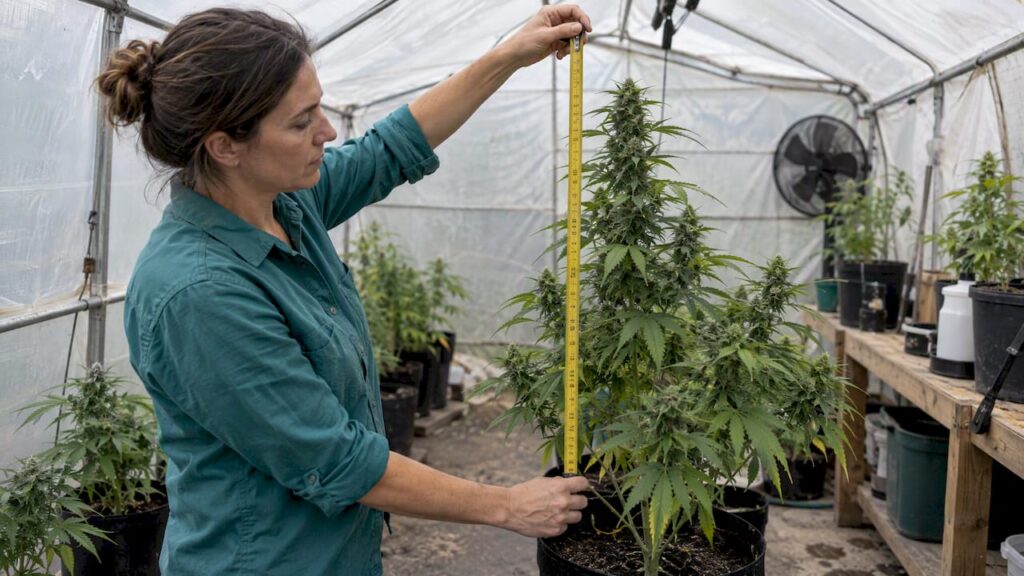
The most common range runs from about 60 cm to 1 m, and that is the figure worth keeping in mind when planning your space. Some plants stay at 40 cm and others, with good conditions and generous genetics, exceed a metre. Beyond that, we’re talking about exceptions, not what you should expect.
The short cycle is what sets the ceiling. An autoflowering plant does not wait for you to change the photoperiod: it goes into flower by age, so it has only a few weeks to stretch before vegetative growth slows down. That is why you will almost never see the size of an unpruned photoperiod plant.
The practical differences between each type of growing are these:
- Indoor in pots: the container and the distance to the light set the limit. It’s where you have the most control over height, and also where a light that’s too close or too far away makes it run wild.
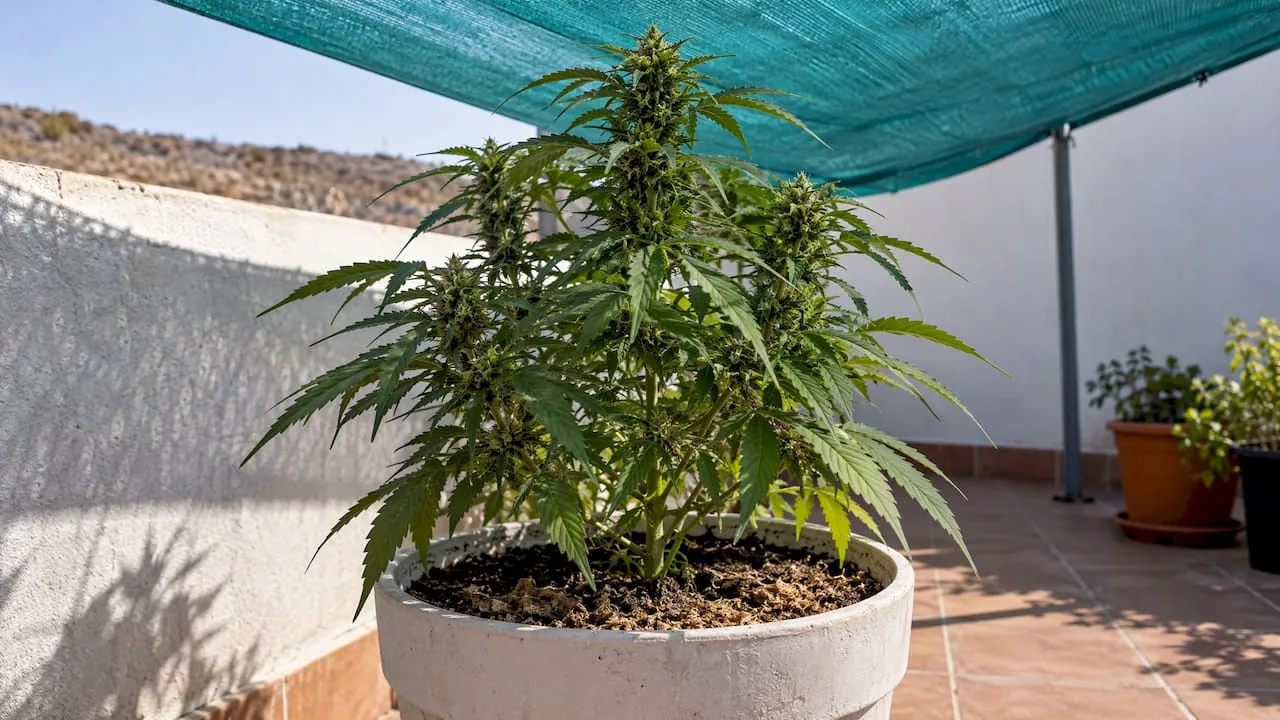
- Outdoors in a large pot: more light, more space and changing temperatures. It is common for these plants to gain centimetres compared with indoors.
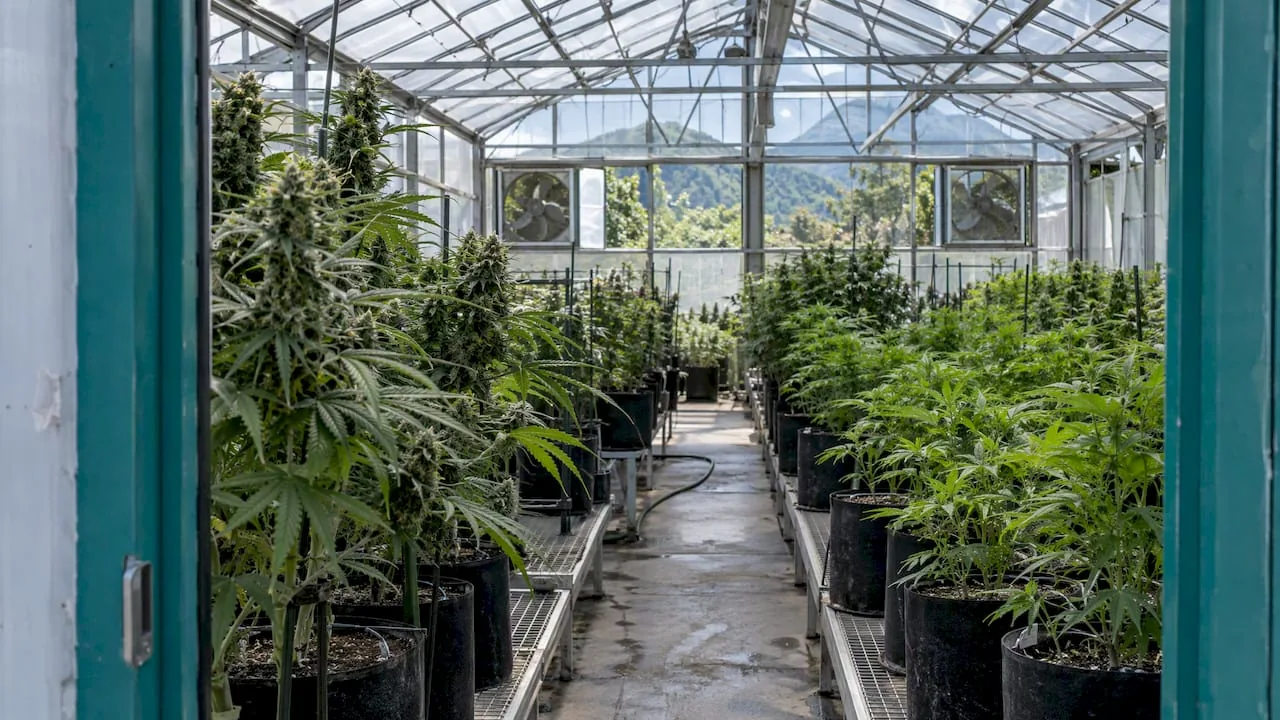
- Outdoors in soil: the roots spread without limit and access to nutrients is greater, so this is where you’ll see the tallest plants.
- Outliers: there can be noticeable differences between plants from the same batch, so don’t be alarmed if one stands out from its sisters.
If you are working with limited space, plan for the upper end of the range and leave a margin between the canopy and the lamp. It is easier to trim your expectations than to move a grow tent mid-cycle. If you are just starting out, our guide to the advantages of autoflowering for beginners will help you picture the whole cycle.
What role does genetics play in final height?
Genetics sets the ceiling, and everything else decides how much of that ceiling you actually reach. Think of it as the blueprint of a building: it tells you how many floors it can have, but not how much it will cost you to build it well. A compact variety won’t turn into a giant no matter how much you pamper it, and a tall one will stretch if you give it light and space.
When choosing seeds, this is what you should look at:
- The variety description: a reputable seed bank usually states whether the plant is compact, medium or tall. If this information is missing, be wary and ask.
- The lineage: crosses with ruderalis bring the autoflowering trait and, generally, a smaller size. Those that incorporate sativa genetics tend to grow taller.
- Variation between plants: in a single pack you will see different phenotypes. Some will be shorter and denser, others more stretched. This is normal and does not indicate a defective seed.
- The space available: if your cupboard has a low ceiling, choose varieties with a controlled habit from the start rather than correcting it with techniques later.
A grower’s tip: when you only have a small grow tent, sow one more seed than you need. That way you can keep the plants that best fit your space and discard the one that grows too tall.
If you’re interested in understanding what sets one set of genetics apart from another, you’ll find more detail in our article on the key differences between exclusive autoflowering varieties. The golden rule is simple: the height you expect should come from the variety’s description, not from what you saw in a friend’s grow with different genetics.
Which environmental factors make it stretch more than it should?
This is where the game is won or lost. With the same seed, a poorly adjusted environment can give you a thin, tall, floppy plant, and a well-managed one a compact plant loaded with flower. We go over what matters most.
Light: distribution before power
The classic mistake is thinking that more intensity at one point means a better result. What matters is that the light reaches the whole canopy evenly. According to a study on light, density and cannabis yield, a more even distribution increases canopy uniformity and can improve terpene concentration and final quality.
Uneven lighting causes uneven stretching and can reduce quality; spreading the light well over the canopy matters more for height than concentrating it in one spot.
Source: University of Hohenheim
In practice, a plant that reaches for the light because it receives it weakly or from only one side will stretch towards it. If you see long stems with lots of space between nodes, there is almost always not enough light in that area or the lamp is too far away.
The spectrum matters too. An experiment with different light spectra indicates that the spectrum and intensity influence the production of secondary metabolites and that light variation affects efficacy at different points of the canopy. You don’t need to become an expert in optics: it’s enough for your light to cover the whole space without dark zones.
Planting density
The more plants you put in the same space, the more they compete for light and the more they tend to stretch upwards. Agronomic research indicates that, in a study on standardised production systems, planting density and the length of the vegetative phase influence yield per area, and that increasing it can shift more biomass towards the top of the crop.
Translated to your grow tent: if you want low, spread-out plants, don’t pile them together. Leave air between them and give each one its own circle of light.
Pot and transplanting
The container determines how much space the roots have and, therefore, how much the aerial part can grow. A small pot limits the plant; a large one gives it freedom to grow upwards.

Here is a rule we follow to the letter: sow directly into the final container. Autoflowering plants have such a short cycle that any root stress from transplanting can slow their development and reduce both height and yield. If you have to transplant, do it with great care, without breaking the root ball.
Temperature, humidity and substrate
Very high temperatures and poor ventilation lengthen the internodes, as does excess nitrogen during the first weeks. Keep the environment cool and stable and the substrate airy, with good drainage, and the plant will respond with compact, healthy growth.
To sum up what to watch for:
- Light spread evenly across the whole canopy.
- Plants with enough space between them.
- Final pot from day one.
- Stable temperature and good ventilation.
- Airy substrate, fertilised in moderation during early growth.
Why train with LST and avoid high-stress pruning?
LST (low stress training) involves bending and tying down the stems to spread the height out horizontally, without cutting anything. It is the technique that best suits a plant that has no time to recover from a wound.
High-stress cuts, such as topping or fimming, tend to be counterproductive on autos. A photoperiod plant can recover over weeks of vegetative growth; an autoflowering one cannot. If you cut the apex, the plant spends days recovering and may end up shorter and with a smaller harvest instead of more branched.
To apply LST safely, follow these steps:
- Start early: when the plant has several nodes and the stem is still flexible.
- Tie a soft string to the main stem: do it below the first leaf, without pulling tight, so you don’t strangle it.
- Gently bend the tip to one side: until it is almost horizontal, and fix the string to the edge of the pot with a hook or a staple.
- Adjust every few days: as the side shoots grow upwards, bend them down again to keep an even canopy.
- Loosen the ties with judgement: once the plant is fully in flower and the stems have hardened, remove the ties that are no longer needed.
Professional tip: if a stem cracks when you bend it, stop, secure it with a soft tape and let it rest before trying again.
If you want to trim something, keep it minimal: remove only the leaves that completely cover a bud site or the lowest ones that never receive light. The fewer the wounds, the sooner the plant focuses on flowering.
What checklist do I follow to control height without losing yield?
Here is an order of priorities. Each point builds on what you saw above.
- Sow directly into the final pot. It’s the golden rule for autos and avoids transplant shock. Choose the volume according to your goal: smaller to control size, larger if you’re after maximum yield and have plenty of height.
- Place the light at the right distance. If the stems stretch, it’s a clear sign that there isn’t enough light or that the light is too far away. Move it closer carefully, making sure the leaves don’t burn or curl.
- Spread the light. Avoid shaded areas, use reflective surfaces on the walls and rotate the pot if it receives stronger light on one side.
- Don’t overcrowd the plants. Leave enough space between them so that none has to reach for its neighbour’s light.
- Control the temperature. An environment that is too warm lengthens the internodes. Ventilate and, if necessary, lower it by a few degrees during the light period.
- Feed sparingly at first. Too much nitrogen in the first weeks encourages stretching.
- Apply LST while the plant is still young and the stems are flexible. It’s your best tool for gaining width instead of height.
- Water at a steady rhythm. Poor watering habits worsen the differences in size between plants from the same batch.
The signs of stretching are easy to recognise: long, thin stems, lots of space between nodes and paler leaves. If you see them, fix the light and ventilation first, then adjust the LST.
Pro tip: note down the height of each plant every week and its distance from the light. Over time you will have your own figures, far more useful than any generic reference.
To take the rest of your grow to the next level, our guide on how to get the maximum yield from your autoflowering plants and the general cannabis growing guide on our blog will help.
What to bear in mind when growing autos
The height of an autoflowering plant is won with a few well-made decisions at the start, not with desperate corrections halfway through the cycle. A final pot, well-distributed light and early LST solve most stretching problems. The rest is detail.
An obsession with light power can mean the distribution of the light gets overlooked. A stronger lamp does not fix an uneven canopy. And another common mistake is cutting on reflex: with autos, the scissors are almost always unnecessary.
Accept the margin of error too. Two seeds from the same pack can differ quite a lot, and that is not your fault or the fault of the genetics. What is in your hands is recording every batch: weekly height, distance to the light, temperature. With that data, your next grow will be more precise and less uncertain.
Which autoflowering seeds do we choose for a limited space?
If you’re already clear on your space, the next step is to choose a strain that fits it. In our autoflowering category you’ll find a curated selection of varieties from recognised seed banks, designed both for those just starting out and for those who have already mastered LST.
- Check each variety’s page and note the stated growth habit before deciding.
- If you’re looking for short cycles and manageable plants, take a look at our fast-flowering seeds.
- If budget matters, take a look at our budget autoflowering seeds.
- To decide between seed types, there is a guide to feminised versus regular.
We ship discreetly and you can track your order, so all that’s left is to choose and plan your space.
Frequently Asked Questions
How many grams does an autoflowering plant yield?
It depends on the genetics, the size of the pot and how you manage the light, so there is no single figure. With a final pot, good light distribution and LST, the plant makes better use of its short cycle. Our guide on how to get the maximum yield explains how to improve it.
Which is better, autoflowering or feminised?
Autos are quicker and more compact, and feminised seeds give you more control over size because you can extend the vegetative phase. If you want simplicity and short cycles, choose autos; if you want bigger plants and have the space, feminised ones are a better fit. You can compare them in more detail in our guide to feminised versus regular seeds.
How long does an autoflowering plant take to grow?
The full cycle is short, and the plant starts flowering by age, not by photoperiod. The exact duration depends on the variety, so check each seed’s product page. If you are after quicker harvests, take a look at our fast flowering seeds.
How many hours of light does an autoflowering plant need indoors?
Autos don’t depend on the photoperiod to flower, so they tolerate long light cycles during almost their whole development. What matters is that the light is even and that the lamp is at the right distance to avoid stretching.
How do I stop my autoflowering plant stretching too much?
Sow directly into the final pot, spread the light well and apply LST from the second or third week. Avoid topping and keep an eye on the temperature. If long, thin stems appear, carefully move the lamp closer.