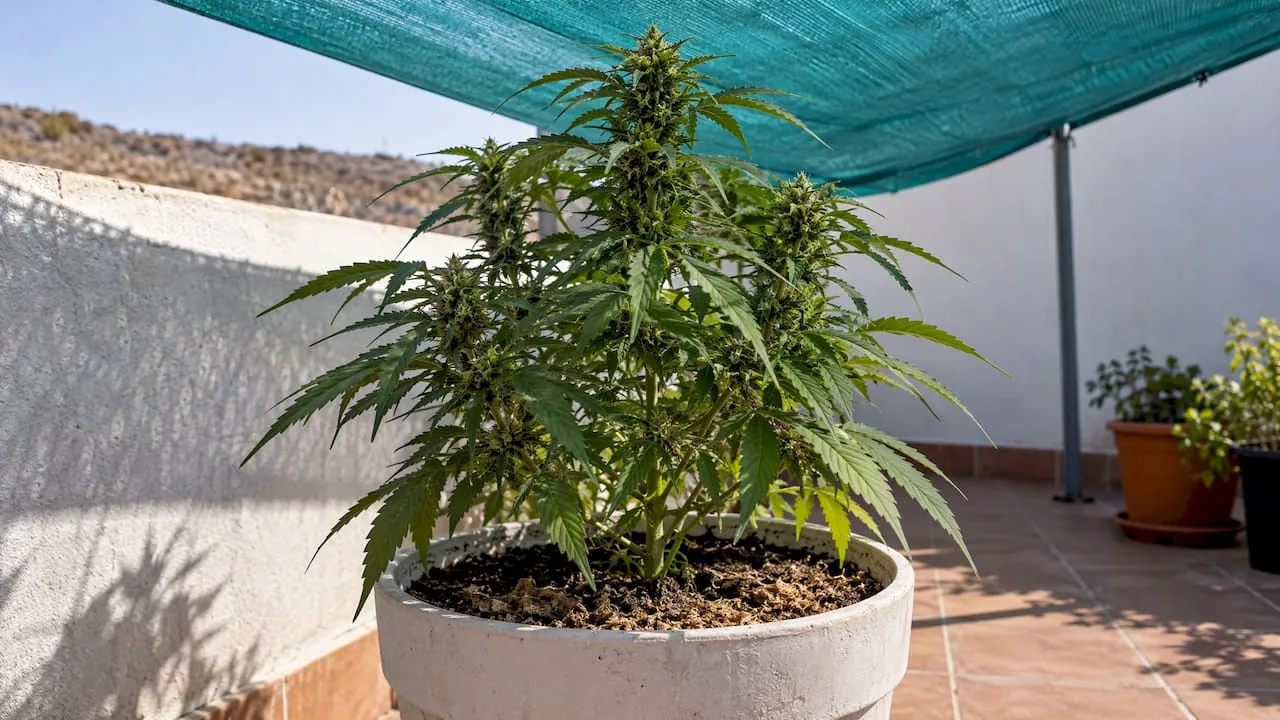



Fast flowering seeds are photoperiod plants selected to complete their cycle in fewer weeks than a standard variety, without losing control of the photoperiod. They are mainly useful for two things: fitting in one more harvest before the cold or autumn damp arrives, and squeezing more rotations a year indoors. If you want speed without giving up classic photoperiod genetics, this is your category; at Bluedoggenetics you will find varieties designed for exactly that.
In short:
- Fast-flowering seeds require precise control of the light cycle and do not give up their dependence on the photoperiod.
- It is essential to check the exact weeks of flowering on the data sheet, not just the commercial name, to avoid surprises.
- Speed in flowering can reduce recovery time and the amount of bulking up, limiting potential yields.
- Genetic selection is based on specific loci, such as Autoflower1 and Early1, which explain the acceleration in the flowering cycle.
- Careful handling and rigorous trichome monitoring from week 5 optimise the harvest in Fast varieties.
The best fast-flowering varieties and their weeks of flowering
Choosing well means comparing real weeks of flowering, not just the commercial name. The “fast” varieties group together very different genetics, so it’s worth looking at each profile separately before deciding which one suits your space and your calendar.
Here is a selection of common profiles on the fast version seed market, with their approximate flowering ranges and the environment where they perform best. Timings vary according to phenotype, so treat them as a starting point and not as a firm promise.
- Compact fast indicas (7 weeks): short, dense plants, ideal for small grow tents or stealth outdoor growing; they usually tolerate LST well without losing recovery time.
- Balanced short-flowering hybrids (7 to 8 weeks): a good middle ground between yield and speed, suitable both for indoor growing with light SCROG and for pots on a balcony.
- Fast-finishing sativas (8 to 9 weeks): they keep a taller structure and intense aroma but shorten their natural cycle thanks to genetic selection aimed at finishing earlier.
- Fast lines with a resinous profile (7 weeks): they prioritise trichome production in a short cycle, with a good response to concentrated flowering nutrients.
- Fast varieties designed for outdoor growing in temperate climates: they finish flowering before the first autumn rains, reducing the risk of mould on the buds.
- Fast-flowering hybrids aimed at yield per square metre: they demand a little more nutrient management but make up for it with bud density in a short time.
If you’re coming from growing autoflowering plants and want to make the jump to photoperiod ones without stretching your schedule too much, it’s worth first reviewing the practical differences between the two formats in this comparison between autoflowering and fast photoperiod varieties, because light management and the vegetative stage change quite a lot from one to the other.
That is why, before buying, it’s worth checking the flowering weeks stated on the seed bank’s data sheet rather than relying only on the name of the line. The Bluedoggenetics fast photoperiod seeds catalogue details these ranges variety by variety, so it’s a good starting point for comparing before you decide.
💡 Pro tip: note the flowering range given on the data sheet and subtract one week from the minimum: that way you get a real margin to check the trichomes without rushing the harvest.
What fast-flowering seeds are compared with autoflowering ones
A fast-flowering seed is still photoperiodic: it needs the switch to a 12/12 light cycle to enter flowering, just like any standard variety. The difference is that its genetics have been selected to flower and mature in fewer weeks once it receives that light signal. An autoflowering plant, by contrast, enters flowering by age, without depending on the photoperiod, and that is the point that confuses new buyers the most.
It is also worth distinguishing between when flowering starts and how long it lasts. A Fast variety does not necessarily shorten the time it takes to show its sex after the flip, but rather the total duration of the flowering process until maturity, something that Grow Weed Easy explains well when comparing both formats.
The genetic reason behind this speed has a name of its own: the Autoflower1 and Early1 loci, identified in studies on the phenology of Cannabis sativa. Autoflower1 is linked to the insensitivity to photoperiod typical of autoflowering plants, while Early1 can shorten flowering by two to four weeks in some photoperiod lines, according to the research that maps both loci. That basis explains why some Fast varieties inherit speed without losing their dependence on the photoperiod.

Advantages and limitations of growing Fast varieties
Speed isn’t free. It brings real benefits, but it also demands more attention at specific moments of the grow.
Among the clearest advantages are these:
- They let you fit in an extra rotation per year indoors, making better use of your growing space.
- They reduce exposure to adverse weather outdoors, finishing before the autumn damp arrives.
- They tolerate training techniques such as LST or topping without losing as much recovery time as an autoflowering plant.
- They make it easier to plan staggered harvests if you grow several varieties at once.
But they also have their awkward side. The harvest window is narrower than with standard varieties, so a slip of two or three days can mean overripe or immature buds. Also, if the vegetative stage is cut too short to save time, the bulking (bud fattening) can fall short, sacrificing some final yield in exchange for speed.
💡 Pro tip: mark the start of week 5 of flowering on the calendar for 7 to 8 week varieties and begin checking trichomes every day from then on with a 60 to 100x loupe; missing that window is the costliest mistake with fast genetics.

How to choose the right fast variety for your grow
Before buying, ask for and compare concrete data instead of trusting the marketing on the product page. These are the points that make the difference between a good purchase and a disappointment:
- Exact weeks of flowering, not just “fast” or “ultra fast”: ask for the numerical range and compare it between seed banks.
- Phenotypic uniformity of the batch: ask whether the line is stabilised or whether it may vary a lot from one seed to another.
- Expected yield per plant or per square metre, adjusted to the space and light you have available.
- Declared genetic stability (whether it is an F1, an Early line or an FF selection): the more stable, the fewer surprises in flowering.
- Compatibility with your outdoor climate, if you grow outside: confirm that the cycle finishes before your first likely frost.
A common warning sign: listings that use «fast» and «auto» as synonyms in the same description. As this guide to fast flowering seeds rightly points out, commercial terminology mixes the two concepts far too often, and it is up to the buyer to clear up any doubt before paying. If you also want to understand why two seeds of the same variety can behave differently, it helps to review the difference between genotype and phenotype in cannabis, and if you would like a broader checklist on photoperiod plants in general, this guide to choosing feminised photoperiod seeds complements these criteria well.
Timeline and techniques to get the most out of fast flowering
Planning the vegetative stage well is what determines whether your Fast variety truly delivers or falls short on buds. The key is deciding when to flip to 12/12 based on the size you want to reach, not on a fixed number of weeks.
With fast genetics, many growers extend the vegetative stage a few days longer than usual precisely to make up for the short flowering and give the plant more structure before it starts to stretch. If you grow indoors and control the light, you can afford that margin; outdoors, nature decides when the flip happens, so there is less room for manoeuvre.
When it comes to training techniques, LST (low-stress training) works well in almost any early stage without cutting into flowering time. Topping, on the other hand, is best done before the flip or very early in the photoperiod change, because a Fast variety has fewer weeks to recover from the stress of the cut. If you’re coming from your first weeks of growing and still aren’t sure how to structure this phase, this guide to the first weeks of growing helps you build that foundation before you get into fast genetics.
A rough timetable for a Fast variety of 7 to 8 weeks indoors would be: four to six weeks of vegetative growth, flip to 12/12, and from there count the weeks of flowering given on the product sheet. Outdoors, the count works the other way round: you identify the likely date of the first frost or the autumn rains and subtract your variety’s flowering weeks to find out when it should start flowering naturally, something that DSS Genetics covers well in its guide to fast-flowering varieties.
Finishing flowering before the autumn damp arrives significantly reduces the risk of mould and cold-related losses in temperate climates. That is why so many outdoor growers prioritise fast-finishing lines.
Faster-flowering varieties usually cut several weeks compared with a standard photoperiod plant, which means more possible cycles per year and less exposure to bad weather, according to the DSS Genetics guide.
When it comes to watering and nutrients, Fast varieties need a quicker transition to flowering formulas: you don’t have the margin of a 10- or 12-week variety to correct feeding mistakes on the go. Keep an eye on the pH of your irrigation water and reduce nitrogen as soon as you see the first pistils, because excess nitrogen in early flowering penalises a fast genetic more than a standard one.
💡 Pro tip: keep a daily trichome log from week 5 onwards for varieties of 7 to 8 weeks; noting the change from translucent to milky gives you the most reliable data for deciding the exact day to harvest.
Pests and diseases that most affect fast varieties
The short cycle of Fast varieties doesn’t make them immune to pests, but it does change the management strategy. With fewer weeks of margin, any red spider mite or whitefly infestation that is spotted late can jeopardise the only harvest you had planned for that rotation.
Indoors, check the undersides of the leaves every two or three days from the vegetative stage, because Fast varieties start flowering earlier and that reduces the time available for preventive treatments without risking residues on the buds.
Outdoors, botrytis (grey mould) is the real threat in the final weeks, especially if your Fast variety is designed precisely to avoid the autumn damp. Paradoxically, growers who choose Fast for that very reason sometimes relax their vigilance just when they need it most, with the dense buds of the last two weeks. Airing the canopy with light defoliation and avoiding foliar watering in late flowering reduces that risk considerably.
Advanced techniques to get more out of fast genetics
With fewer weeks of flowering, every technique you apply has to deliver results faster. SCROG (screen of green growing) works especially well with fast varieties of compact structure, because it lets you even out the light canopy without needing extra weeks of vegetative growth to fill the space.
Selective defoliation in mid-flowering, removing only the large leaves that cover lower buds, helps the plant distribute its energy better in the short time it has. Doing it too late, in the last two weeks, is usually counterproductive because the plant has no room to recover.
Using flowering supplements with phosphorus and potassium from the third week of 12/12 can help make up for the shorter bulking we mentioned earlier, although it is best to introduce them gradually so as not to overload the plant. And if you work with SCROG or topping, remember that with Fast genetics the recovery margin after stress is shorter, so any structural intervention should be finished before the third week of flowering.
Common mistakes when growing fast-flowering seeds
The most common mistake is confusing “fast” with “autoflowering” and handling the plant as if it didn’t depend on the photoperiod. If you give it an irregular light cycle thinking it makes no difference, the plant won’t enter flowering when you expect, and you lose all the speed advantage you were after.
The second mistake is not adjusting the vegetative stage: keeping a Fast in vegetative for the same length of time you would use for a variety with 10 weeks of flowering usually unbalances the final size of the plant relative to its short cycle. It is also common to harvest late out of convenience, waiting “one more week” when the trichomes were already ready, which penalises a Fast more because the optimal window lasts fewer days than in a standard variety.
Finally, many new growers don’t ask for exact flowering weeks when buying and go only by the commercial name, which leads to scheduling surprises just when there’s the least room to improvise.
Why this guide is backed by real growing experience
Behind every recommendation in this guide there is more than theory: Bluedoggenetics selects its Fast catalogue based on verified technical data sheets and the experience gained from working with fast photoperiod genetics variety by variety.
This is what underpins that trust:
- Curated catalogue with verified flowering data, not just generic commercial labels.
- Discreet shipping and order tracking with every purchase, plus personal support if any questions come up before or after you buy.
- Quality guarantees designed both for growers just starting out and for those who already have several Fast harvests behind them.
- If you have a dispute as a consumer, the European Commission offers an consumer dispute resolution portal that you can use for online purchases within the European Union.
If you want to keep building your knowledge before buying, the Bluedoggenetics blog has complementary guides on breeding and genetic selection that go deeper into why some lines flower earlier than others.
What nobody tells you about fast flowering
The most repeated opinion about Fast varieties is that they are “the lazy version” of photoperiod plants, a shortcut for those who don’t want to wait. That view falls short. What a fast genetic really demands is more precision, not less effort: less margin for error in the schedule, more frequent trichome checks and nutrient management that leaves no room for improvisation in the final week.
What tends to be overrated is the idea that “faster” automatically means “easier”. It doesn’t. What is undervalued is the strategic value of finishing earlier: for outdoor growers in temperate climates, that difference of two or three weeks can be the line between a complete harvest and one lost to autumn mould.
If I had to prioritise a single piece of advice from everything above, it would be this: don’t choose a Fast variety by its name, choose it by the exact range of flowering weeks shown on its product page, and plan your calendar backwards from there. Everything else (techniques, nutrients, training) can be adjusted afterwards.
Our final recommendation for getting started with fast flowering
If you already know you want to try Fast genetics, there’s no need to keep comparing catalogues forever. At Bluedoggenetics you’ll find fast photoperiod varieties with clear data sheets on flowering weeks, something many sellers deliberately leave vague so they don’t commit to a number.
For anyone looking to combine speed with an intense flavour profile without giving up sativa structure, a fast line finishing in 8 to 9 weeks is usually the safest starting point. And if your priority is making the most of indoor space with several rotations a year, a compact 7-week indica will give you more predictable results with less handling.
You can browse the available options directly in the Bluedoggenetics fast photoperiod seed shop, where each variety includes its estimated flowering range. All orders arrive with discreet shipping and tracking, and if you already know what you need, you can complete your order directly from the basket with no fuss.
Sources
- Identification and mapping of major-effect flowering time loci Autoflower1 and Early1 in Cannabis sativa L.
- What’s the Difference between “Fast” and “Autoflower” Cannabis Strains? | Grow Weed Easy
- Fastest Flowering Cannabis Strains: Quick Harvest Guide | DSS Genetics
- Fast-Flowering Cannabis Seeds Explained (Not Autoflowers!)
- Online dispute resolution | European Commission