

For hot climates, the winning move is to choose sativa, landrace or autoflowering genetics with proven heat tolerance, and combine them with partial shade, morning watering and pots that won’t cook the roots. Mulching and using fabric instead of black plastic make the difference between a plant that survives August and one that stalls. In the Bluedoggenetics catalogue you’ll find varieties already selected for this kind of demand.
In short:
- In hot climates, landrace and heat-resistant autoflowering varieties are the most suitable for reducing risks and improving plant survival.
- Early watering, partial shade, fabric pots and mulching are key measures to avoid heat stress and protect the roots during the summer.
- Choosing genetics with deep roots and an airy structure, together with short flowering cycles, helps reduce exposure to heat peaks and supports yield.
- Nutrient management, lowering the EC on extreme days and adjusting feeding, prevents burn and keeps the plant healthy in high temperatures.
- It is advisable to plan the sowing of short-cycle autoflowering plants so that flowering does not coincide with the hottest weeks of summer.
Best seed varieties for warm climates: practical recommendations
If you grow in an area where the thermometer nudges 35 ºC in the height of summer, the genetics you choose matter as much as your daily care. Not all cannabis plants react the same way to dry heat, and that is the key to not losing yield between June and August.
Varieties with landrace ancestry (originating from tropical or desert areas such as parts of Mexico, India or North Africa) usually have generations of natural adaptation to extreme temperatures. Their roots tend to be deeper, which allows them to seek out moisture lower down when the surface of the substrate dries out quickly. Modern hybrids with a sativa base inherit some of that resistance, along with a more airy bud structure that reduces the risk of mould when the relative humidity rises at night.
Autoflowering varieties come into play for another reason: they do not depend on the photoperiod, so you can adjust the sowing date so that the most delicate flowering phase does not coincide with the harshest heatwave of the year, something we explore in more detail further on.
When choosing, bear these traits in mind:
- Deep root system: better tolerance of occasional drought and less stress if you are a day late with watering.
- Airy bud structure: lower risk of fungus with high night-time humidity.
- Short flowering cycles (especially in autoflowering plants): less exposure to the hottest weeks.
- Documented genetic heat resistance, present in many genetics suited to hot, dry climates.
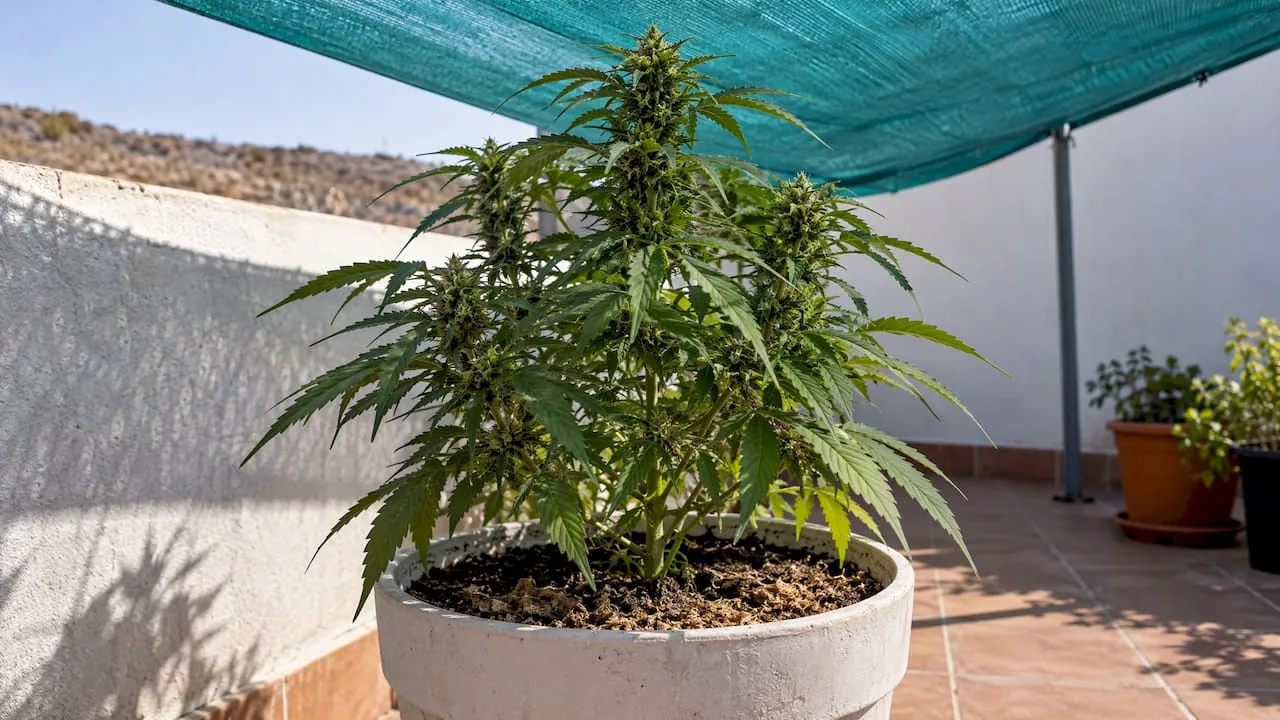
If you grow in pots on a terrace that gets direct sun all day, prioritise short-cycle autoflowering plants with a compact structure: they suffer less when the substrate heats up at the sides of the container. If you grow in the ground with good soil depth, a long-flowering sativa can make better use of that natural moisture reserve. Bluedoggenetics selects its varieties with precisely this in mind, and it’s worth checking the page for each feminised and autoflowering seed before deciding, because heat resistance isn’t a generic trait but something that varies depending on the lineage.
Essential care on hot days: watering, shade and root protection
Water management and shade matter more than genetics during heat peaks. A well-chosen plant that is poorly watered suffers just as much as a mediocre variety.
- Water early, never at midday. Cold water on hot substrate at midday causes a thermal shock that stresses the roots, and a good part of it evaporates before reaching them. Watering at dawn means the plant has water available throughout the day; if the heat is extreme, a second light watering at dusk helps it recover turgor.
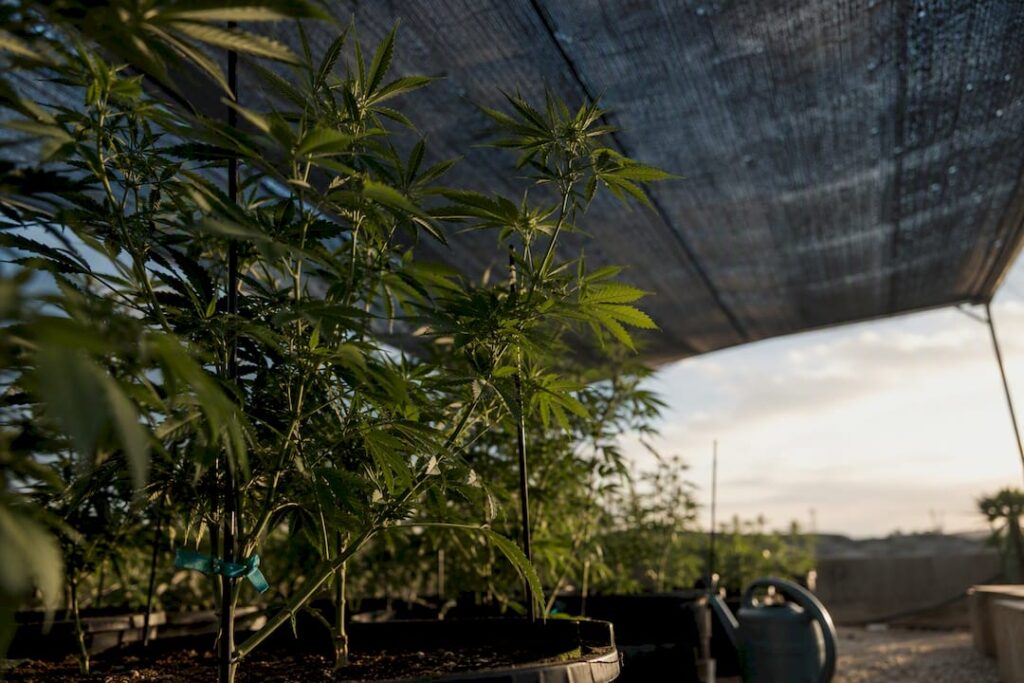
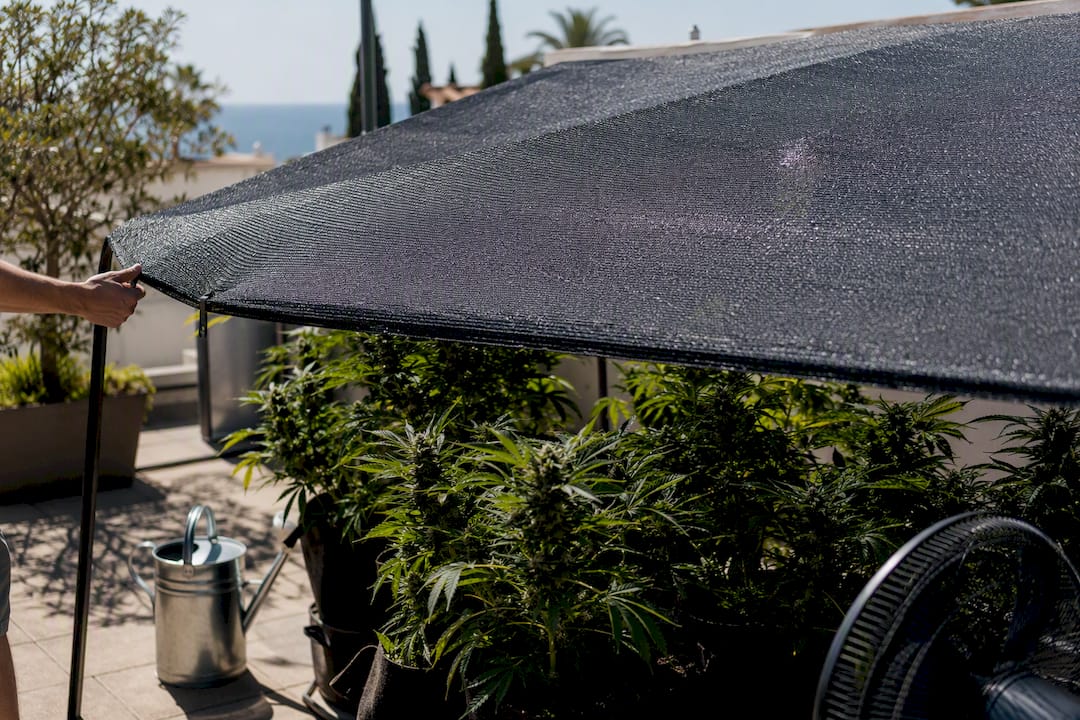
- Put up 30-40 % shade netting during the middle hours of the day. At that percentage the plant keeps photosynthesising instead of closing its stomata to protect itself, which is what happens when temperatures exceed 32-35 ºC without any protection.
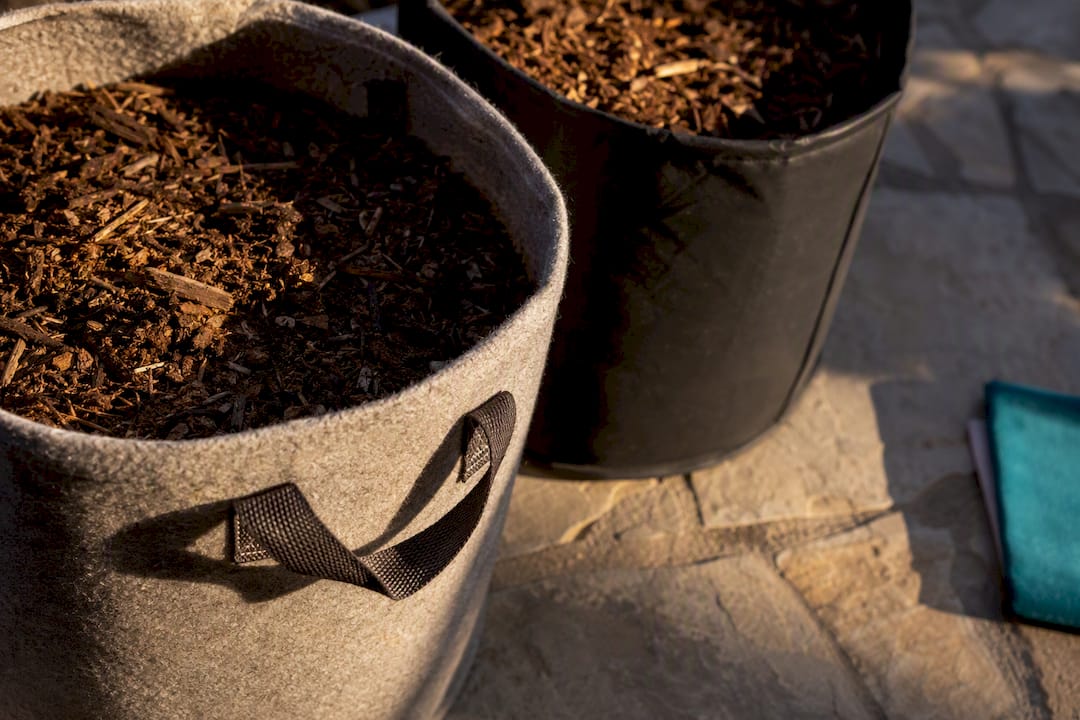
- Choose light-coloured or fabric pots instead of black plastic. Black plastic absorbs heat and passes it directly to the roots; a fabric pot breathes and dissipates that temperature better.
- Raise the containers on pallets, bricks or supports. That cushion of air between the base of the pot and the hot ground noticeably reduces heat transfer to the roots, especially on concrete terraces or rooftops.
- Apply a layer of mulch (straw, shredded bark, even organic cardboard) over the substrate. It retains moisture and acts as insulation against direct sun.
💡 Pro tip: put your finger or a probe thermometer about 5 cm deep into the substrate at midday. If the substrate feels clearly warmer than the surrounding air, it’s time to shade or water, not to wait for the plant to show drooping leaves.
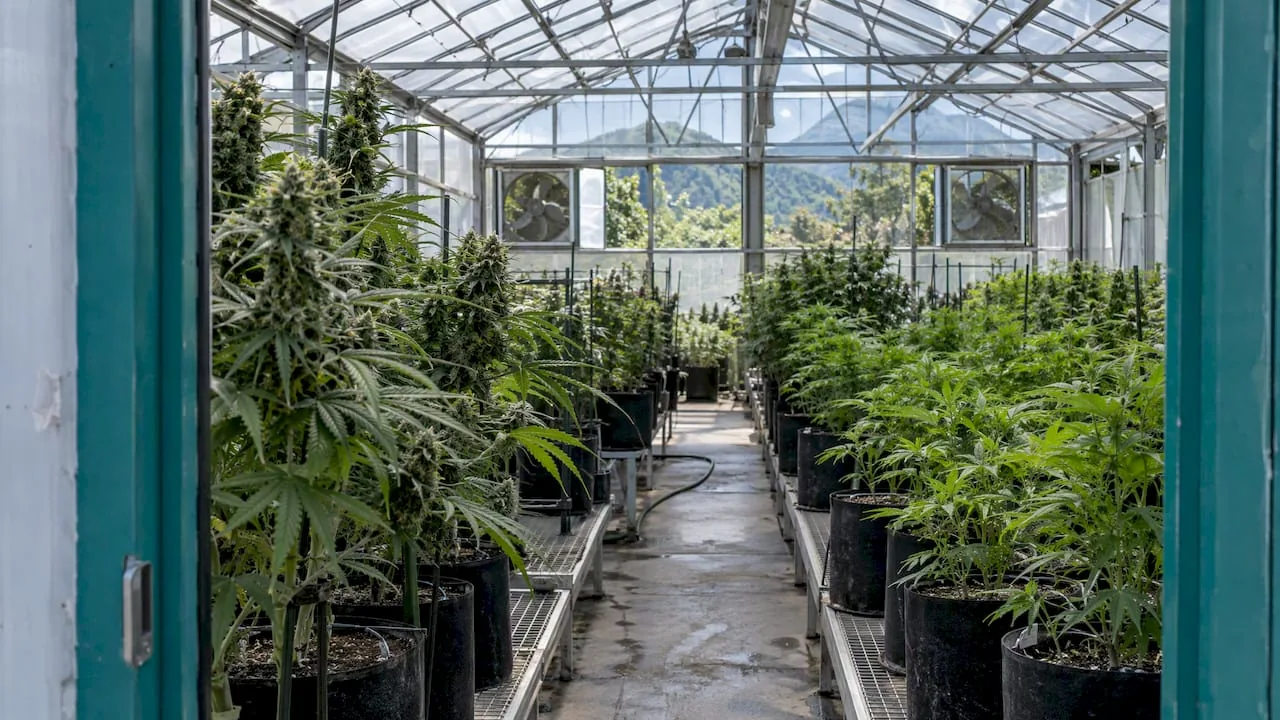
When a real heatwave arrives, with temperatures several degrees above normal, the usual measures may not be enough. On those extreme days it is worth raising temporary shading to 50-70 % during the critical hours and strengthening ventilation, especially if you grow in a tent or greenhouse.
Nutrition adjustments and flowering management in summer
In extreme heat, roots absorb water faster but not necessarily more nutrients, so a nutrient solution that is too concentrated builds up in the substrate and burns the leaf tips. The general rule is to lower the EC on the hottest days and raise it again once temperatures return to normal.
- A moderate EC, around 1.5, works as a conservative reference for many varieties during peaks of heat stress, compared with the higher values you would tolerate in a temperate climate.
- In pre-flowering, phosphorus and potassium take centre stage over nitrogen, but it is best to introduce them gradually: a sudden jump in dose can cause the same kind of burn as excess heat.
- If you are expecting a particularly hot week, consider alternating one watering with diluted growth fertiliser and another with flowering fertiliser, instead of applying the full flowering dose every time. This reduces the salt load in the substrate without leaving the plant short of nutrients.
- Watch out for the difference between overfertilisation and heat stress: leaves burnt by excess nutrients show brown, brittle tips that start at the edge, whereas heat stress usually shows up as drooping leaves or leaves curled downwards that recover overnight.
Getting this part right makes the difference between dense buds and a plant that aborts part of its production midway through the cycle. If you want to go deeper into the exact proportions for each stage, the flowering feeding guide breaks down the doses week by week.
Pests and diseases that appear with the heat and how to control them
Dry heat is the favourite scenario of the red spider mite, which reproduces much faster when the environment is hot and humidity is low. Caterpillars also take advantage of these months to attack developing buds.
- Spot spider mite early: leaves with tiny yellow dots or a dusty look on the underside are the first sign, long before you see any visible webbing.
- Avoid creating damp microhabitats by watering at night, as the combination of daytime heat and night-time humidity favours both mites and fungi.
- Improve the ventilation between plants and remove lower leaves that get no light, so you reduce the starting point for any pest.
- Turn to biological acaricides and targeted treatments as soon as you spot the first outbreaks, rather than waiting for a widespread infestation that forces you to spray the whole plant.
- If you see leaves with irregular holes or buds with silky threads, suspect caterpillars and check by hand, especially on varieties with dense buds.
Autoflowering seeds and a calendar to avoid the worst heatwave
Autoflowering plants have an advantage that many growers in warm climates underestimate: they do not depend on hours of light to flower, but on the age of the plant. This gives you room to plan your sowing so that the critical flowering phase does not coincide with the harshest weeks of summer.
- Work backwards from your usual heatwave. If July and August are brutal where you live, sow early enough for flowering to progress before those weeks, or late enough for it to start when the heat is already easing off.
- Make the most of short cycles. Many autoflowering plants complete their cycle in 10-12 weeks, which in practice reduces the chances of flowering falling right at the summer heat peak.
- Adjust your management to the container. In a pot, the substrate heats up and dries out faster than soil in the ground, so you’ll need to check watering more often during the calendar weeks with the most hours of direct sun.
If you’ve never worked with this type of genetics, the guide to the advantages of autoflowering cannabis explains how to make the most of those short cycles, even if it’s your first harvest.
Why trust this guide: the author’s experience and the editor’s guarantees
The techniques described in this guide have been tested in real Mediterranean heat conditions, not in textbook theory.
Watering at midday in the height of July is the mistake almost all of us make once. Seeing it once is enough: the plant shrivels within minutes and takes days to regain the vigour it had in the morning.
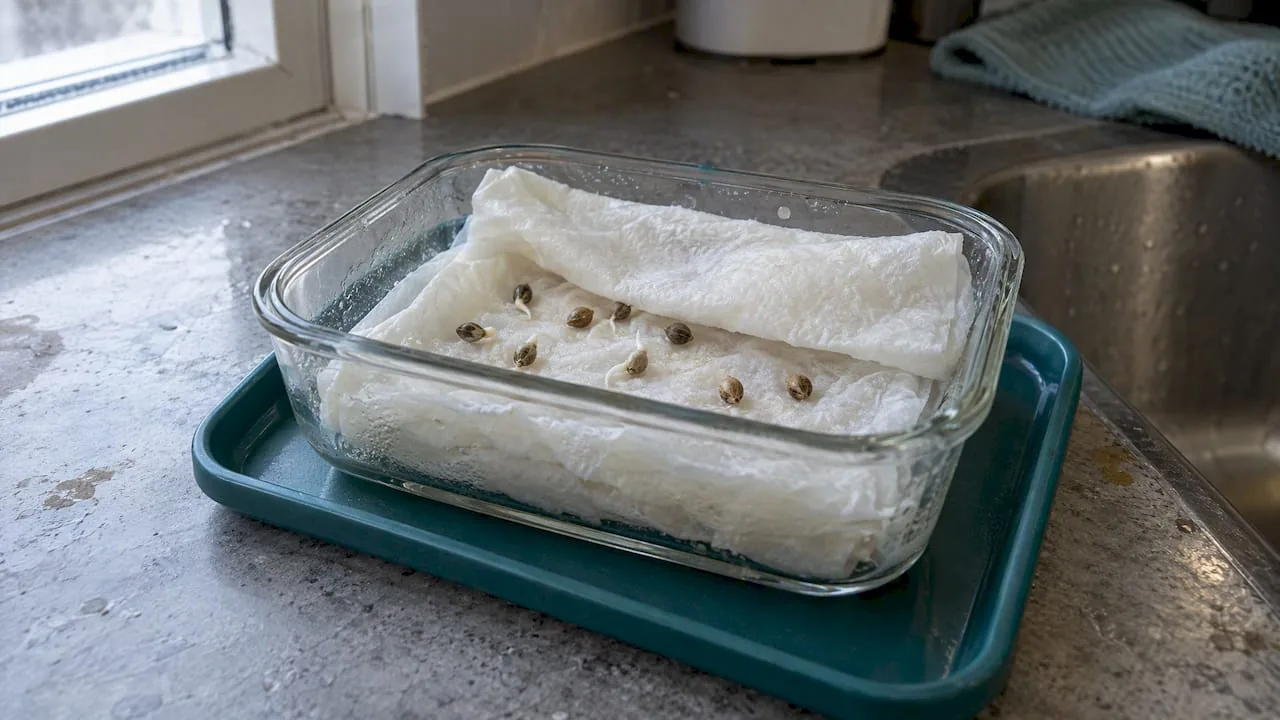
If you’re starting from scratch, the complete guide to germinating seeds and the clone-handling techniques from Minnesota Cannabis College are good additions. Every order comes with quality and tracking guarantees, which counts for a lot when the genetics you’ve chosen have to survive their first summer.
What most people get wrong when preparing their grow for the heat
Most guides to summer growing focus on watering and forget about fabric pots and mulching, which in practice are just as decisive. More plants are lost to black pots cooking the roots than to a lack of water as such.
The other common mistake is treating shade as an emergency patch instead of a planned tool. Putting up netting only when the plant already shows drooping leaves is reacting too late. What works is deciding at the start of the cycle what percentage of shading you will use during the middle hours of the day, without waiting for symptoms to appear.
If I had to prioritise just one thing for someone starting out in a warm climate, it would be the choice of genetics. An autoflowering or sativa variety with good heat tolerance forgives far more management mistakes than a variety designed for temperate climates, and that reduces the pressure on everything else: watering, shade and nutrition.
Where to find heat-resistant seeds and how to choose yours
Choosing the right genetics from the start avoids half of the problems we describe in this guide. You can find varieties designed for growers who face harsh summers, with discreet shipping and support throughout the whole process, from the first question to tracking your order. Some seeds include a quality guarantee, which matters especially when you decide to invest in a variety designed specifically to withstand drought and extreme heat.
If you are looking for where to start, the full seed shop lets you filter by resistance traits and flowering type. For anyone growing on a balcony or terrace with direct sun all day, a short-cycle autoflowering plant is usually the safest bet for this summer. Add it to your basket and plan your sowing following the calendar we saw earlier, leaving a margin before the hottest weeks in your area.