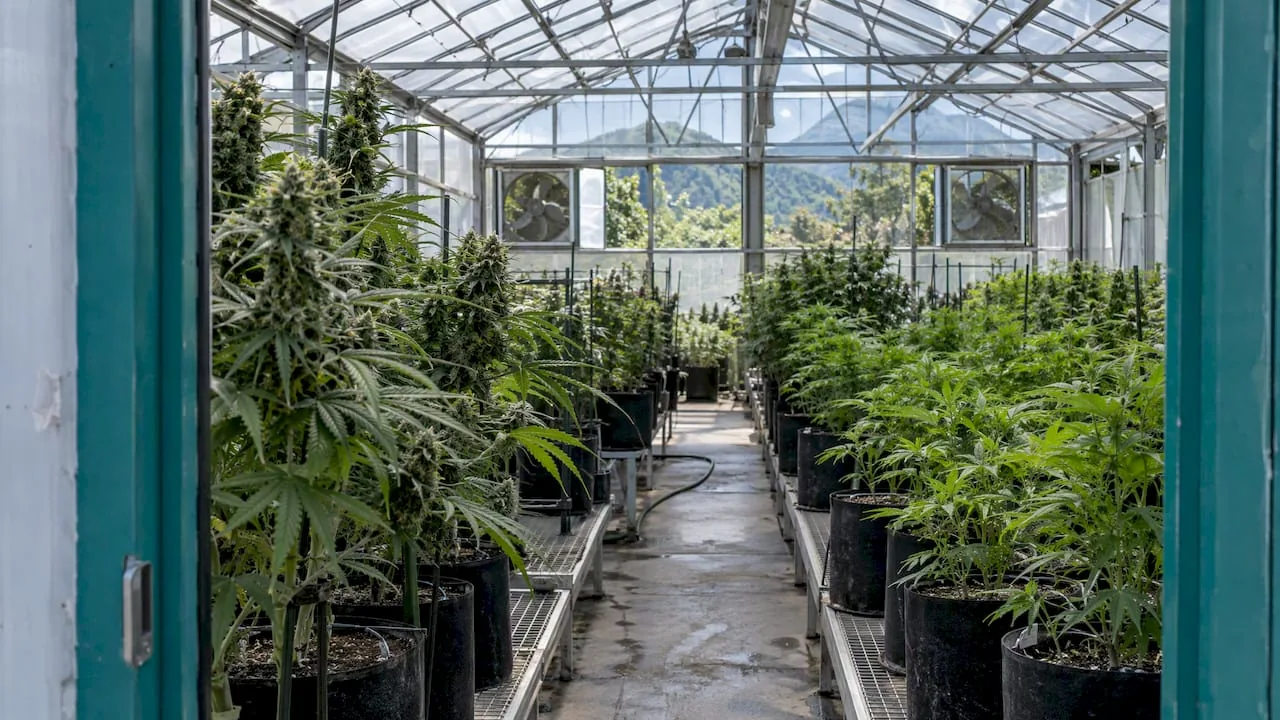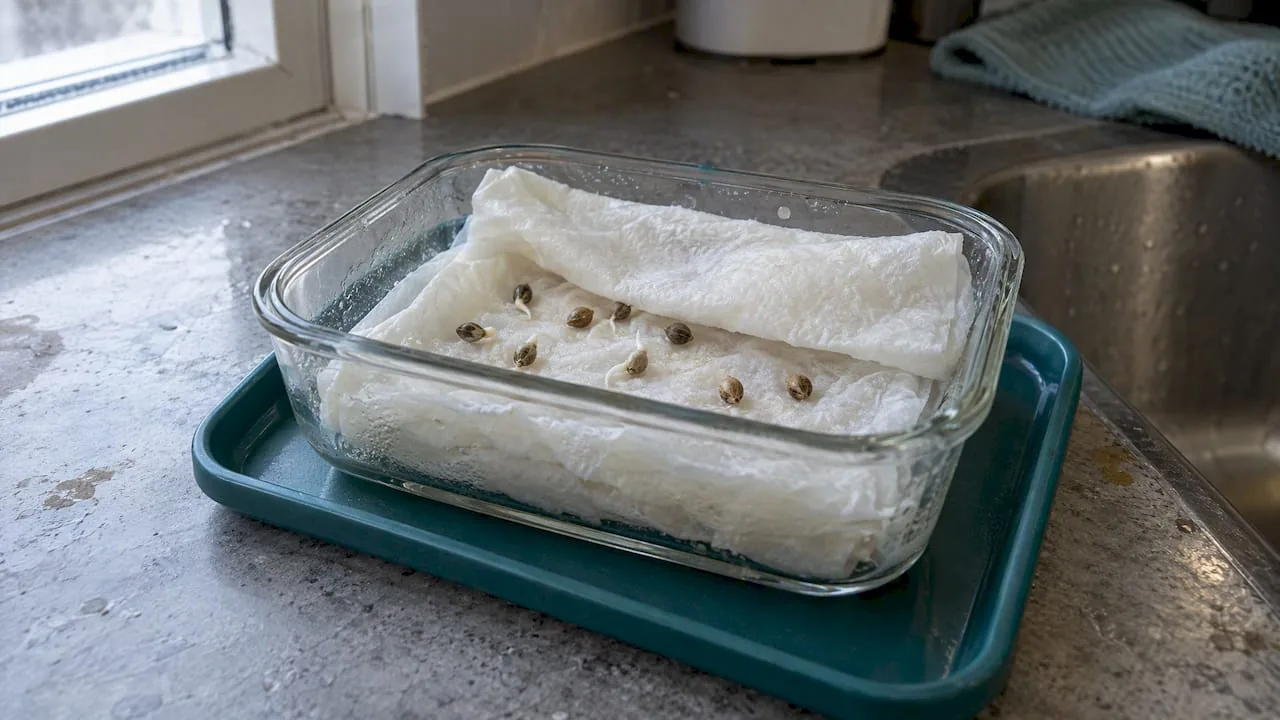


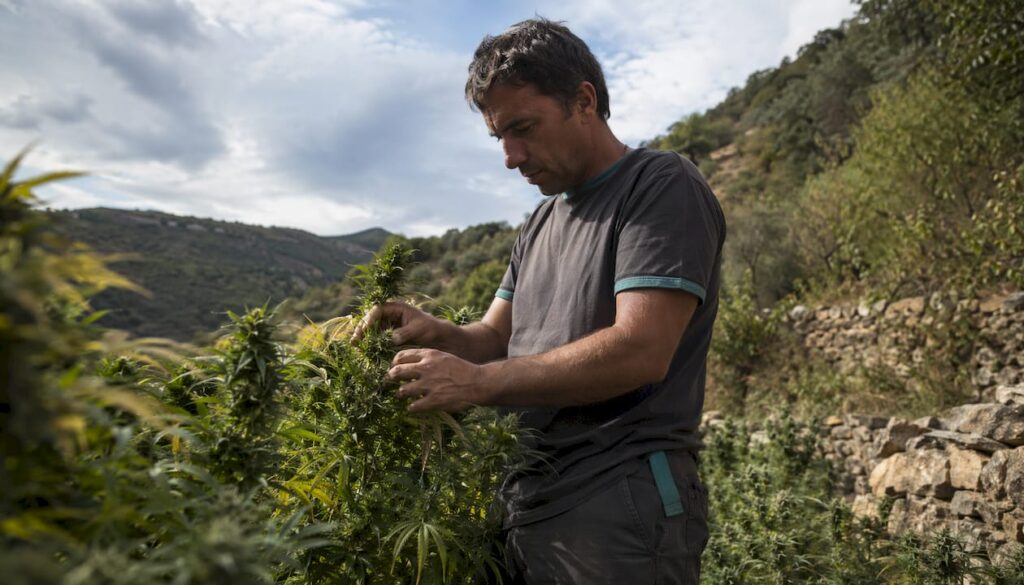
Growing cannabis in a Mediterranean climate means dealing with a specific reality: warm temperatures, dry summers, low rainfall and intense solar radiation that can be an ally or an enemy depending on how you manage it. Temperatures during the growth phase range between 15.2 °C and 27.9 °C, with rainfall that can drop to barely 1 mm in the driest months. That’s not a problem if you know how to handle it: water control, genetic choice and adjusting the sowing calendar are the three levers that separate a mediocre harvest from an outstanding one in the Mediterranean, and at Bluedoggenetics you’ll find genetics selected for this type of climate.
In short:
- The optimal temperature range for cannabis in the Mediterranean is 15.2 to 27.9 °C; above 32–35 °C the plant closes its stomata and growth stops.
- Sowing in March or early April places flowering in September or October, away from the August heat peaks.
- Mulching and drip irrigation at dawn are the most effective tools for retaining moisture in summer.
- High salinity in irrigation water inhibits cannabinoid accumulation; controlling electrical conductivity is key.
- Bluedoggenetics offers feminised and autoflowering seeds with genetics adapted to dry heat and Mediterranean cycles.
How does the Mediterranean climate affect the cannabis cycle?
The phenological cycle of cannabis responds directly to temperature, humidity and day length. In the Mediterranean, long, dry summers offer plenty of light, but extreme heat triggers a defence mechanism in the plant that slows its development.
When the temperature exceeds 32–35 °C with low relative humidity, the vapour pressure deficit (VPD) reaches critical levels. The plant closes its stomata to avoid dehydration and, in doing so, halts photosynthesis. The result is a growth stoppage that no amount of light can make up for.
The most relevant effects of the Mediterranean climate on the cannabis cycle are:
- Early flowering caused by heat stress: plants that flower in the middle of August suffer a reduced terpene profile and lower trichome density.
- Mild summer nights: they encourage the accumulation of sugars and resins, especially in long-cycle varieties.
- Mild springs: allow a long, vigorous vegetative phase if sowing is planned correctly.
- Westerly and easterly winds: they dry out the substrate quickly and increase water stress in young plants.
Cannabis’s phenotypic plasticity makes it possible to adjust the sowing date so that flowering takes place outside the heat peaks. Sowing in March or early April on the Mediterranean coast puts flowering in September, when temperatures drop and nights get longer. This adjustment doesn’t require complex infrastructure. It requires knowing your local microclimate and acting ahead of time.
Soil and watering management in Mediterranean growing
Soil and water are the factors you control most directly as a grower. In the Mediterranean, managing them well makes the difference between a plant that produces and one that merely survives.

Organic substrates and soil structure
Organic substrates rich in organic matter improve water retention and lower the temperature in the root zone during summer. A soil with a high humus content cushions the temperature peaks that damage roots. Growing directly in the ground is preferable to pots in a Mediterranean climate: natural soil offers a thermal and moisture stability that no container can match, since pots heat up and dry out quickly.
Efficient irrigation system step by step
- Install localised drip irrigation. It delivers water directly to the root zone and reduces surface evaporation by a significant percentage compared with sprinkler irrigation.
- Collect rainwater. Rainwater harvesting combined with mulching is the most efficient strategy for retaining moisture in Mediterranean soils during the summer.
- Apply mulching. A 5–8 cm layer of straw, bark or compost on the soil surface reduces evaporation and keeps the root temperature stable.
- Measure the electrical conductivity of the water. High salinity inhibits the accumulation of cannabinoids and terpenes. Keep the electrical conductivity of your irrigation water below the values recommended for your variety.
- Water at dawn. The water reaches the roots before the heat of the day causes heavy evaporation, and the foliage stays dry, which reduces the risk of fungus.
💡 Pro tip: check our watering frequency guide to adjust irrigation cycles according to your plant’s stage of development and local temperatures.
| Water situation | Effect on the plant | Recommended solution |
|---|---|---|
| Moderate water deficit | Stress that concentrates resins | Controlled drip irrigation |
| Severe water deficit | Stomatal closure, growth stops | Mulching + watering at dawn |
| Excess water | Root asphyxia, fungi | Improve drainage with perlite or sand |
| High salinity in irrigation | Cannabinoid inhibition | Rainwater or reverse osmosis filtration |

The total CBD content in plants grown in Mediterranean areas varies between 4.99 % and 34.72 %, with soil quality and irrigation water as the determining variables. That wide range of variation shows that environmental management carries as much weight as genetics in the final result.
Which cannabis varieties work best in the Mediterranean?
The right genetics halve the adaptation work. Not all varieties tolerate the dry heat, low humidity and long light cycles that characterise the Mediterranean summer.
The characteristics you should look for in a variety for this climate are:
- Heat and water stress tolerance: phenotypes with narrow leaves (sativa-dominant or hybrids with tropical heritage) transpire more efficiently in dry heat.
- A flowering cycle that avoids August: varieties that complete flowering in September or October produce denser, more aromatic flowers, away from the heat peaks.
- High resin production under moderate stress: some genetics respond to controlled water stress by increasing trichome production as a defence mechanism.
- Feminised seeds for a long season: if you sow in March, feminised plants make the most of the whole Mediterranean vegetative phase and produce abundant harvests in autumn.
- Autoflowering seeds for short cycles: if you are after a second harvest or you are starting late in the season, autoflowering plants complete their cycle in 70–80 days regardless of the photoperiod.
Studies with varieties such as Fibror 79 and Mona 16 show significant phenological differences in a Mediterranean climate. Choosing the variety according to your production goal, whether CBD, flower production or heat resistance, determines the result from day one.
The relationship between soil fertility and terpene content is direct. A living soil, rich in microorganisms and organic matter, produces plants with more complex aromatic profiles. No synthetic fertiliser can achieve that on its own.
Sustainable practices to protect your grow from environmental stress
The Mediterranean rewards growers who work with the environment, not against it. Sustainable practices are not just an ethical matter: they cut costs, improve quality and make your plants more resilient to the unexpected events of summer.
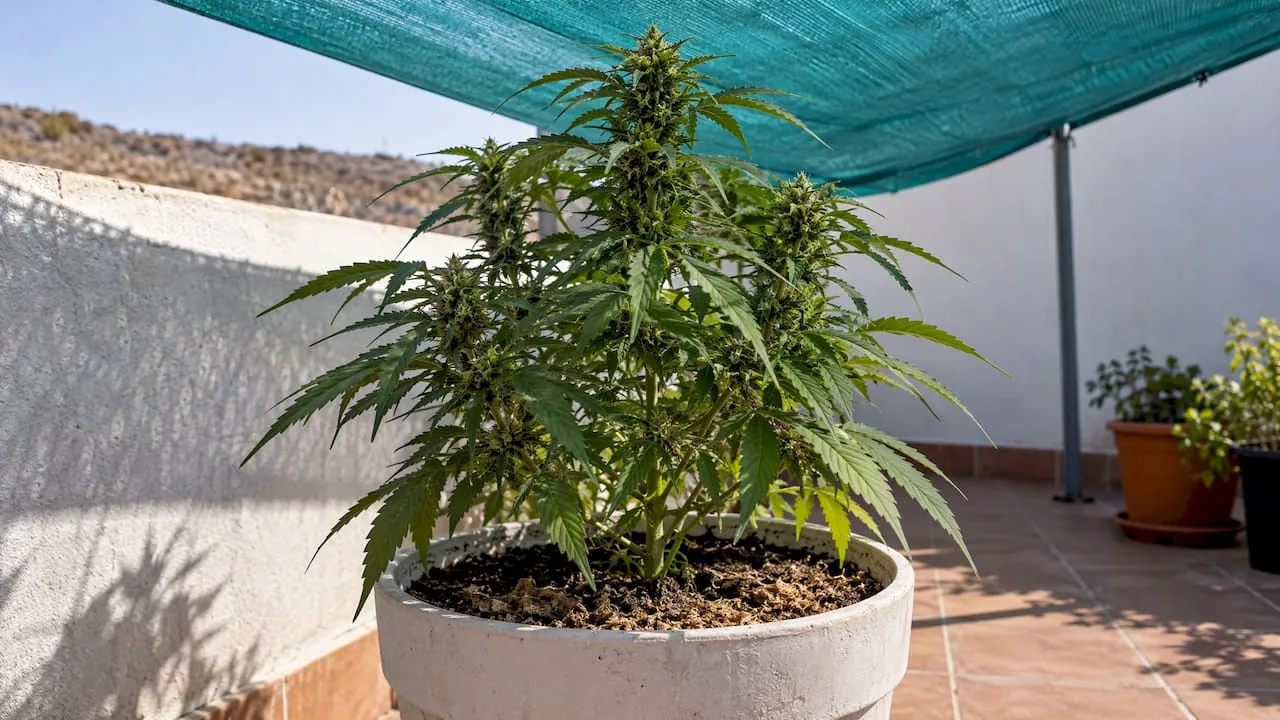
💡 Pro tip: if you grow on a terrace or in an urban space, managing the microclimate is even more critical. Check out our guide to growing on urban terraces to adapt these techniques to small spaces.
The most effective practices for sustainable Mediterranean growing are:
- Permanent mulch: keeps the soil moist, regulates root temperature and reduces weeds without herbicides.
- Strategic partial shade: a 30–40% shade cloth during the middle hours of the day (12:00–16:00) prevents stomatal closure without significantly reducing total daily photosynthesis.
- Controlled airflow: excessive wind dries out the substrate and damages the stems. A plant barrier or windbreak netting protects without blocking the ventilation needed to prevent fungi such as Botrytis cinerea.
- On-site composting: adding homemade compost improves the soil structure every season and feeds the microbiota that makes nutrients available.
- Adjusted sowing calendar: adjusting sowing dates so that critical stages do not coincide with heat peaks is the most effective preventive measure and the one that uses the fewest resources.
Sustainable growing in the Mediterranean means practices that save water and improve soil health. The resilience of your plants depends directly on the life beneath the ground. Dead, compacted or saline soil produces weak plants even if the genetics are excellent.
Microclimate management also includes protecting plants from night-time temperature stress in inland Mediterranean areas, where summer nights can be cooler than expected. That temperature swing between day and night, when managed well, favours resin build-up and improves the final cannabinoid profile.
Key points
Growing cannabis in the Mediterranean demands controlling water, heat and genetics with equal precision to achieve genuinely high-quality harvests.
| Point | Details |
|---|---|
| Growing temperatures | The optimal range is 15.2–27.9 °C; above 32–35 °C the plant closes its stomata and stops growing. |
| Water management | Mulching and drip irrigation at dawn are the most effective tools for retaining moisture in summer. |
| Soil quality | High salinity inhibits cannabinoids; monitor the water’s electrical conductivity and amend with organic matter. |
| Genetic selection | Choose varieties with a flowering cycle in September or October to avoid the temperature peaks of August. |
| Sowing calendar | Sowing in March or April places flowering in autumn, improving flower density and terpene profile. |
What the Mediterranean teaches about cannabis
Several years of growing on the Mediterranean coast make the most common mistake clear: believing that more sun means more quality. The Mediterranean has light to spare. What is scarce is water and moderate temperatures at critical moments.
The first season you adjust the sowing calendar so that flowering falls in September, the difference is immediate: the flowers are more compact, the aroma more intense and the plant reaches the end of the cycle without the usual exhaustion of previous harvests. The genetics and the substrate do not change. Only the date does.
Living soil is the other factor that new growers underestimate most. Soil with active microbiota, organic matter and good structure retains water, regulates temperature and makes nutrients available without the need for constant intervention. Investing in the soil in the first year saves work and money in the years that follow.
The most serious warning concerns irrigation water. In many Mediterranean areas, tap water has a high electrical conductivity. That salinity, building up season after season, degrades the soil and progressively reduces the quality of the harvest. Measuring the conductivity before watering and acting if the values are high is key: it is the quietest and most damaging problem of Mediterranean growing.
Seeds adapted to the Mediterranean at Bluedoggenetics
Choosing the right genetics is the first step before planting. Bluedoggenetics offers a curated selection of feminised and autoflowering seeds designed for growers who want quality and yield in demanding conditions. The varieties in the catalogue include genetics with high tolerance to dry heat, flowering cycles suited to the Mediterranean autumn and potent cannabinoid profiles. Delivery is discreet and order tracking ensures you receive exactly what you need to get off to a good start. For the Mediterranean, long-cycle feminised and summer autoflowering varieties are the options that best fit the challenges described in this article.
Frequently Asked Questions
What is the optimum temperature for cannabis in the Mediterranean?
The optimal range during the growth phase is 15.2–27.9 °C. Above 32–35 °C, the plant closes its stomata and stops photosynthesis.
When is the best time to sow cannabis in a Mediterranean climate?
Sowing in March or early April allows flowering to take place in September or October, away from the August heat peaks and with higher flower quality.
How does water salinity affect cannabis growing?
High salinity in the irrigation water inhibits the accumulation of cannabinoids and terpenes. Monitoring the water’s electrical conductivity and using organic amendments corrects this problem.
Is it better to grow in pots or in the ground in the Mediterranean?
Growing in the ground is preferable because it offers greater temperature and moisture stability. Pots heat up and dry out quickly under the Mediterranean sun.
What type of seeds work best in the Mediterranean?
Long-cycle feminised seeds take advantage of the full season and flower in autumn. Autoflowering varieties are ideal for a second harvest or for growers who start late in the season.
Sources
- Study on cannabis phenology in a Mediterranean climate | Agronomy
- Outdoor Cannabis Growing | Cannabivo
- Nachhaltiger Heimanbau: umweltfreundlicher Cannabis-Gartenbau
- Study on salinity and cannabinoid accumulation | Industrial Crops and Products
- Phenological study of Fibror 79 and Mona 16 varieties | Agronomy
Recommendation
- How to grow cannabis on urban terraces without bothering your neighbors
- How to Grow Marijuana in Cold and Humid Climates – BLUEDOG GENETICS Seeds
- Your Cannabis Garden – Cannabis Blog: Growing Guides, Curiosities and Culture
- The Ultimate Guide to Cannabis Home Cultivation in Germany – BLUEDOG GENETICS Seeds