

Mould-resistant seeds are those that combine an airy bud structure, short flowering cycles and some genetic tolerance to fungi such as Botrytis cinerea. That combination reduces the humid microclimate inside the flower, which is where infection starts. The practical recommendation is simple: choose genetics with those traits and add preventive management of humidity, pruning and biofungicides from transplanting to drying.
In short:
- Bud structure and flowering length are key to reducing susceptibility to mould, especially in humid and rainy climates.
- Varieties with airy flowers and short flowering times reduce the window of exposure to conditions favourable to Botrytis cinerea.
- Good hygiene, humidity control and the use of preventive biofungicides in specific weeks of the cycle are essential to prevent infections.
- Choosing seeds with sativa or airy hybrid genetics, from resistant lines, can make a significant difference in humid areas.
- Combining resistant genetics with good cultural practices is the most effective strategy to minimise fungal damage in your grow.
Which genetic and phenotypic traits reduce the risk of mould
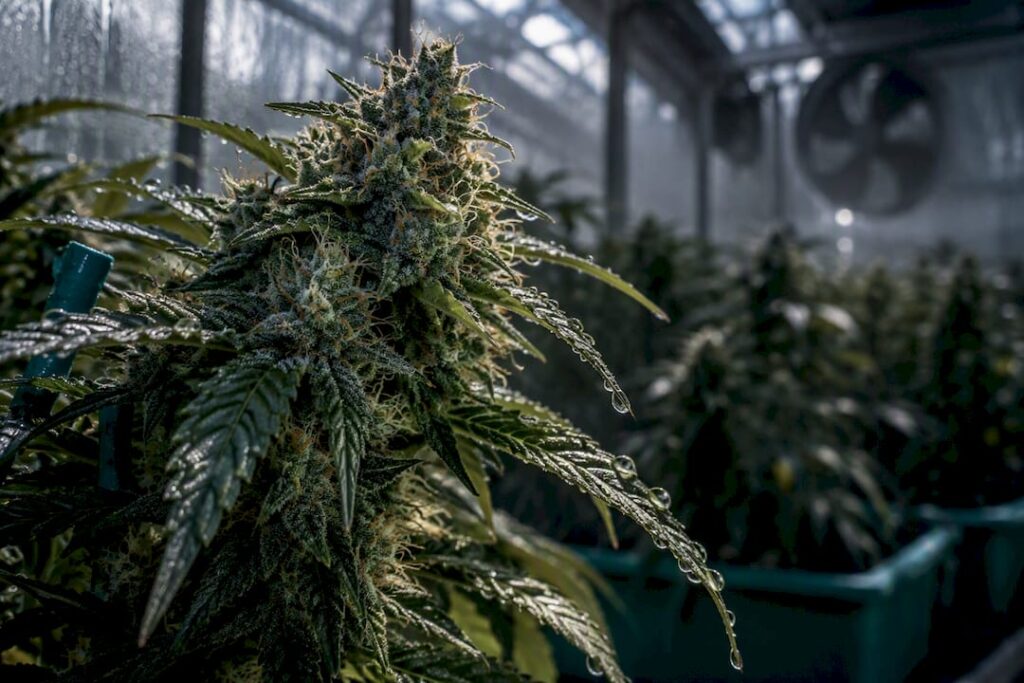
A dense bud is not just an aesthetic matter. The compactness of the flowers creates its own microclimate, different from that of the room or greenhouse where you grow. In 49-day-old buds, the researchers measured up to notably higher humidity and temperature inside the flower than in the surrounding air. That warm, humid pocket is the perfect habitat for Botrytis to germinate and spread before you see any external symptoms.
Pro tip: don’t rely only on the room’s hygrometer. If you grow dense-bud varieties, place a small probe among the flowers in the last phase of flowering: the difference from the ambient reading may surprise you.
The traits that set a mould-prone genetic apart from a resistant one can be observed before you buy the seed:
- Bud structure: looser, more conical flowers let air pass between the calyxes, while very tight varieties trap moisture in the centre.
- Flowering time: every extra week on the plant is another week exposed to rain, dew or peaks in relative humidity, especially outdoors.
- Genetic origin: sativa-dominant lines tend to develop longer, more branched buds with better internal airflow, compared with pure indicas, which tend to make the flower more compact.
- Vegetative vigour: plants with longer internodes and less lateral branching create fewer shaded areas and less stagnant air.
The science behind this goes beyond field observation. A review of the molecular mechanisms of resistance in Cannabis sativa identified two genetic loci, called PM1 and PM2, associated with tolerance to powdery mildew, and points out that inactivating the MLO genes (specifically CsMLO1 and CsMLO4) is one of the most promising routes to achieving lasting resistance to fungi. Another independent study confirmed the mapping of the PM1 gene as a dominant locus linked to resistance against a specific strain of powdery mildew in cannabis.
Here it pays to be honest about expectations: these findings are a roadmap for breeding, not a guarantee of total immunity. What you can do is tip the balance in your favour by choosing phenotypes with the right architecture, something you can understand better if you know the difference between genotype and phenotype in cannabis, because the same genetics can express itself differently depending on how you grow it.
How to choose mould-resistant seeds: practical criteria
Choosing well starts with knowing what to look for on a spec sheet, not with trusting the word “resistant” printed on the packaging. Without further context, that word tells you nothing verifiable.
Follow this order of checks before adding any variety to your basket:
- Check the described flower structure: look for terms such as “airy bud”, “open structure” or “conical” rather than “dense” or “compact”. Reliable product pages tend to describe the architecture, not just the aroma.
- Check the flowering time: strains that finish in 7 or 8 weeks leave less exposure time than those that stretch to 10 or 12 weeks, especially if you grow outdoors with damp autumns.
- Check the seed bank’s track record: a breeder with genetic traceability and stability data inspires more confidence than one who only lists effects and flavours.
- Ask about the parental origin: if the genetics descend from sativa lines or sativa-dominant hybrids, it is reasonable to expect better airflow inside the bud.
- Compare the described vigour with real photos from growers, not just with the catalogue render.
Pro tip: if a data sheet only says “mould resistant” without mentioning bud structure, flowering week or parental genetics, treat it as marketing until you can confirm the information with another source or with the seller themselves.
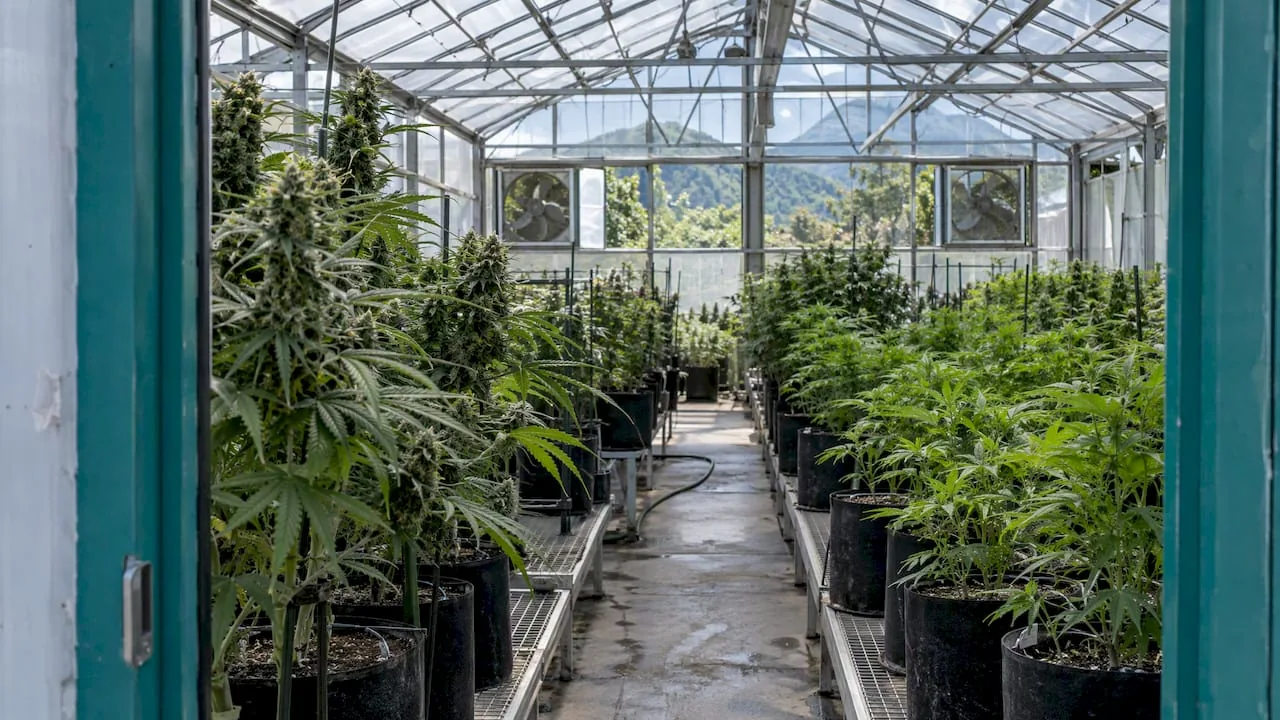
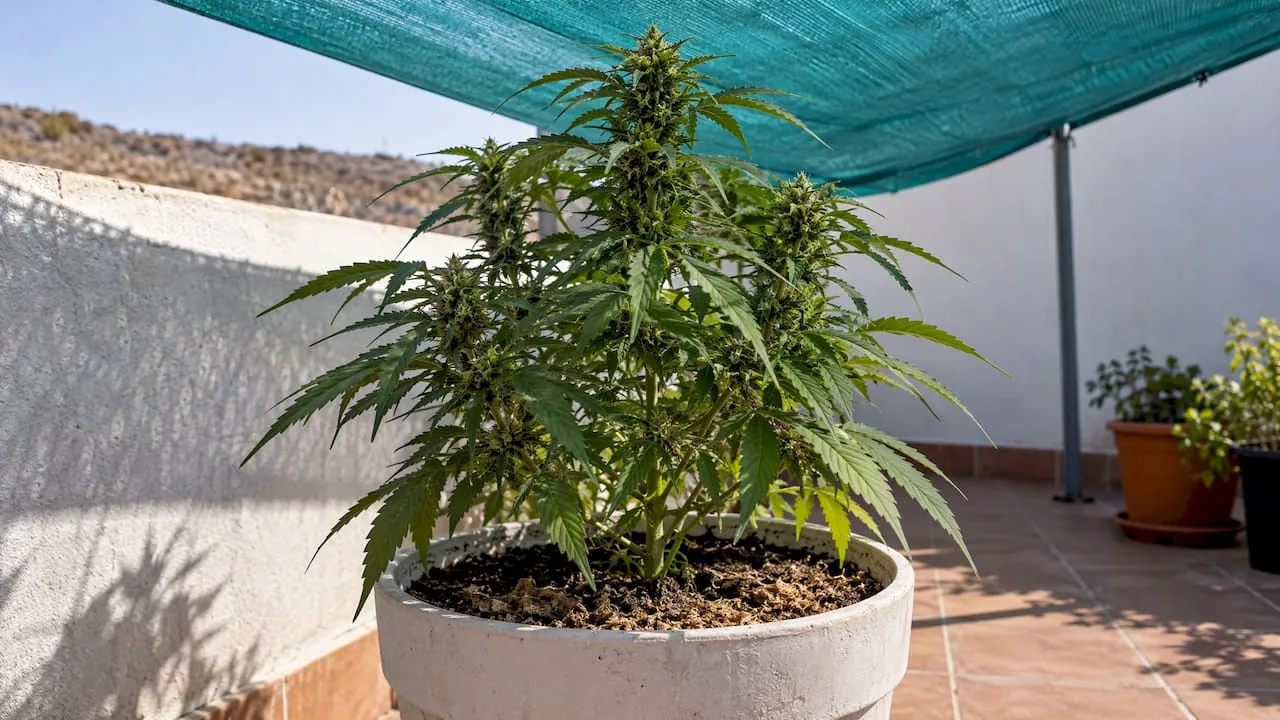
Indoors, with full climate control, resistant genetics are a plus, but you control relative humidity with your equipment. In a greenhouse, where ambient humidity fluctuates with the outside, the genetic choice starts to matter much more. And outdoors, especially in areas with night-time dew or late-summer rain, genetics become your first line of defence, because you can’t fix the weather with an extractor fan.
If your set-up is outdoors or a greenhouse without strict climate control, always prioritise short flowering over other attributes such as maximum yield. A smaller but healthy bud is worth more than a huge one lost halfway through drying. If you grow in areas with humid summers and unstable autumns, it is worth first reviewing the growing techniques for cold, humid climates, because the management changes quite a lot compared with a dry climate.
Growing practices and integrated management to reduce mould throughout the whole cycle
Resistant genetics does its part, but without proper management it is not enough. The strategy backed by the scientific literature is called integrated disease management (also known as IDM), and it combines tolerant genetics, cultural practices and preventive biological agents. A review focused on greenhouse cannabis growing advocates precisely this combination as the most effective route, also pointing out that many markets lack authorised synthetic fungicides for this plant, which forces growers to rely on cultural and biological control.
Relative humidity by stage
There is no single magic number.
- Vegetative: 55-65 % relative humidity favours vigorous development without stressing the plant.
- Early flowering: lowering to 45-55 % helps harden the flower tissues before they become dense.
- Late flowering (last 3 weeks): keeping it below 45 %, and ideally close to 40 %, drastically reduces the risk of bud rot.
- Drying: 50-55 % with a temperature between 18 and 21 °C is the range that minimises both mould and excessive loss of terpenes.
Sanitation and control of inoculum entry
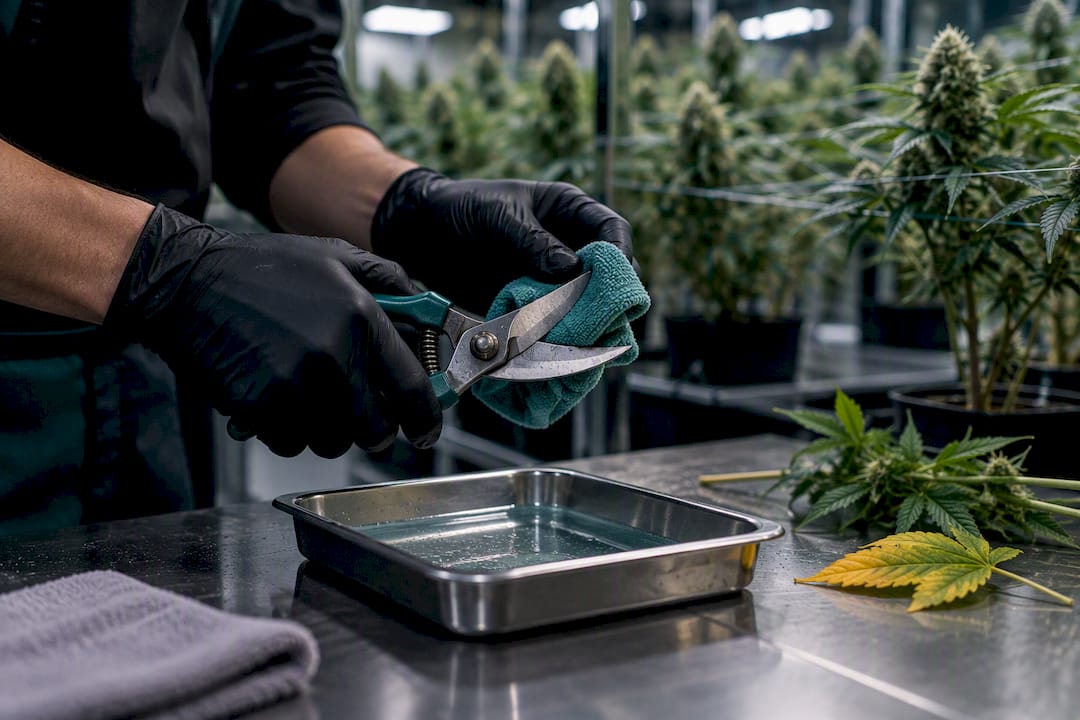
Botrytis spores travel through the air, on dirty tools and in dead plant debris. Remove yellow leaves and lower branches that get no light as soon as you spot them, disinfect scissors between plants and avoid bringing outdoor clothes or shoes straight into the flowering room. It sounds basic, but most indoor mould outbreaks are traced back to a hygiene failure, not to the genetics chosen.
Pruning, training and spacing
Techniques such as lollipopping (removing unproductive lower shoots) and selective defoliation in early flowering open up air channels within the canopy. Spacing between pots also matters: if the crowns of neighbouring plants touch, you are recreating the same closed microclimate problem that an overly dense bud has, just on the scale of a whole room.
Key fact: improving air circulation reduced the incidence of bud rot by between 66% and 92% in trials on Botrytis cinerea in greenhouse cannabis. It is probably the measure with the best effort-to-result ratio in this whole article.
Preventive biofungicides on a schedule
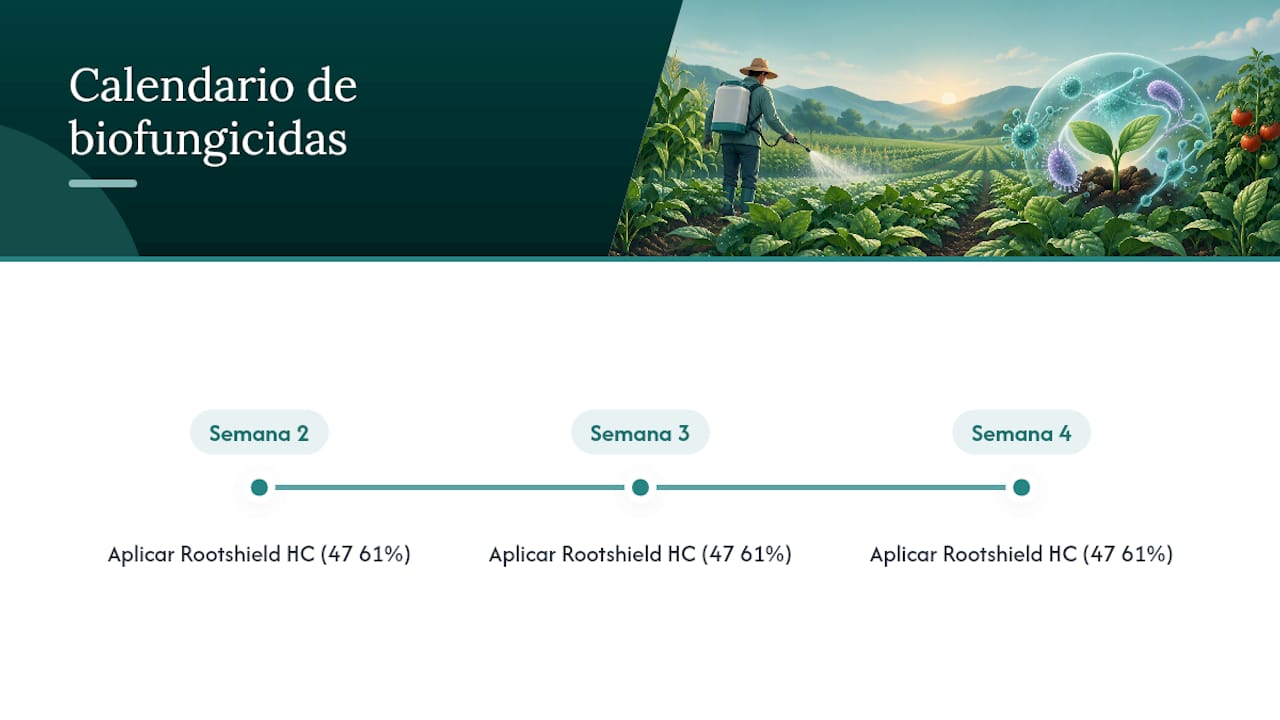
Biological control agents such as Trichoderma and Bacillus have shown effectiveness as a preventive strategy in cannabis and related crops, acting before the pathogen becomes established, not after symptoms appear. A trial with Rootshield HC (based on Trichoderma harzianum), applied on days 14, 21 and 28 of flowering, reduced the incidence of bud rot by between 47 % and 91 %, depending on the stage and the dose used.
Pro tip: mark weeks 2, 3 and 4 of flowering on your calendar as your preventive biofungicide application dates, not as a reaction to the first symptoms. By the time you see a grey spot on the bud, the fungus has already been working away inside for days.
Monitoring and early detection
Check the densest buds and those in areas with less ventilation every two or three days during the last weeks of flowering. Gently open a few representative flowers: if you notice brownish discolouration or a stale, damp smell inside, act immediately by removing the affected area and adjusting ventilation before it spreads to the rest of the plant.
Specific prevention during flowering and post-harvest (drying and curing)
Studies on the epidemiology of Botrytis in greenhouse cannabis point to very specific infection windows: the critical risk is concentrated between days 14 and 28 of flowering, with visible fungal growth shooting up between days 33 and 41. Knowing these dates lets you act before, not after.
- Week 2 of flowering (day 14): first preventive application of biofungicide and a check of the spacing between plants.
- Week 3 (day 21): second preventive application; start lowering relative humidity towards the low range recommended for this phase.
- Week 4 (day 28): third and final application before the final fattening phase; detailed visual inspection of the densest buds.
- Days 33 to 41: the period of highest risk of visible spread of the fungus if something went wrong earlier; this is the time for maximum vigilance, not for relaxing your control.
Reducing the bud microclimate at this stage also comes down to simple measures: increasing local airflow with fans aimed at the canopy and, if the harvest schedule allows, bringing forward the cutting of the densest or most exposed branches when you detect a high risk, even if you sacrifice some ripeness.
Pro tip: *if you hit a spell of rain or high humidity just before your planned harvest date, harvest a few days early rather than risk the whole plant waiting for the perfect ripeness.
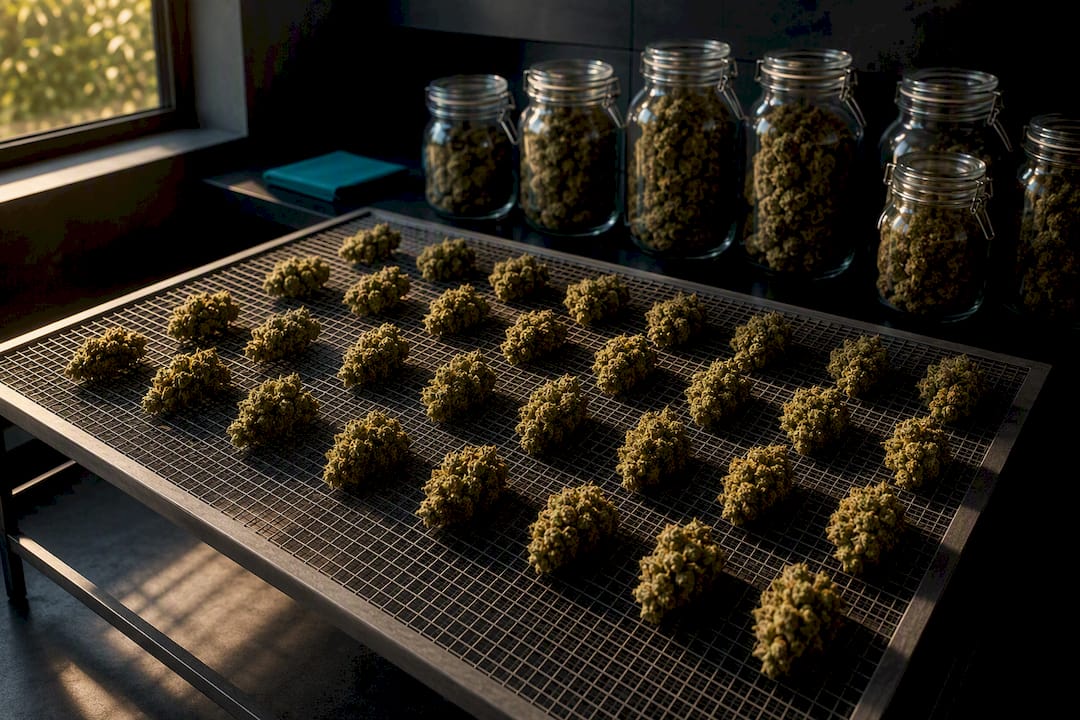
Drying and curing are the last line of defence, and many growers underestimate them after doing the whole flowering cycle well. Drying too quickly (in under 5 days) traps chlorophyll and unpleasant flavours. Drying too slowly with excess humidity reopens the door to mould just when you thought you had already won. The curing process in glass jars, turning them daily for the first two weeks, finishes stabilising the internal moisture of the bud and reduces the residual risk, something we explain in more detail in our guide on why curing cannabis after harvest matters.
If you spot Botrytis on a bud that has already been harvested, don’t try to save it: remove it completely, along with the surrounding plant material, and check the rest of the batch more often over the following days. A single infected branch stored alongside healthy ones can contaminate the whole jar within days.
Examples of recommended genetics and profiles
Instead of chasing specific variety names, look for descriptive profiles that you can verify on any serious data sheet. These are the three profiles that work best in humid climates:
- Fast, airy sativa: sativa-dominant, elongated, loose buds, 8 to 9 weeks of flowering. Ideal for outdoor growing in areas with unpredictable autumns.
- Airy hybrid of 7 to 8 weeks: a balance between vigour and open structure, a good option for a greenhouse where you control part of the climate but not all of it.
- Short-flowering autoflowering variety with an open structure: total life cycles of 8 to 10 weeks from germination, which drastically reduces the window of exposure to seasonal humidity; it suits growers who prioritise speed over maximum yield.
To confirm that a particular variety fits one of these profiles, compare the stated flowering week, the percentage of sativa or indica in the parent genetics and any explicit mention of bud structure. If the seller offers it, also ask for photos from real growers in the final stage of flowering: that is where you see the real density, not the catalogue one.
Expert insight and resources from Bluedog Genetics
At Bluedog Genetics we select genetics with growers in mind who face demanding climates, not just ideal laboratory conditions. In our technical sheets we prioritise verifiable data on flower structure and flowering week, which is exactly what we recommend you demand from any seed bank.
As well as our selection of varieties, we offer:
- Published growing guides on managing grows in humid and Mediterranean climates, available on our blog.
- Order tracking from confirmation to delivery.
- Discreet shipping on all orders.
- Personalised customer service for questions before and after purchase.
- Quality guarantees on the genetics you buy.
Our editorial criteria for including a variety in collections designed for humid environments always involve reviewing bud structure, flowering time and documented genetic stability, rather than relying on marketing promises.
A practical balance between genetics and management
Mould-resistant genetics isn’t an insurance policy, it’s a head start. I’ve seen too many growers buy the “right” variety and then neglect ventilation in the final weeks, losing the harvest just as if they had planted the densest genetics in the catalogue. Bud structure gives you a margin for error, not immunity.
What really makes the difference is treating seed choice and environmental management as a single decision, not as two separate steps. If you are unsure which profile suits your climate, go through the technical sheets calmly or talk to our team before buying.
Find your resistant genetics at Bluedog Genetics
If you want to start with a genetic base that already comes with an airy structure and short cycles built in, take a look at our collection of feminised seeds, where you’ll find detailed data sheets on flowering week and plant architecture. If your priority is to cut the window of exposure to humidity as much as possible, especially outdoors or in a greenhouse without strict climate control, autoflowering seeds usually complete their cycle in 8 to 10 weeks from germination, which gets you out before the rainy season.
The offer includes genetics with detailed data sheets, an ordering process built around transparency, discreet shipping and support to guide interested customers before they buy. Head to the shop, filter by flowering week and structure, and if you need guidance on which profile best suits your particular climate, contact our team before completing your order.
Sources
For anyone who wants to check the original evidence: the study on the epidemiology of Botrytis cinerea in greenhouse cannabis details infection windows and the effectiveness of biofungicides. The review on integrated pathogen management in cannabis explains why combining genetics and cultural practices beats isolated treatments. The work on molecular mechanisms of resistance goes deeper into the PM1, PM2 and MLO genes.
- The epidemiology and management of Botrytis cinerea causing bud rot on greenhouse cultivated cannabis (Cannabis sativa L.)
- Integrated Management of Pathogens and Microbes in Cannabis sativa L. under Greenhouse Conditions
- Molecular Mechanisms Underlying Potential Pathogen Resistance in Cannabis sativa
Frequently Asked Questions
How can you tell if a seed is no longer good?
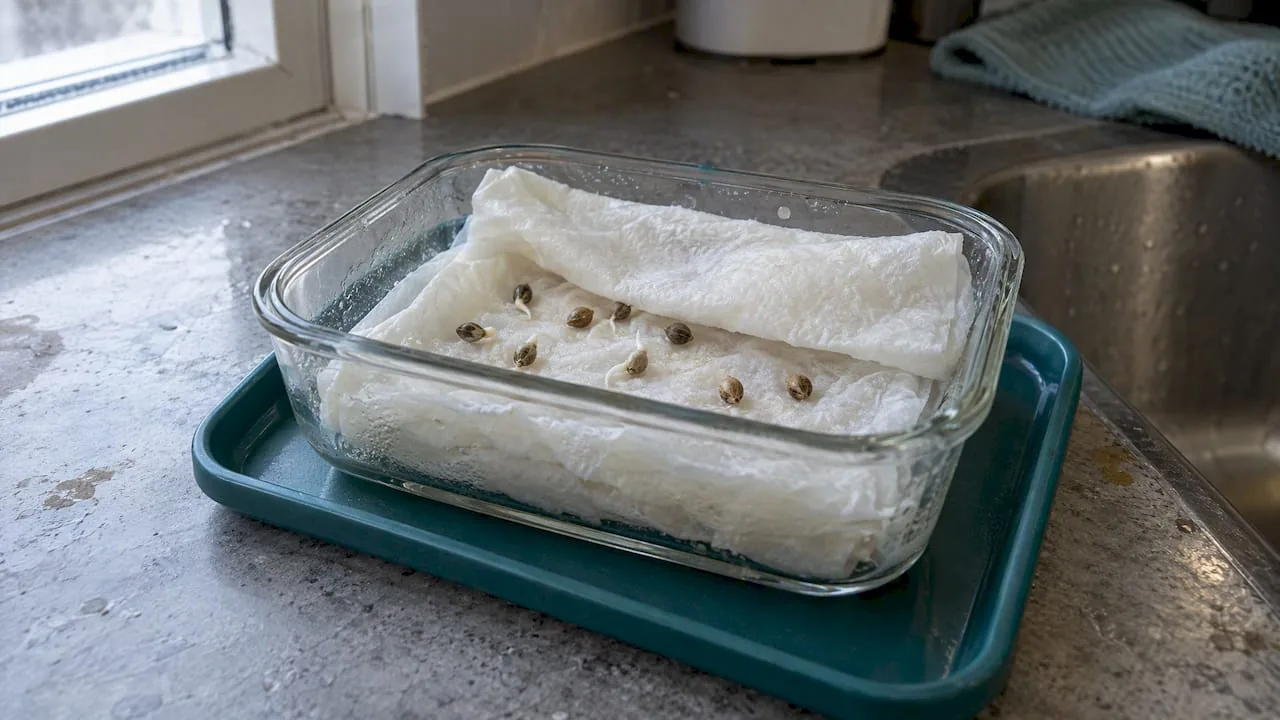
A viable seed usually has a dark brown or mottled colour and a firm, slightly shiny surface; if it is greenish, very pale or crumbles when gently pressed, it probably will not germinate. The float test (leaving it in water for a few hours) also helps, although it is not foolproof. You can review the whole process in our germination guide.
What type of mould is dangerous for cannabis?
The most destructive one in flowering is Botrytis cinerea, which causes bud rot, attacking from inside the bud and able to ruin an entire harvest within a few days if it is not detected in time. Powdery mildew is another frequent risk, more visible on leaves but also damaging if it reaches the flowers.
What are the most common types of mould in cannabis growing?
The most common are Botrytis cinerea (bud rot), powdery mildew or powdery mildew, Fusarium, Pythium (common in roots that are overwatered) and various species of Aspergillus, which can appear in poorly dried or cured material. Each has its favourite humidity and temperature conditions, but they all share the same common enemy: excess stagnant moisture.
Do mould-resistant seeds guarantee a fungus-free harvest?
No. Genetics reduces the likelihood of infection by improving flower structure and shortening exposure, but no seed bank can guarantee total immunity against all existing fungal isolates. Preventive management, with ventilation and biofungicides, remains essential.
What is the difference between resistance and tolerance to mould in cannabis?
Resistance means the plant actively blocks or limits infection at a genetic level, something research into the PM1, PM2 and MLO genes is still refining. Tolerance means the plant can live with a certain amount of the pathogen without the harvest collapsing, mainly thanks to structural traits such as loose buds and short flowering.