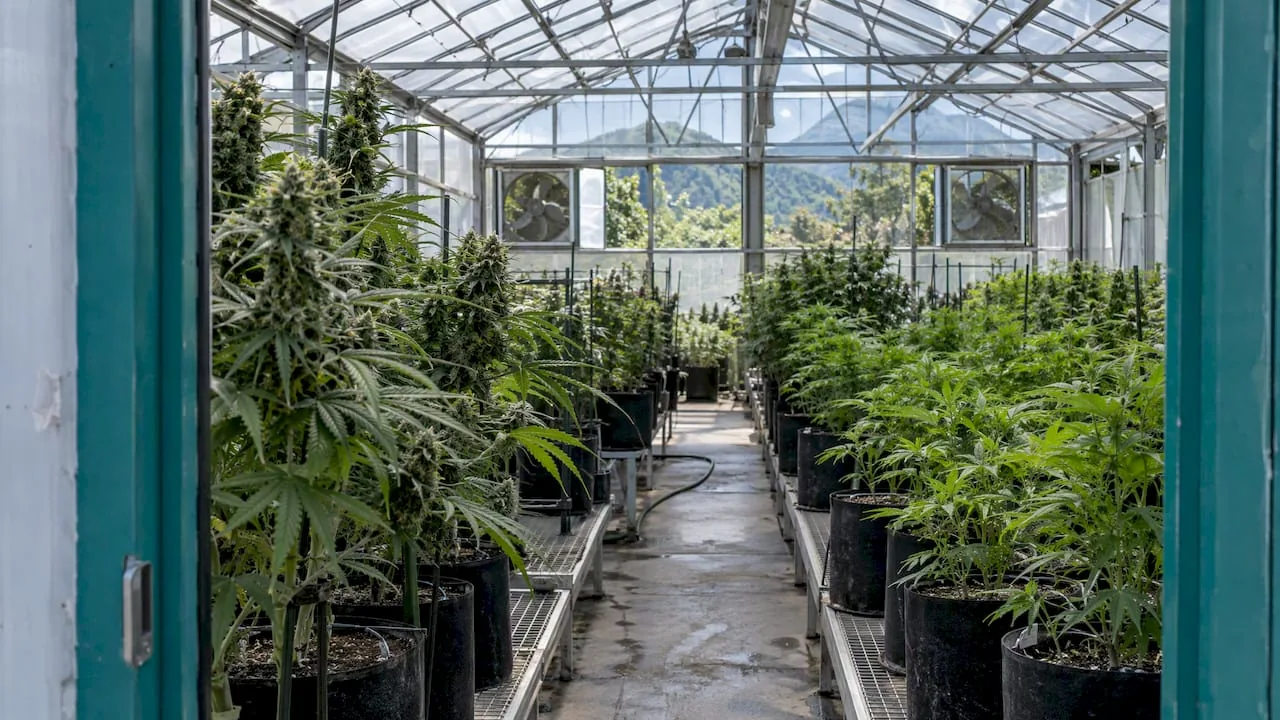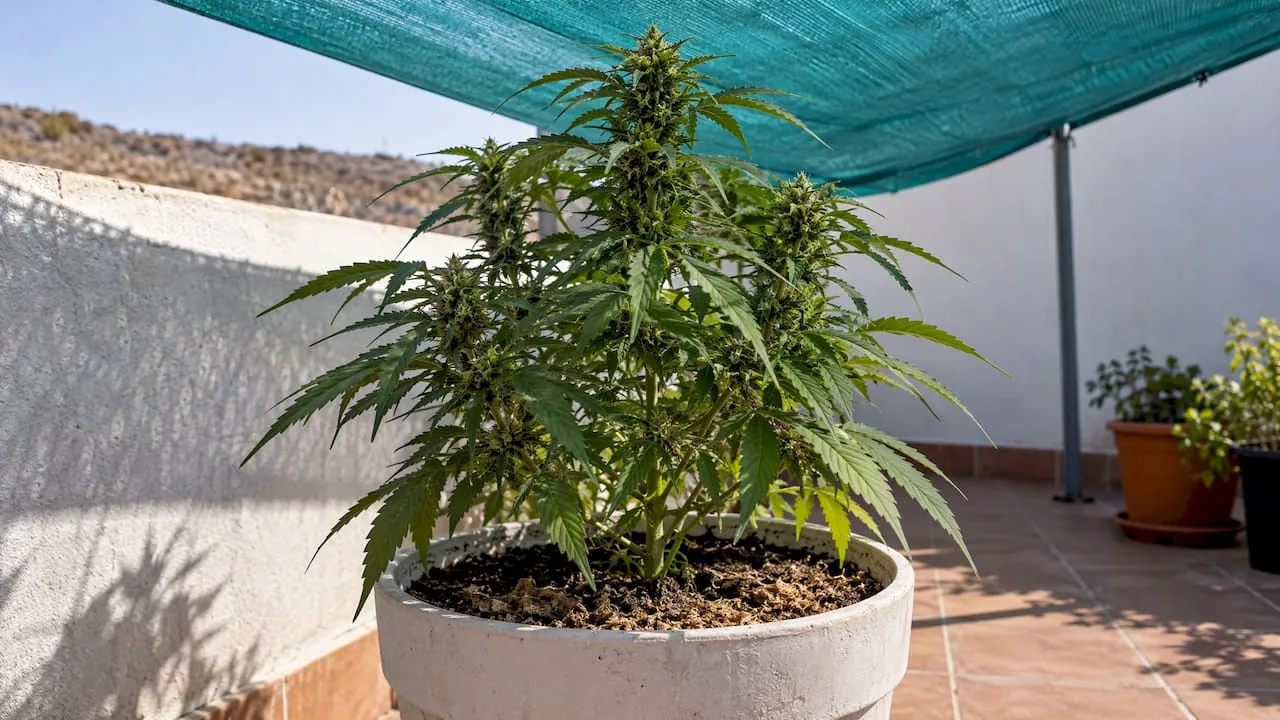



Kush genetics are a group of indica landraces originating from the Hindu Kush mountain range, the chain that runs through Afghanistan, northern Pakistan and north-west India. For growers in Central Europe, that translates into compact plants, fast flowering (generally 7–9 weeks) and a resin production that makes them the most solid choice for extractions such as rosin or hash. The terpene myrcene dominates their aromatic profile, bringing that characteristic earthy, sedating base that sets an authentic Kush apart from any modern hybrid with a similar commercial name.
Where do Kush genetics really come from?
The story of the origin of Kush cannabis begins on the slopes of the Hindu Kush, a mountain range of about 800 km that separates Central Asia from the Indian subcontinent. At altitudes above 2,000 metres, with short summers, cold nights and intense ultraviolet radiation, cannabis developed over centuries traits that growers actively look for today: low stature, fast maturity and a layer of trichomes that protected the plant from the hostile environment.

Local communities cultivated these plants for generations, mainly to produce charas and hashish. The selection was empirical but effective: the most resinous, most compact plants with the shortest flowering survived and reproduced. That cumulative process left an extraordinarily stable genetic material.
The spread to the West began with travellers on the so-called “hippie trail” in the 1960s and 1970s. Young Europeans and North Americans travelling the London-Kathmandu route passed through Kabul and Peshawar, where they found fields of short, dark indica plants, very different from the tropical sativas they knew. Many brought seeds back from the Hindu Kush when they returned, and those seeds ended up in the hands of the first breeders in California and Amsterdam.
The expansion timeline was roughly as follows:
- 15th–19th centuries: traditional use in the Hindu Kush region for resin and hashish production.
- 1960–1965: the first Western travellers discover the varieties on their journeys through Central Asia.
- 1966–1970: the period of greatest activity of the “Magic Bus” and the Hippie Trail; seeds begin to circulate in European countercultural circles.
- 1971–1975: mass arrival of seeds in California; breeders such as Sam «Skunkman» Selezny begin crossbreeding experiments.
- 1976–1980: first controlled crosses between Afghan indicas and local sativas; in 1980, Sacred Seeds launches Afghani #1 and Hindu Kush as pure lines.
- 1980–1990: development of OG Kush and other iconic varieties that transform the Western market.
Note on terminology: “Hindu Kush” refers both to the geographical region and to the pure landrace derived from it. When a commercial seed has “Kush” in its name without documenting that lineage, it may be a modern hybrid with no direct connection to the original landrace.
What adaptive traits define Kush landraces?
The conditions of the Hindu Kush acted as a brutal filter for centuries. Cold nights, scarce moisture and short growing windows eliminated any plant that didn’t mature in time or didn’t produce enough resin to protect itself. The result was a genetic line with very specific, reproducible traits.
The most relevant traits for the modern grower are:
- Compact, bushy structure: a moderate average height indoors, with short internodes and sturdy lateral branches.
- Broad, dark leaves: the classic indica phenotype, with wide leaflets that maximise light capture at low angles.
- Dense, heavy buds: density is an advantage for yield, although it requires attention to humidity to avoid rot.
- High trichome production: the most prized trait; the resin covers not only the buds but also the small adjacent leaves.
- Short flowering: between 7 and 9 weeks in most landraces and their direct derivatives, which makes them especially useful in climates with short autumns.
- Pronounced terpene profile: dominant myrcene, with earthy, fruity and spicy notes that intensify in the final weeks of flowering.
That genetic stability, the result of millennia of geographical isolation, makes Kush landraces a valuable resource for breeders looking to anchor specific traits in complex crosses. It’s no coincidence that Hindu Kush appears in the family tree of hybrids as different as Northern Lights or Purple Kush.
Pro tip: If you are growing for extraction, prioritise phenotypes with visible trichomes on the small leaves surrounding the bud (sugar leaves). That extra coverage points to genetics with a high aptitude for rosin and cold-water hash, not just for dried flower.
Which Kush varieties should you know about and how do they differ?
The Kush lineage has given rise to varieties that differ greatly from one another. Some are almost intact landraces; others are modern hybrids that keep certain traits but have very different profiles. The following table summarises the five most relevant for growers in Central Europe.
| Strain | Height / structure | Flowering | Resin / extraction | Terpenes and effects | Indoor vs outdoor (Central Europe) | Phenotypic stability |
|---|---|---|---|---|---|---|
| Hindu Kush | Low, very compact plant | 7-9 weeks | Very high; ideal for hash and rosin | Myrcene dominant; earthy, deeply sedating | Excellent indoors; outdoors only in warm areas | Very high (pure landrace) |
| OG Kush | Medium, a somewhat more open plant | 7-9 weeks | High; abundant trichomes | Myrcene + limonene + caryophyllene; citrusy, euphoric and relaxing | Better indoors; outdoors requires a dry autumn | Medium (modern hybrid) |
| Bubba Kush | Low-medium, compact plant | 7-9 weeks | Very high; extremely dense buds | Myrcene + caryophyllene; chocolate, coffee, intensely sedating | Indoor preferable; sensitive to high humidity | High (stabilised line) |
| Master Kush | Low, compact plant | 7-9 weeks | High; good for extraction | Myrcene + caryophyllene; earthy, incense, relaxing | Very good indoors; outdoors in temperate areas | High (Hindu Kush x Skunk cross) |
| Purple Kush | Low, compact plant | 7-9 weeks | High; dense resin | Myrcene + limonene; sweet, grape, sedative | Indoor; outdoor only in warm microclimates | High (stabilised indica line) |

The most important distinction to keep clear: OG Kush is a modern hybrid, probably a cross of Chemdawg with Hindu Kush, developed in California in the 1990s. Its effects and terpene profile are different from those of the original landrace. When someone talks about “pure Kush”, they mean Hindu Kush or preservation lines directly derived from it, not OG Kush.
How do you recognise a Kush genetic during growing?
Identifying an authentic Kush phenotype doesn’t require a laboratory. There are visual, aromatic and behavioural signs that appear from the first weeks of flowering.
Visual checklist during growing:
- Short, bushy plant from the vegetative stage, with very short internodes.
- Leaves with broad, rounded leaflets, in an intense dark green colour.
- Buds that form dense and compact from the second week of flowering.
- Trichome coverage that advances towards the small leaves next to the bud before week 6.
- Earthy-spicy aroma that appears early, even before full flowering.
The terpene profile of an authentic Kush has myrcene as its main marker, which explains the sedative effect and the earthy-fruity aroma. Caryophyllene adds spicy notes and a slight sting, while limonene appears in more modern variants such as OG Kush, bringing citrus nuances. If, when you rub a leaf during flowering, the smell is mainly of damp earth, pine and spices, you’re looking at a well-expressed Kush phenotype.
In terms of cannabinoids, pure landraces such as Hindu Kush tend to sit in THC ranges of 15–20 %, with CBD somewhat more present than in modern hybrids. Commercial hybrids labelled as Kush can exceed 25 % THC, but that depends more on the modern cross than on the landrace lineage. To confirm traits before buying, read the seed’s product page looking for: flowering time (under 9 weeks is a positive sign), stated indica percentage, photos of the real phenotype and resin production data. A product page that documents the parents and the stabilisation process is always more reliable than one that only mentions the name.
To go deeper into the difference between what the genetics promise and what the plant expresses, the guide on genotype and phenotype in cannabis from Bluedoggenetics explains that distinction well with practical examples.
Growing Kush in Central Europe: calendar, techniques and realistic expectations
Central Europe has conditions that favour indoor growing for most Kush varieties, although outdoor growing is viable with the right varieties and a well-adjusted calendar.
Indoor vs outdoor: practical differences

Indoors you have total control over the photoperiod, temperature and humidity, which lets you get the best out of any Kush. Outdoors, short-flowering varieties can finish before the autumn rains in temperate areas, although the margin can be tight.
Estimated indoor timeline:
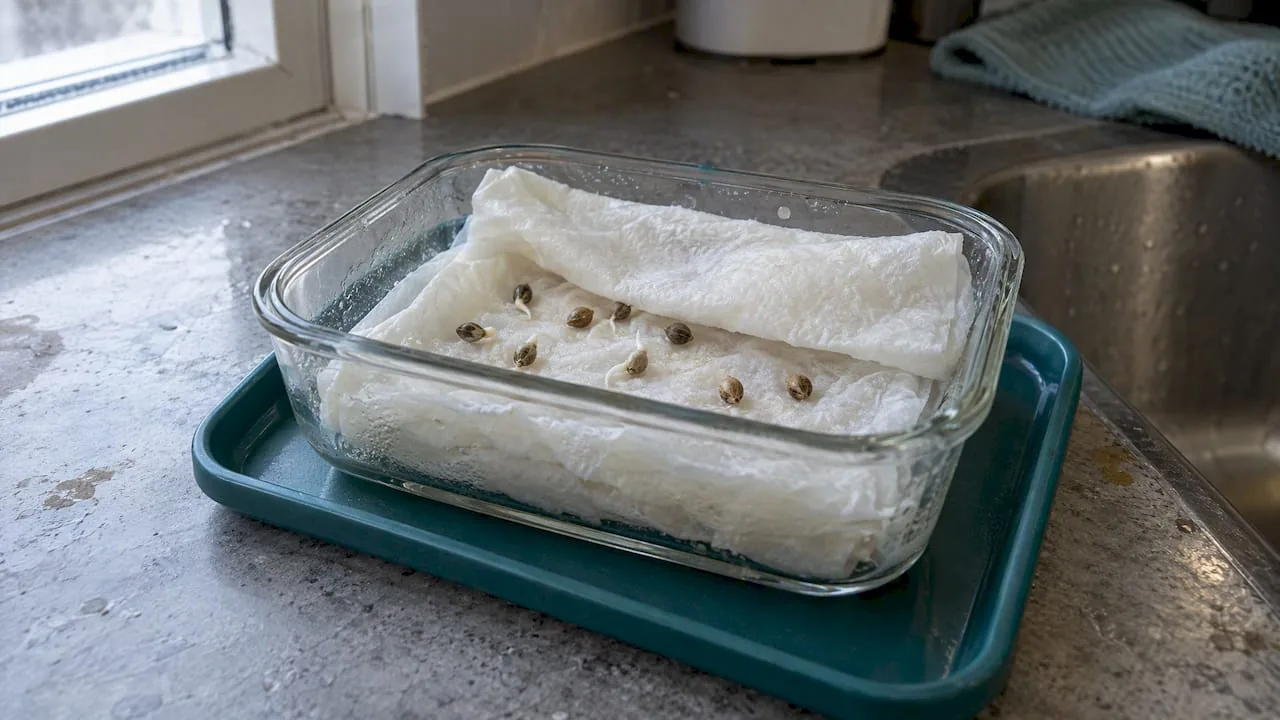
- Germination: 3–7 days using the damp paper method or directly in substrate.
- Vegetative phase: 3–5 weeks under 18/6 hours of light; Kush plants grow slowly in veg compared with sativas.
- Switch to flowering: reduce to 12/12 hours; Kush strains respond quickly to the change in photoperiod.
- Flowering: 7–9 weeks depending on the variety; Hindu Kush and Master Kush usually finish at the lower end.
- Harvest: check the trichomes with a magnifier; when 70–80 % are milky with some amber, it is the optimal moment for sedative effects.
Recommended practices to maximise results:
- Apply training techniques such as LST (low-stress training) or SCROG to make the most of the compact structure and improve light penetration to the lower buds.
- Keep relative humidity below 50 % during flowering. Dense Kush buds are especially vulnerable to Botrytis (grey mould) in high humidity.
- Reduce nitrogen from the third week of flowering and increase phosphorus and potassium to encourage resin production.
- Outdoors (Central Europe), plant after the last frosts and choose varieties with short flowering to harvest before the autumn rains.
Pro tip: In the last two weeks of flowering, lower the night-time temperature indoors to 16–18 °C. That temperature difference mimics the conditions of the original Hindu Kush and can intensify both resin production and purple colouring in varieties such as Purple Kush.
The most common mistakes with Kush are overwatering (the roots prefer drying cycles) and not controlling humidity during flowering. A grower who looks after those two points can expect decent yields indoors under good light conditions.
How do breeders use Kush genetics in their breeding programmes?
Understanding breeding terminology helps you read a seed description with a critical eye and know what to expect from the plant before germinating it.
Key terms you should know:
- F1 (first filial generation): a cross between two different parent lines. It usually shows hybrid vigour, but phenotypic variability can be high.
- F2: a cross between two F1s. Greater variability; useful for selection, but less predictable for the grower.
- Backcross: crossing a hybrid with one of its parents to reinforce that parent’s traits. Breeders use Hindu Kush in backcrosses to “anchor” resin and compact structure in hybrids that would otherwise be more sativa-leaning.
- Preservation line: seeds kept as close as possible to the original landrace, without crossing with other genetics. They are the most valuable for anyone seeking the authentic Kush experience.
- Stabilisation: a selection process over several generations to reduce phenotypic variability. A stabilised line gives more predictable and uniform plants.
Breeders turn to Hindu Kush as a genetic base precisely because of its extreme stability, the result of centuries of geographical isolation. Introducing Hindu Kush into a complex cross is a way of ensuring that the progeny keeps fast flowering and high resin production, even when the other parent is a long-flowering sativa.
Questions to ask the seed’s product page before you buy:
- Does it document the parents with specific names?
- Does it state whether it is F1, F2, backcross or a preservation line?
- Does it include photos of real phenotypes, not just renders?
- Does the breeder have a documented track record with that line?
- Does it offer verifiable flowering, yield and terpene profile data?
If the product page doesn’t answer at least three of those questions, the “Kush” in the name may be just marketing.
Why do Kush strains produce so much resin and how can you maximise it?
The high resin production of Kush strains is not an accident of modern breeding. It is a direct biological response to the conditions of the Hindu Kush: resin acts as a filter against intense ultraviolet radiation and as thermal insulation against the cold of the night. That selective pressure over centuries left a genetic legacy that growers can make the most of by replicating some of that stress in a controlled way.
Practices to maximise trichomes in the final weeks:
- Lower the night-time temperature to 16–18 °C during the last two weeks (temperature differential).
- Lower the relative humidity to 40–45 % in the final stretch to concentrate resin production.
- Adjust the nutrition: reduce nitrogen to a minimum, keep phosphorus and potassium high until 10 days before harvest, then give only water.
- Consider adding ultraviolet B (UV-B) light in a controlled way in the final weeks; moderate environmental stress can stimulate trichome production without harming the plant.
Pro tip: For the 48–72 hours before harvest, keep the plant in total darkness at a cool temperature (16–18 °C). Many experienced growers report that this final period intensifies the aroma and resin density without degrading the terpenes, which are the first to evaporate in excessive heat.
What you shouldn’t do is just as clear. Exposing the plant to intense heat or very strong direct light in the final weeks speeds up the degradation of terpenes and converts THC into CBN, which produces a more soporific and less aromatic effect. If you grow for extraction, terpenes are as important as cannabinoids: a well-preserved resin produces a rosin or hash with much more character than one harvested in a hurry under heat.
To better understand the applications of Kush resin in modern extractions, the comparison between rosin and resin offers useful context on the technical differences between methods.
How to choose Kush seeds without falling for empty commercial names?
The seed market is full of “Kush” strains that have nothing to do with the original landrace. Most commercial seeds labelled as Kush are stabilised hybrids designed to maximise yield or potency, not to preserve the lineage. That isn’t necessarily bad, but you should know what you’re buying.
Checklist before buying Kush seeds:
- Does the product sheet mention “Hindu Kush”, “preservation line” or explicit genealogy with named parents?
- Does the seed bank have a documented track record with that specific line?
- Does it include photos of real phenotypes of that specific variety, not generic images?
- Does it offer verifiable data on flowering time, yield and terpene profile?
- Are there quality guarantees and order tracking?
If the name includes “Kush” but the product page does not document the parents or the generation, you are probably looking at a modern hybrid with that name for commercial reasons. It is not a problem if you know what you are after, but if you want high phenotypic stability and authentic landrace traits, you need that documentation.
Feminised vs regular vs autoflowering:
Feminized seeds are the most practical option for most growers: every plant produces flowers and there are no males to identify or remove. Regular seeds are preferable if you want to make your own crosses or select phenotypes. Autoflowering seeds are ideal for climates with short summers, such as many parts of Central Europe, because they flower with age rather than photoperiod, which lets you harvest in summer without depending on the short days of autumn.
To choose well from the start, the guide to feminised photoperiod seeds from Bluedoggenetics details the key criteria you should check before any purchase. And if you are just starting out, the resource on seeds for beginners helps you understand which type of seed best suits your level and growing space.
Professional tip: Before buying, search for the exact name of the variety on grower forums with photos of real harvests. A variety with a history documented by the community is much more reliable than one with only seed bank photos. Bad or poorly documented seeds can ruin an entire harvest before you realise there is a problem.
Key points
The Kush landraces of Hindu Kush are the most influential genetic foundation of modern cannabis: their compact structure, short flowering and high resin production make them especially valuable for growers in Central Europe and for any extraction programme.
| Point | Details |
|---|---|
| Landrace origin | Kush strains come from the Hindu Kush mountain range (Afghanistan, Pakistan, northern India), adapted to cold climates and altitude. |
| Key traits | Compact plants, dense buds, 7–9 weeks of flowering and high trichome production with dominant myrcene. |
| Growing in Central Europe | Indoors is the safest option; outdoors, choose varieties of 7–9 weeks and plant between May and June so you can harvest before October. |
| Trade name vs landrace | “Kush” in the name does not guarantee authentic lineage; ask for documentation of the parents and generation before buying. |
| Bluedoggenetics | Offers Kush and Kush-derived seeds with documented profiles, discreet shipping and quality guarantees for growers in Central Europe. |
What nobody tells you about growing Kush in Europe
There is a tendency in the growing community to romanticise landrace purity to the point of ignoring that the best practical results usually come from well-stabilised hybrids, not from pure landraces. Hindu Kush in its pure state is genetically fascinating, but its potency is moderate and its effects profile can be too sedating for many modern users.
What really matters is not whether your seed is “100% landrace” but whether the breeder has honestly documented the stabilisation process. A well-selected F3 from a Hindu Kush x OG Kush cross, with documented parents and photographed phenotypes, will give you more predictability and better results than a supposed landrace with no verifiable history.
The other mistake I see repeated is underestimating humidity during flowering. Dense Kush buds are beautiful, but they are also a perfect trap for Botrytis in the humid climates of Central Europe. A dehumidifier in the grow tent is not a luxury: it’s the difference between a complete harvest and losing half in the last week.
Kush seeds at Bluedoggenetics: where to start your grow
If after reading all this you are sure you want to grow a Kush with real documentation and predictable results, Bluedoggenetics has what you need. The seed shop includes indica-dominant and Kush-derived varieties selected for their phenotypic stability and suitability for indoor growing, with product sheets that document parents, flowering times and terpene profiles.
For growers looking for an extraction-oriented option, the high-resin varieties available in the seed banks catalogue are a solid starting point. For those just starting out, there are short-flowering feminised options that suit Central European conditions well and do not require advanced experience.
All orders include discreet shipping, tracking and quality guarantees. Check the product pages, compare the flowering data with your growing space and choose wisely.
Useful sources and recommended reading
| Source | What it provides |
|---|---|
| CannaGenie — Hindu Kush Genetics | Detailed history of the Hindu Kush lineage, from its origin in Central Asia to its spread in the West; a reference for landrace preservation. |
| Wikipedia — Kush (cannabis)) | Encyclopaedic overview in Spanish on the origin, traits and varieties of the Kush group; useful as an entry point. |
| PhenoDB — Kush family tree | Analysis of the family tree from Hindu Kush to modern hybrids such as OG Kush; essential for understanding lineages. |
| Cannoptikum — Afghan Kush and nomenclature | It explains the differences between geographical terms (Afghan, Hindu Kush) and stabilised lines; key to avoiding confusing commercial names with lineages. |
| Cannactiva — What is Kush marijuana | Practical description of varieties, terpenes and effects; a good reference for aromatic and cannabinoid profiles. |
| Nordicoil — Cannabis Kush and resin | It explains the relationship between Kush phenotypic traits and resin production; useful for growers focused on extraction. |