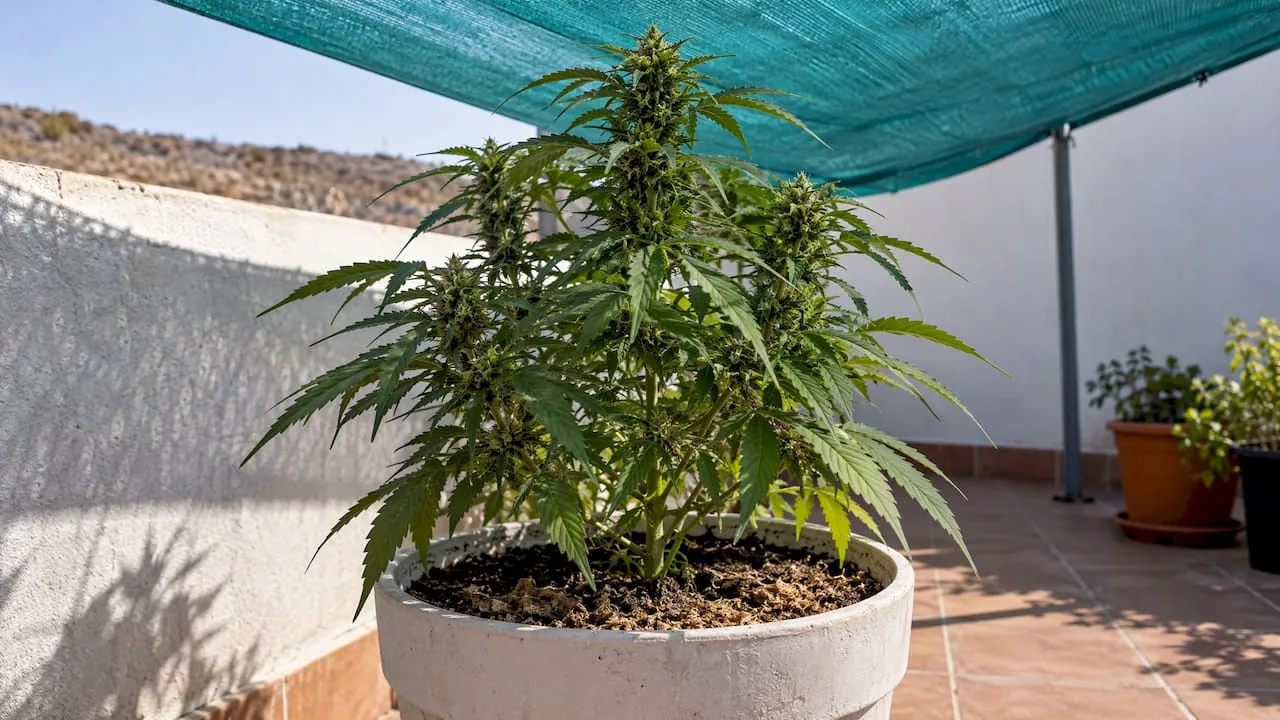



Premium seeds are defined by a rigorous process of breeding and genetic stabilisation that guarantees consistent, predictable, high-quality plants in every growing cycle. Understanding why premium seeds cost more and when they are worth paying for is not just a question of budget: it is a strategic decision that can determine the success or failure of your harvest. The higher price reflects generations of phenotypic selection, control of genetic variability and viability testing that standard seeds simply don’t include. If you grow with clear goals, whether for consistent personal use or commercial production, this difference matters.
Why premium seeds cost more and which processes justify it
The price of a premium seed isn’t arbitrary. Every extra euro represents real genetic work, time invested and biological resources that can’t be compressed.
The breeding process that produces a superior-quality seed follows a structured sequence:
- Selecting parent phenotypes. The breeder identifies plants with the desired traits: structure, cannabinoid profile, terpene production and resistance. This step may require evaluating hundreds of plants to choose two or three candidates.
- Initial cross and F1 generation. The first hybrid generation shows high variability. Here the breeder observes which traits dominate and which are lost.
- Backcrosses and successive generations. From F2 to F5 or more, each generation fixes the desired traits and eliminates the unwanted ones. A stabilised line requires F6 or more generations, with populations of 50 to 200 plants per cycle for rigorous selection.
- Controlling inbreeding depression. Repeated crossing between related plants can weaken the genetics. That is why introducing outside crosses maintains the diversity and health of the line, although it adds more stabilisation cycles.
- Viability and germination tests. Before being sold, batches undergo germination rate and growth uniformity tests.
The population size in breeding has a direct impact on genetic stability: working with small groups increases the presence of unwanted traits and forces you to repeat cycles. More plants, more selection, higher production costs.
💡 Pro tip: If you want to understand what makes a genetic premium before buying, read the guide to identifying premium genetics so you know exactly what to ask the supplier.

What are the concrete advantages of using higher-quality seeds?
Genetic stability isn’t an abstract concept. It translates into tangible benefits that directly affect your grow, your time and your final product.
- Uniform growth. Genetic stability reduces variability in size, structure and flowering pace. All your plants grow in a similar way, which simplifies the management of space, lighting and nutrition.
- Higher germination rate. Premium seeds go through viability checks that standard ones don’t guarantee. Fewer failed seeds means less money lost from day one.
- Consistency in cannabinoid and terpene profiles. If you grow for your own use or for others, knowing that every harvest will have the same chemical profile is a real asset. Variation between plants is minimised.
- Less selection work. With stabilised genetics, you don’t need to spend weeks identifying and discarding plants that don’t meet your expectations. Genetic uniformity reduces the extra selection work when growing.
- Critical relevance for extraction. If your aim is to produce concentrates, resins or oils, the homogeneity of the batch determines the efficiency of the process and the quality of the final product.
“Genetic stability is the main driver of premium value, as it allows predictable results and reduces work in the grow.” — PhenoDB cannabis genetics guide
For producers who supply third parties, the consistency of a premium batch is especially critical. Uniform profiles avoid additional quality control costs and product rejections. This turns the higher price of the seed into a real saving in the production chain.
When is it worth investing in premium seeds? Economic analysis
The decision to buy premium seeds should be based on an honest assessment of your goals, not on the price per unit. This is where a key financial concept comes in: sunk costs.

Sunk cost management indicates that the decision to buy premium seeds should be based on future marginal benefits, not on what you’ve already spent. If you’ve spent two weeks on a batch of cheap seeds with low germination, the right question isn’t “how much have I already spent?” but “what will it cost me to continue with this batch versus resowing with higher-quality seeds?”
| Scenario | Standard seeds | Premium seeds |
|---|---|---|
| Small home grow (1-4 plants) | Viable if the aim is experimental | Recommended if you want consistency and guaranteed quality |
| Commercial production (20+ plants) | High risk of variability and losses | An investment that pays back in uniformity and efficiency |
| Concentrate extraction | Inconsistent profiles reduce yield | Uniform profiles maximise quality and quantity |
| First grow with no experience | Can work for learning | Reduces variables and makes learning easier |
For a home grower who plants four plants a year, the price difference between standard and premium seeds can be 20 to 60 euros. If those premium seeds save you a week of selection work and guarantee a uniform harvest, the return is clear. For a commercial producer with 50 plants per cycle, the equation is even more favourable: variability in a standard batch can mean product losses, reprocessing time and logistics costs that far outweigh the initial saving on seeds.
💡 Pro tip: Before deciding, use the seed selection checklist to assess whether a batch meets the minimum quality criteria that justify any investment.
Premium, feminised and bulk seeds: a practical comparison to help you choose
Not all expensive seeds are premium, and not all cheap seeds are bad. The key is understanding exactly what you’re buying in each category.
| Seed type | Relative price | Uniformity | Germination guarantee | Best use |
|---|---|---|---|---|
| Premium (stabilised feminised) | High | Very high | High | Commercial production, extraction, demanding grows |
| Standard feminised | Medium | Medium | Medium | Home grows with defined goals |
| Regular | Low-medium | Variable | Variable | In-house breeding, genetic experimentation |
| Bulk | Low | Low | No guarantee | High volume with risk tolerance |
Buying seeds in bulk can seem attractive because of the saving per unit, but the lower germination guarantee and the lack of traceability can translate into greater indirect costs. A bulk lot with 60% effective germination compared with a premium lot with 95% completely changes the economic calculation.
Standard feminised seeds sit at a useful midpoint. They are a good option for home growers who want to avoid males without paying the full price of a stabilised genetic line. To better understand the differences between types, the comparison between feminised and regular seeds helps you fine-tune your decision according to your goals.
Some additional factors to consider when choosing a supplier and format:
- Genetic traceability: Does the supplier document the variety’s lineage? Quality premium seeds include information about breeding generations and parent phenotypes.
- After-sales support: A serious supplier offers a germination guarantee and assistance if the batch fails. This has real value.
- Storage and packaging: Premium seeds usually come in vacuum-sealed packs that preserve viability. Bulk packaging rarely offers this protection.
- Small batch test: If you are going to invest in a large batch, try 5 to 10 seeds first. A germination under controlled conditions gives you real data before you commit your whole budget.
Key points
Premium seeds justify their price when consistency, viability and growing efficiency are real priorities, not aspirational ones.
| Point | Details |
|---|---|
| The price reflects real genetic work | Stabilisation requires F6 or more generations with populations of 50 to 200 plants per cycle. |
| Uniformity reduces indirect costs | Less selection, less rework and consistent profiles save time and money in demanding grows. |
| The decision should be based on future value | Ignore what you’ve already spent and assess what marginal benefits the premium seed gives you from today. |
| They are not always the best option | For experimental or low-volume growing, standard feminised seeds may be enough. |
| The supplier matters as much as the seed | Traceability, germination guarantee and after-sales support are part of the real premium value. |
What I learned growing with cheap seeds and why I changed my mind
For years I thought the price of premium seeds was a marketing strategy. I grew with standard seeds, selected the best plants and assumed that the selection work was part of the process. It worked, but it was inefficient in a way that took me a while to recognise.
The change came when I started working with larger batches for extraction. The variability between plants from the same standard batch became a real problem: different flowering times, inconsistent terpene profiles and plants that simply did not meet expectations. The cost of that mess, in time, space and discarded product, far outweighed what a premium batch would have cost from the start.
What I learned is this: premium seeds are not for every grow, but they are for every grower who has clear goals. If you grow four plants a year for personal use and enjoy variability as part of the experience, standard seeds work perfectly well. But if your time is valuable, if you produce for others, or if you want predictable results cycle after cycle, the premium price becomes the smartest investment you can make before planting.
The most common mistake I see is comparing the price per seed without considering the total cost of the cycle. A 15 euro seed that germinates at 95% and produces uniform plants is cheaper than a 3 euro seed with 60% germination and high variability, when you calculate the real cost per productive plant.
Find premium seeds with guaranteed genetics at Bluedoggenetics
Bluedoggenetics brings together a curated selection of premium feminised and autoflowering seeds with stabilised genetics, a germination guarantee and discreet shipping. Every variety in the catalogue goes through selection criteria that ensure uniformity and quality in your grow, whether you’re a home grower or a larger-volume producer. Personalised support and order tracking make the buying experience as reliable as the seeds themselves. If you’re looking for a variety with a defined terpene profile and high resin production, the Bluedoggenetics catalogue has options for every growing goal.
FAQ
Why do premium seeds cost more than standard ones?
Premium seeds cost more because they involve genetic selection and stabilisation over several generations, with large populations of 50 to 200 plants per cycle. This process ensures uniformity, a high germination rate and consistency in cannabinoid and terpene profiles.
When is it worth choosing higher-quality seeds?
It’s worth it when your goal is commercial production, concentrate extraction or any grow where uniformity and predictability are priorities. For low-volume experimental grows, standard seeds may be enough.
What is the difference between premium seeds and bulk seeds?
Bulk seeds offer a lower cost per unit but with no guarantee of germination, genetic traceability or uniformity. Premium seeds include lineage documentation, protective packaging and verified germination rates that reduce the risk of loss during growing.
Are feminised seeds always premium?
No. Feminised seeds guarantee female plants, but they don’t imply advanced genetic stabilisation. A premium seed can be feminised, but what makes it premium is the breeding and stabilisation process, not just the absence of males.
How do I know if a seed batch justifies its premium price?
Evaluate the supplier’s genetic traceability, the germination guarantee offered and the reviews from other growers with that specific batch. Always try a small batch first before committing your whole budget to a new variety.