

The price of cannabis seeds is a direct function of their genetic quality, germination viability and the guarantees offered by the seed bank that produces them. Understanding the factors that determine the cost of cannabis seeds lets you make purchasing decisions based on real value, not on the lowest number on the label. Growers who ignore these criteria end up paying twice: once for cheap seeds and again for replanting, lost cycles and mediocre harvests. This article breaks down each factor with concrete criteria so that you can compare cannabis seed prices intelligently and without surprises.
What factors determine the price of cannabis seeds?
The price of a cannabis seed reflects the accumulated cost of genetics, quality testing, storage conditions and the backing of the seed bank that sells it. There is no universal “fair” price: there is a price justified by evidence. The main factors are the verifiable germination rate, the documented genetic stability, the type of seed (feminised, autoflowering or regular), shipping and return costs, and the purchase volume. Ignoring any of these elements turns a price comparison into a superficial exercise that does not protect your investment.

How do viability and germination rate affect the price?
The germination rate is the most direct indicator of a seed’s real value. Reputable seed banks report rates of between 80 and 95% for fresh seeds, and warn that any claim of 99-100% without documented tests is a warning sign, not a guarantee. A verifiable rate of 85% on seeds costing 3€ each has more practical value than a promise of 99% on unbacked seeds at 1€.
Freshness and storage conditions directly determine viability. Well-stored seeds kept cold and at controlled humidity retain their germination potential for years, whereas a badly kept batch can lose viability within months even if the price is attractive. This means that paying more for a recent batch with documented storage conditions is, in most cases, the smartest financial decision.
Viability also affects the total cost of growing, not just the initial price. When a seed doesn’t germinate, you lose the cost of the seed, the waiting time and the growing space. Seeds with verified rates reduce replanting and losses, which lowers the real cost per harvested plant.
- Always ask for germination rate data per batch, not general seed bank averages.
- Check the batch date and storage conditions before buying.
- Be wary of advertised rates above 95% without an attached certificate.
- Consider the cost per harvested plant, not just the price per seed.
💡 Pro tip: Before buying a large batch, ask the supplier for the batch number and the packing date. If they can’t give them to you, that alone tells you everything you need to know about their level of transparency.

What role do genetics and the seed bank’s reputation play in the price?
Genetics is the blueprint of your harvest. A stable genotype with documented parental lines guarantees that the phenotype you get will be predictable in aroma, potency, resin production and flowering time. Seed banks that invest in stable genetics and quality testing justify higher prices compared with sellers without guarantees, because the risk they pass on to the buyer is significantly lower.
Genetic transparency includes information about the parent varieties, the number of stabilisation generations and cannabinoid test results when available. A seed bank that publishes this data isn’t doing it for marketing: it’s doing it because it has results to stand behind. That documentation has a real production cost that is reflected in the unit price.
Reputation and after-sales service are also part of the real price. Guarantees and technical support increase perceived value and justify increases in the unit cost, because they reduce the risk of total loss if there are problems with germination. A seed bank with no returns policy or customer service passes that risk entirely on to the grower.
| Indicator | Seed bank with guarantees | Seller without guarantees |
|---|---|---|
| Parent lines | Documented and verifiable | Generic or absent |
| Germination rate | Per batch, with certificate | General average, untested |
| Returns policy | Clear and applicable | Non-existent or ambiguous |
| Unit price | Taller, lower risk | Lower, higher risk |
| Technical support | Available pre- and post-sale | No support |
Buying without comparing, or at prices that are too low, usually points to a lack of transparency or seeds of dubious quality. Established seed banks with a track record and certificates justify higher prices precisely because they have built that track record with real results.
How do shipping, returns and volume affect the final cost?
The price per seed you see in the shop is not the price you pay. The total cost includes shipping, possible import duties, and the value of return policies in case of failed germination. Many transparent suppliers recommend comparing total cost, not just price per unit, to get a real picture of what you are paying.
To calculate the real cost per seed, follow these steps:
- Add the total order price plus the shipping cost.
- Divide by the number of seeds in the pack to get the real unit cost.
- Apply the expected germination rate: if it is 85%, divide the unit cost by 0.85 to get the cost per viable plant.
- Compare that number between suppliers, not the headline price.
- Add the value of the return policy: if the seed bank replaces failed seeds, that insurance has real financial value.
Volume discounts can lower the unit cost, but savings on bulk seeds only make sense when the quality and freshness of the batch are under control. Buying 50 seeds from an old batch at a low price can end up costing more than buying 10 fresh seeds from a certified seed bank, once you work out the cost per harvested plant.
Feminised, autoflowering and regular: how does the type affect the price?
Seed type is one of the most direct factors when comparing cannabis seed prices between shops. Each type has different characteristics that justify clear price differences.
- Feminised: They produce female plants with very high reliability, eliminating the risk of males and making the best use of your growing space. Buying feminised seeds is usually more expensive than autoflowering or regular ones because of their greater predictability and quality. They are the preferred option for growers who want to maximise resin and trichome production per square metre.
- Autoflowering: They flower according to the age of the plant, not the photoperiod. They are more affordable and more tolerant of variable weather conditions, which makes them ideal for growers with less control over their environment. Their short cycle reduces the time invested per harvest.
- Regular: They produce male and female plants in a roughly 50/50 ratio. They are the cheapest on the market and the preferred choice of breeders who work with their own genetics. For the average grower, the cost of removing males and the wasted space can cancel out the initial saving.
Choosing well according to your climate and needs as a grower has a direct impact on return on investment. An autoflowering variety well suited to your outdoor climate can offer a better cost-benefit ratio than a premium feminised one grown in suboptimal conditions.
💡 Pro tip: If you’re just starting out, autoflowering plants offer the best balance between price, ease of growing and predictable results. Save premium feminised seeds for when you’ve mastered control of your growing environment.
How do you compare prices across shops and seed banks using solid criteria?
Comparing cannabis seed prices between shops without clear criteria is as useful as comparing the price of two cars without knowing their mileage or maintenance history. The quality seed selection checklist gives you a structured basis for evaluating any supplier.
Before buying, check these points with each supplier:
- Batch documentation: packing date, storage conditions and batch number available on request.
- Germination certificate: actual rate per batch, not the catalogue’s general average.
- Returns policy: clear conditions for replacement in case of failed germination.
- Seed bank track record: years in operation, verifiable reviews and a presence in grower communities.
- Genetic transparency: identified parent lines, stabilisation generations and, where applicable, cannabinoid analysis.
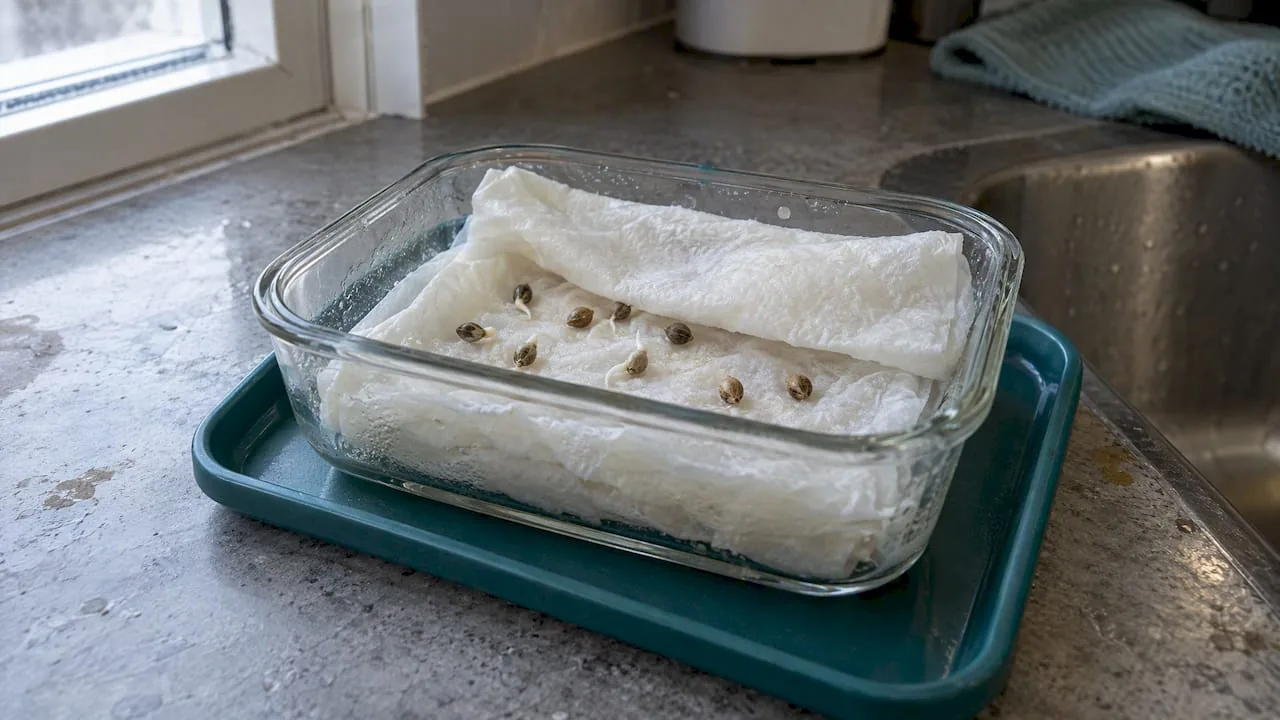
Many experts recommend small initial purchases and home germination tests before investing in large quantities, to mitigate risk. This practice lets you validate the supplier’s real quality before committing budget to a large batch. Insisting on documentation of the batch and storage date is standard practice to minimise losses, especially with bulk purchases.
| Criterion | Weight in the decision | Warning sign |
|---|---|---|
| Certified germination rate | High | No data per batch |
| Genetic documentation | High | Trade name only |
| Returns policy | Medium | No written guarantee |
| Adjusted unit price | Medium | Price well below the market |
| Verifiable reputation | High | No reviews or history |
Key points
The real price of cannabis seeds is calculated by dividing the total cost of the order by the number of viable plants you expect, not by the number of seeds in the pack.
| Point | Details |
|---|---|
| Verifiable germination rate | Demand batch data between 80 and 95%; be wary of promises without a certificate. |
| Documented genetics justify the price | Parental lines and stability tests reduce the grower’s real risk. |
| Total cost, not the headline price | Add shipping and apply the germination rate to calculate the cost per viable plant. |
| Seed type to suit your grow | Feminised for maximum yield, autoflowering for ease and price, regular for breeders. |
| Trial purchase before the big batch | Validate real quality with a small order before committing budget to bulk. |
What I learnt buying seeds over the years
I have seen experienced growers make the same mistake over and over: comparing cannabis seed prices by looking only at the number on the label. I fell into that trap myself at the beginning, buying “budget” batches that resulted in germination rates of 40% and lost cycles that cost far more than the initial saving.
What changed the way I buy was starting to demand documentation. Not aggressively, but as a selection criterion: if a seed bank can’t tell me its batch date or the germination rate per batch, I simply don’t buy. That requirement automatically removed the problematic suppliers from my list.
The point I find hardest to get across to new growers is that the face-value price of a seed is almost irrelevant. What matters is the cost per gram harvested at the end of the cycle. An 8€ seed with 90% germination and stable genetics can cost less per final gram than a 2€ one with 50% viability and an unpredictable phenotype.
In 2026, seed bank transparency has improved noticeably, but there are still sellers who take advantage of buyers’ lack of information. The best protection is to know the right criteria and apply them without exception, regardless of the advertised price.
Premium seeds with transparent pricing at Bluedoggenetics
Bluedoggenetics brings together in a single catalogue what is hardest to find separately: documented genetics, verifiable germination rates and clear shipping and customer service policies. Whether you’re after high-yield feminised seeds or autoflowering ones suited to outdoor growing, the Bluedoggenetics catalogue of feminised and autoflowering seeds includes curated varieties with real batch information and personalised support before and after your purchase. Shipping is discreet, prices are competitive and the guarantees are written down, not just promised. Visit the catalogue, apply the criteria from this article and choose with the information you deserve to have.
FAQ
What is the normal germination rate for quality seeds?
Reputable banks report rates of between 80 and 95% for fresh, well-stored seeds. Any claim of 99-100% without a per-batch certificate should be treated with scepticism.
Why are feminised seeds more expensive than regular ones?
Feminised seeds require a more complex production process to guarantee female plants with high reliability, which raises the production cost and, therefore, the price for the grower.
How do I calculate the real cost per seed including shipping?
Add the order price to the postage and divide by the number of seeds. Then divide that result by the expected germination rate to get the real cost per viable plant.
What signs indicate that a seed price is too low?
A price far below the market, no batch documentation, no returns policy and no verifiable seed bank history are clear warning signs. Established seed banks with certificates justify higher prices with real results.
Is it worth buying seeds in bulk to save money?
Only if the supplier guarantees freshness, documents the batch and offers verifiable germination rates. Buying in bulk from an old or undocumented batch can end up costing more than a small batch of certified quality.