

A cannabis seed stash is your genetic bank for future grows: storing it badly is the difference between replanting the variety you already know and starting from scratch with new genetics and no guarantees. If you want your seeds to keep a high germination rate for years, you need to control humidity, temperature, light and oxygen from day one; at Bluedoggenetics you will find feminised and autoflowering varieties with documented genetics, a good starting point for building that stash.
In short:
- Seeds stored well in cold, darkness and low humidity can keep germination above 85% after five years.
- The four enemies of a stash are humidity, temperature, light and oxygen.
- An amber glass jar with indicator silica gel is the minimum standard for storing seeds for more than a few weeks.
- Splitting your stock into several small jars prevents opening one from exposing the whole collection to moisture and oxygen.
- Bluedoggenetics offers feminised and autoflowering seeds with documented genetics, ideal as a starting point for a solid collection.
What are backup seeds and why do you need them?
Reserve seeds are the genetic stock you keep for future grows, and storing them properly is the difference between having vigorous plants next season or starting from scratch. It is not just about keeping leftover seeds: it is about preserving specific phenotypes, genetic stability and the selection work you have already done.
When you store them correctly, seeds can last for more than five years while keeping germination rates above 85%. Under professional conditions, cases have been documented where viability exceeds a decade. The enemy is not time: it is humidity, temperature and light.
The four factors that destroy a stash:
- Humidity: high levels encourage mould and can cause premature germination, ruining the seed before it reaches the substrate.
- Temperature: heat speeds up the embryo’s metabolic activity and uses up its nutritional reserves.
- Light: UV exposure, even indirect over several weeks, degrades the dormancy hormones that keep the seed inactive.
- Oxygen: it drives lipid oxidation in the embryo’s cell membranes, although it is less critical than humidity and temperature.
Both feminised seeds and autoflowering ones benefit from the same storage principles. The difference is that autoflowering seeds, having shorter cycles, tend to be replaced more often, whereas feminised seeds of stable genetics deserve a more carefully kept long-term reserve.
How to store your spare seeds so they last for years

The ideal conditions for storing them are a cool temperature and low relative humidity, which are usually found at the back of a fridge drawer, away from the door and the freezer compartment.
Conditions and materials that make the difference:
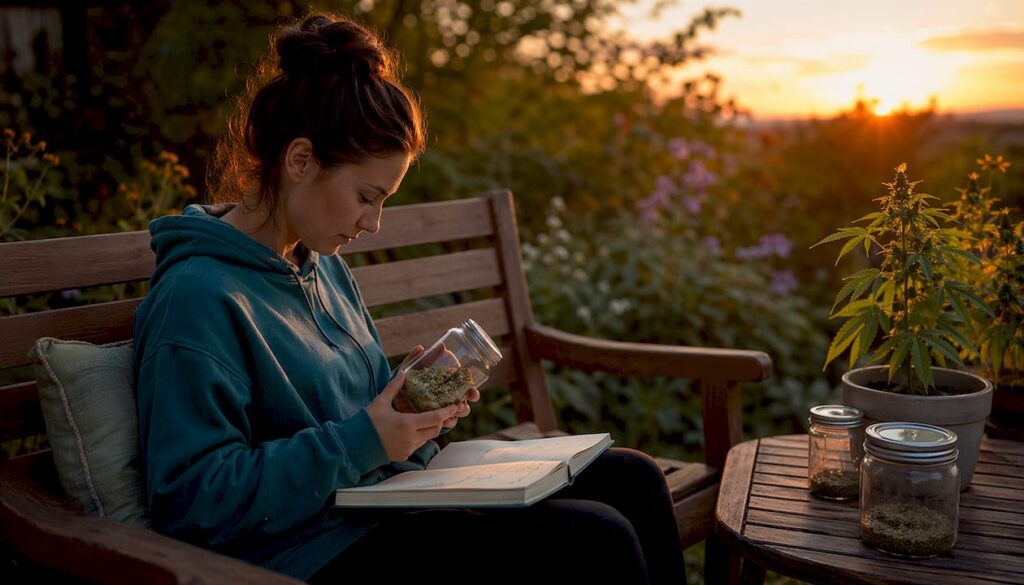
- Container: amber glass jar with a rubber stopper. Glass is inert, blocks UV and doesn’t release compounds that could affect the embryo. Plastic is permeable to moisture in the long term.
- Desiccant: silica gel with a colour indicator (blue when dry, pink when saturated). A jar with silica gel is the minimum standard for any storage lasting more than a few weeks.
- Darkness: wrap the jar in aluminium foil or use an opaque secondary container. Indirect light accumulates hormonal damage over time.
- Airtightness: airtight containers with desiccant tackle both humidity and oxygen at the same time.
About the freezer: it can extend viability for a long time, but it requires the seeds to be very dry, double sealing and a gradual thawing protocol lasting several hours. If you skip any step, condensation kills the embryo when you open the container. For most growers, the fridge is safer and gives almost equivalent results for long-term storage.
💡 Pro tip: if you harvested your own seeds, let them dry in a ventilated, dark place for at least a week before sealing them. Storing seeds with residual moisture is the most common cause of mould in the stash.

Expert tips to get the most out of your reserve
This is where most growers lose valuable genetics without realising it. These are the most common mistakes and how to avoid them:
- Divide your stock into small batches. Every time you open a container, you let in moisture and oxygen. If you have 50 seeds of one variety, store them in five jars of ten. Open one and the rest stay untouched.
- Don’t blame the genetics before checking your storage. Poor germination almost always points to a storage problem, not defective seeds. Check the silica gel indicator before ruling out a variety.
- Respect the original packaging. Reputable seed banks use packaging with a moisture barrier and UV protection. Keep the seeds in that packaging inside the glass jar.
- Label everything. Variety, sealing date and source. Without a label, in two years you won’t know what you have or how long it has been stored.
- Avoid places with temperature fluctuations. Garages, storage rooms and windowsills are the worst spots. A kitchen with the oven on can raise the temperature of a drawer by several degrees in minutes.
- Seeds with cracks or soft areas should not be stored. Germinate them straight away: their protective shell is already compromised and they will not survive in storage.
The genetic stability of your stash depends directly on these habits. You can read more about signs of elite seeds to know which traits to prioritise before deciding what to keep.
Guarantees and confidence when buying reserve seeds
Bluedoggenetics offers a curated selection of feminised and autoflowering varieties designed for growers who want to build a solid stash from their very first order. Each variety goes through a quality check before reaching your hands, with order tracking and discreet shipping so that the experience is safe from start to finish.
Personalised support makes the difference when you have doubts about which variety stores best or which one suits your growing space. Whether you are a beginner or have spent years selecting phenotypes, you will find options with competitive prices and promotions that make it affordable to build a quality reserve. Check the guide to seed storage to complement your purchase with the best preservation practices.
Recommended varieties for your stash
For a reserve planned for the long term, prioritise varieties with stabilised genetics and a documented high germination rate.
- Feminised seeds of stable genetics: they produce uniform plants, with no males to contaminate the grow, and are the most suitable for medium-term reserves stored in the fridge.
- Autoflowering seeds: ideal if you renew your stock every season. Their short cycle lets you check viability quickly and replenish it without waiting through long flowering periods.
💡 Pro tip: always germinate two or three seeds from each new batch before sealing it. That way you confirm the real viability before committing the whole stock to years of storage.
Explore the full catalogue of feminised and autoflowering seeds at Bluedoggenetics and choose the varieties that best fit your growing project.
Bluedoggenetics, your starting point for a quality stash
Building a solid genetic stash starts with choosing seeds that arrive with guarantees. Bluedoggenetics brings together high-quality feminised and autoflowering varieties with discreet shipping, affordable prices and a team that answers your questions before and after you buy. There’s no need to search across several sites or take a risk on unreliable sources: the whole catalogue is available in the Bluedoggenetics shop, with the peace of mind of knowing exactly what you’re keeping in your stash.
Key points
Reserve seeds that are well stored in cold, low-humidity and dark conditions can maintain germination rates above 85% after five years and remain viable for even a decade if the conditions are professional.
| Point | Details |
|---|---|
| Temperature and humidity are the priorities | Keep a cool temperature and low relative humidity to preserve viability. |
| Silica gel with indicator | Use colour-changing silica gel to detect moisture inside the container. |
| Split your stock into batches | Opening a jar lets in moisture; splitting into portions protects the rest of the seeds. |
| Freshly harvested seeds need drying | Leave to dry for at least a week before sealing to avoid mould in storage. |
| Bluedoggenetics guarantees quality from the source | Their catalogue of feminised and autoflowering seeds includes order tracking and personalised support. |
What nobody tells you about reserve seeds
The conversation about stored seeds usually revolves around technique: temperature, containers, desiccants. All of that matters. But there’s something that is overlooked far too often: the initial genetic quality sets the ceiling for what you can preserve.
Storing mediocre seeds with a perfect protocol only prolongs the life of something that wasn’t worth preserving. The real work begins before you open the jar: choosing varieties with stable genetics, documented phenotypes and verifiable origin. A quality feminised seed stored correctly is an asset that can last for years. A seed of dubious origin, even if it survives storage, will give you unpredictable results when growing.
The reserve is not an archive of everything you have. It is a deliberate selection of the best you have found.