

If you’re looking for an energising effect, buy seeds whose offspring show a medium-high THC profile and terpenes such as limonene and pinene, rather than trusting the “sativa” label. At Bluedog Genetics we work with varieties selected for that kind of profile, designed for growers who want alertness and focus rather than sedation.
In short:
- Choosing seeds with terpene profiles dominated by limonene, pinene or terpinolene ensures an energising effect and mental clarity.
- Commercial names such as sativa don’t guarantee a stimulating chemical profile, so we recommend checking the terpene and cannabinoid analyses.
- Growing in controlled conditions, with care at harvest and curing, helps preserve the volatile terpenes that enhance the energising effect.
- Excessive THC potency can increase the risk of anxiety and psychotic episodes, so it is preferable to look for a balance with terpenes and responsible doses.
- It is advisable to start by trying a few seeds to check the effect in cultivation before buying large batches or new varieties.
Which compounds explain why some flowers feel energising and others don’t
THC tends to correlate with the overall intensity of the effect, while CBD can modulate it and soften peaks of anxiety. But reducing the conversation to that ratio leaves out the most revealing piece: terpenes. A study published in PubMed shows that characterising minor cannabinoids and the terpene profile makes it possible to distinguish chemotypes with far more precision than the simple THC/CBD ratio, and that this terpene profile predicts sensory nuance better than any commercial label.
Three terpenes appear repeatedly associated with feelings of energy and clarity:
- Limonene brings a feeling of lightness and good mood, common in citrus varieties.
- Pinene is associated with greater alertness and a feeling of mental clarity.
- Terpinolene adds to that mental clarity, with a more herbal and spicy aromatic profile.
Caryophyllene, on the other hand, acts on different receptors and tends to provide a more relaxing undertone, so a high presence of it can counteract the stimulating effect you’re looking for.
Here is the underlying problem: the mass hybridisation of recent decades has blurred the line between sativa and indica. A study on the classification of cannabis varieties confirms that these commercial labels are based on plant morphology, not chemical composition, and that they do not align consistently with real phytochemical diversity. To better understand why this distinction fails so often, it’s worth reviewing the differences between indica, sativa and hybrids before deciding on a purchase based on the name alone.

Practical checklist for choosing seeds with an energising effect
Buying seeds blind based on the strain name is the most common way to end up disappointed. This is the process we follow to filter before adding anything to the basket:
- Read the full technical sheet, not just the headline: look for explicit mentions of limonene, pinene or terpinolene, or lab data if the seed bank publishes it.
- Prioritise stable phenotypes, with descriptions that indicate consistency between batches and not just generic promises of “euphoria”.
- Decide on the type of seed according to how much control you have over your grow: a feminised seed gives you predictability, an autoflowering one shortens the cycle, and a regular one only makes sense if you are going to select your own genetics.
- Ask the seller whether they offer a germination guarantee and whether there is traceability back to the seed bank of origin of the genetics.
- Check whether cannabinoid or terpene analyses are available, even from earlier batches, to corroborate what the description says.
For those still undecided between formats, our guide on how to choose cannabis seeds according to your experience goes into more detail on the advantages of each type depending on the grower’s level.
Pro tip: before buying a large batch, get just three or four seeds of a new variety and confirm the effect in your own grow before scaling up.
How to grow and process to preserve a stimulating effect
Genetics sets the potential, but growing and processing decide how much of that potential reaches the final bud. Terpenes such as limonene and pinene are volatile compounds, and they degrade easily if post-harvest handling is careless.
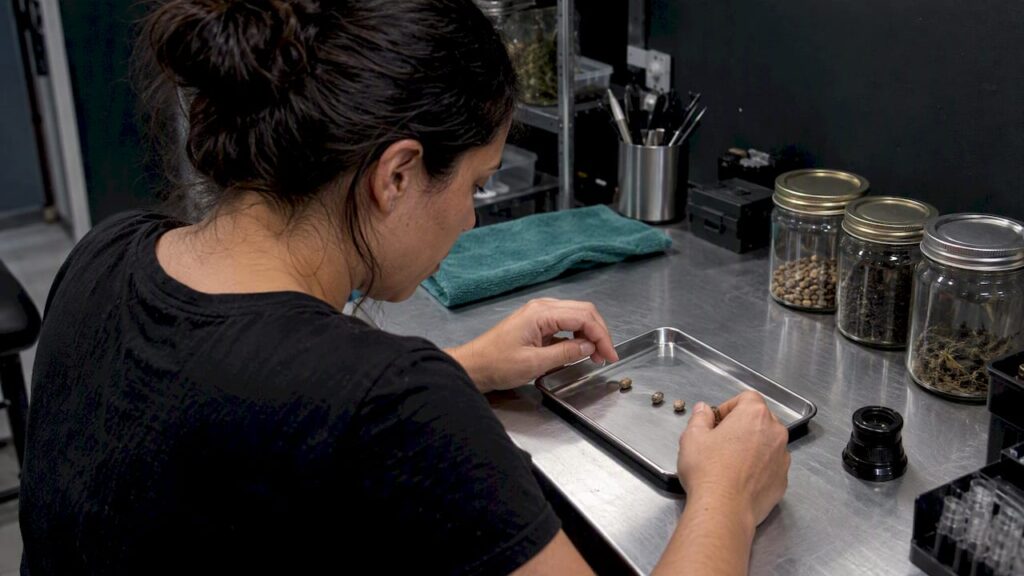
- Look at the trichomes with a magnifying glass before cutting: a midpoint between milky trichomes and the first amber ones usually preserves the balance between THC and terpenes better than waiting for full maturity.
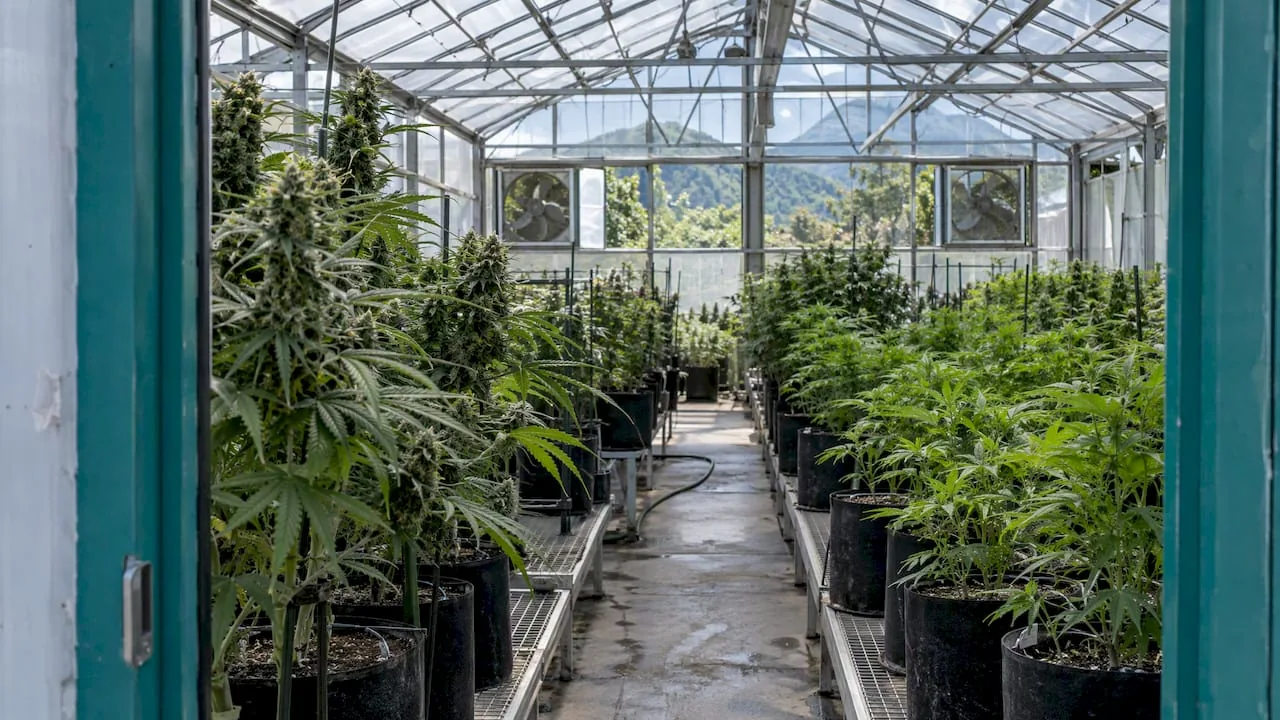
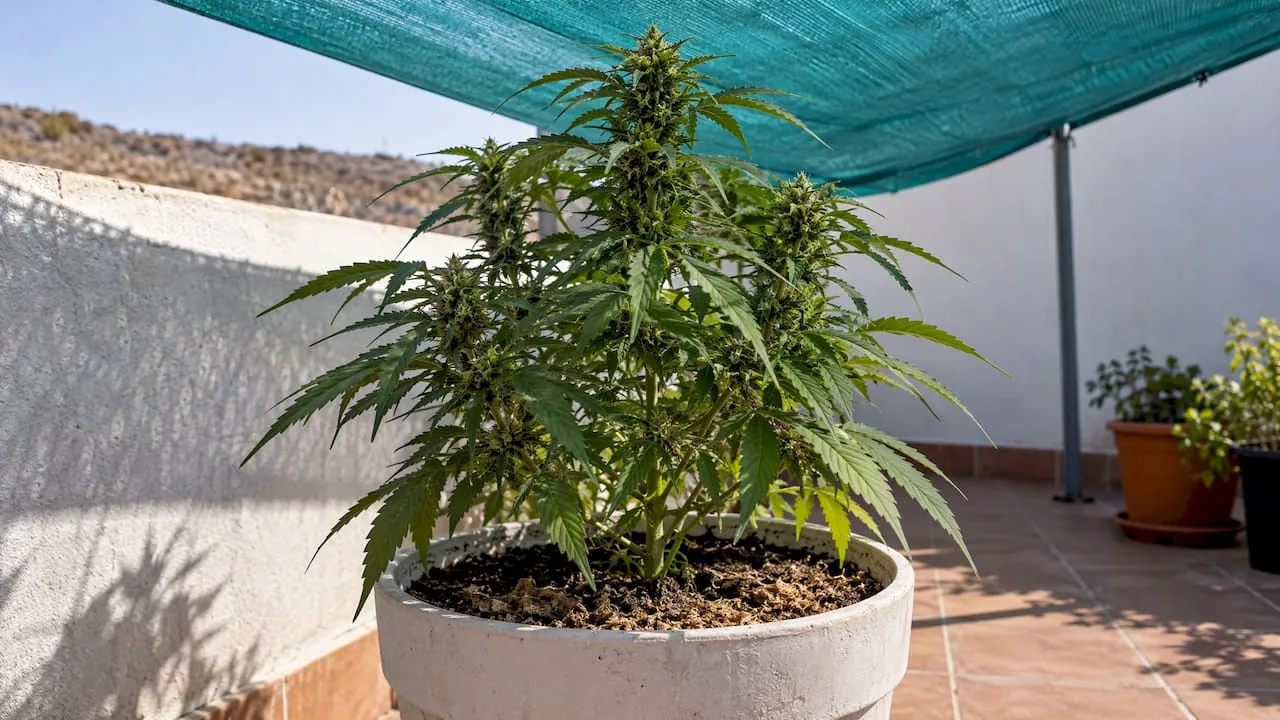
- Keep temperatures moderate and light good during flowering, because excessive heat stress tends to volatilise terpenes before harvest.
- Dry slowly, in a dark space with good air circulation, avoiding direct heat that speeds up the loss of aromas.
- Cure in opaque glass jars at a stable temperature, opening them briefly every day during the first weeks to release moisture without exposing the material to light or heat.
A well-done cure, lasting several weeks, stabilises both the aroma and the subjective experience of the final consumption. It’s the difference between a bud that promises energy on the spec sheet and one that actually delivers it when you smoke it.
Pro tip: keep a grow journal with the cutting date, curing conditions and your own notes on the perceived effect: over time, that record is worth more than any commercial data sheet.
Risks and warning signs: health, adulteration and vulnerable populations
Looking for a more intense effect should not mean ignoring the risks of high potency. The European Drug Report 2025 recorded that the average potency of cannabis resin seized in the European Union reached a high THC level in 2023, while that of herbal cannabis stayed at a medium level, and the same report warns of the growing availability of semi-synthetic cannabinoids such as HHC or THCP, linked to episodes of acute intoxication in several European countries between 2022 and 2024.
- High doses of THC can cause anxiety, tachycardia and, in predisposed people, a higher risk of psychotic episodes.
- Semi-synthetic cannabinoids circulate with little analytical traceability, which makes it hard to know what you are really consuming.
- German health authorities point out that people under 25 are more vulnerable to the adverse effects of THC, according to information material from the BMG.
Always choose seeds from seed banks with known traceability, start with low doses when trying a new genetic and avoid consumption if you have a personal or family history of psychiatric conditions.
The author’s perspective on selecting and testing energising varieties
I have spent years selecting genetics and comparing spec sheets against what really happens in the pot, and the lesson that comes up most often is this: be wary of any variety that promises energy just because it is called sativa. The label sells, but the terpene profile and the stability of the phenotype are what truly determine the result.
That is why I insist on trying one or two plants first and noting the real effect before committing to a large batch. At Bluedog Genetics we believe in maintaining a curated catalogue with clear guarantees precisely because we know that first trial is what builds long-term trust with each grower.
Where to buy: catalogue and guarantees at Bluedog Genetics
Once you’re clear about the profile you’re looking for, the next step is to find reliable genetics. In our feminised seeds category you’ll find options designed for predictable results, while the autoflowering section works best if you want short cycles without depending on the photoperiod. We also offer Fast version for anyone who wants to harvest sooner without giving up the freshness of the terpenes.
On each product page we state the characteristics of the variety, along with details of the discreet shipping and order tracking that come with every purchase. Our practical recommendation: buy a small pack first, confirm the phenotype in your own space and then decide whether to repeat the genetics on a larger scale. You can start browsing options in our general seed catalogue.
This article is general information and does not replace the advice of a qualified doctor. Consult a qualified healthcare professional about your particular case before acting on this content.

Frequently Asked Questions
What does it really mean when a seed has an “energising effect”?
It means that, under normal growing conditions, the plant tends to produce flowers with a medium-to-high THC profile combined with terpenes such as limonene, pinene or terpinolene, associated with feelings of alertness and mental clarity. It is not an absolute guarantee, because the response varies depending on the person and the specific grow.
Do sativa seeds always produce an energising effect?
Not necessarily. Extensive hybridisation means the sativa label doesn’t always match a stimulating chemical profile, so it’s best to check the terpene profile described on the product page rather than relying only on the category name.
Do autoflowering seeds produce the same energising effect as photoperiod ones?
They can, if they share similar genetics, but their shorter cycle sometimes limits the full development of volatile terpenes compared with a photoperiod plant grown to full term. The difference depends more on care during flowering and curing than on the type of seed itself.
Is it safe to always look for the highest possible potency?
No, very high potency increases the risk of anxiety, tachycardia and, in predisposed people, more difficult episodes, as the European cannabis report warns. It is safer to look for a balance between THC and terpenes than to chase the highest possible number.
Which Bluedog Genetics varieties do you recommend for starting to try an energising effect?
In our catalogue, feminised options with citrus profiles are usually a good starting point thanks to their higher limonene content, and the Fast versions let you check the effect in less time before deciding whether to repeat the genetics on a larger scale.