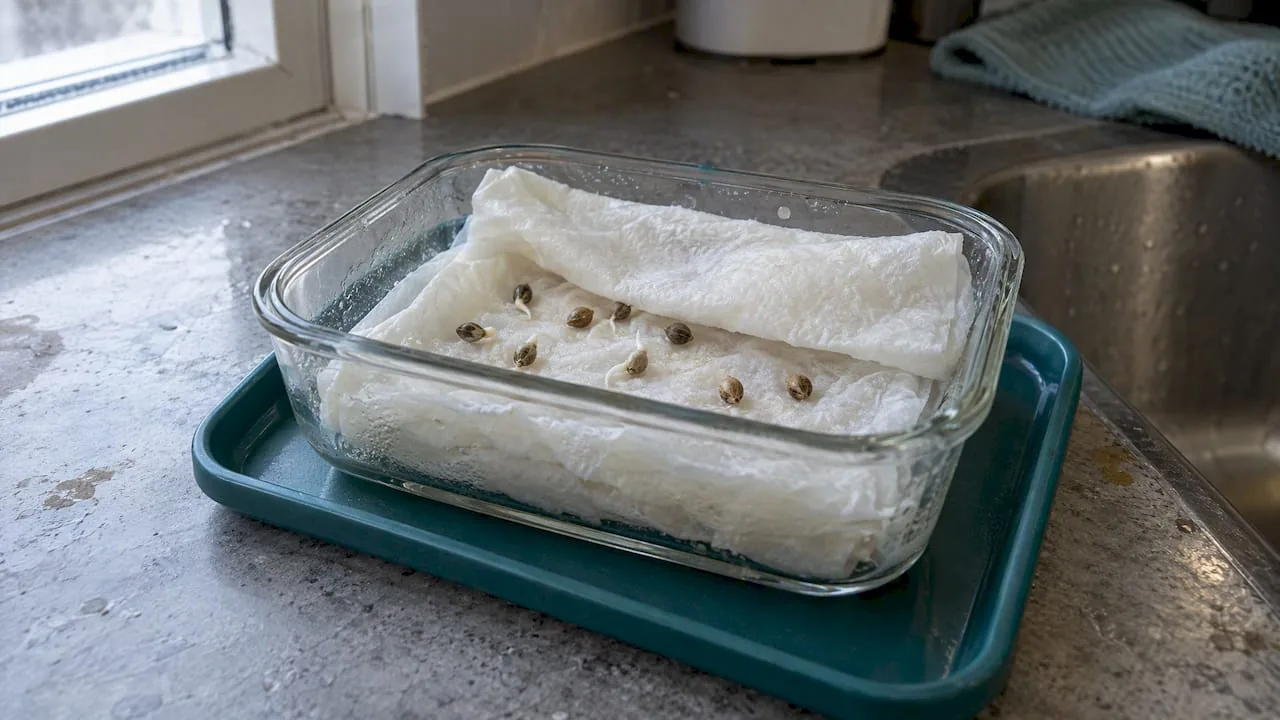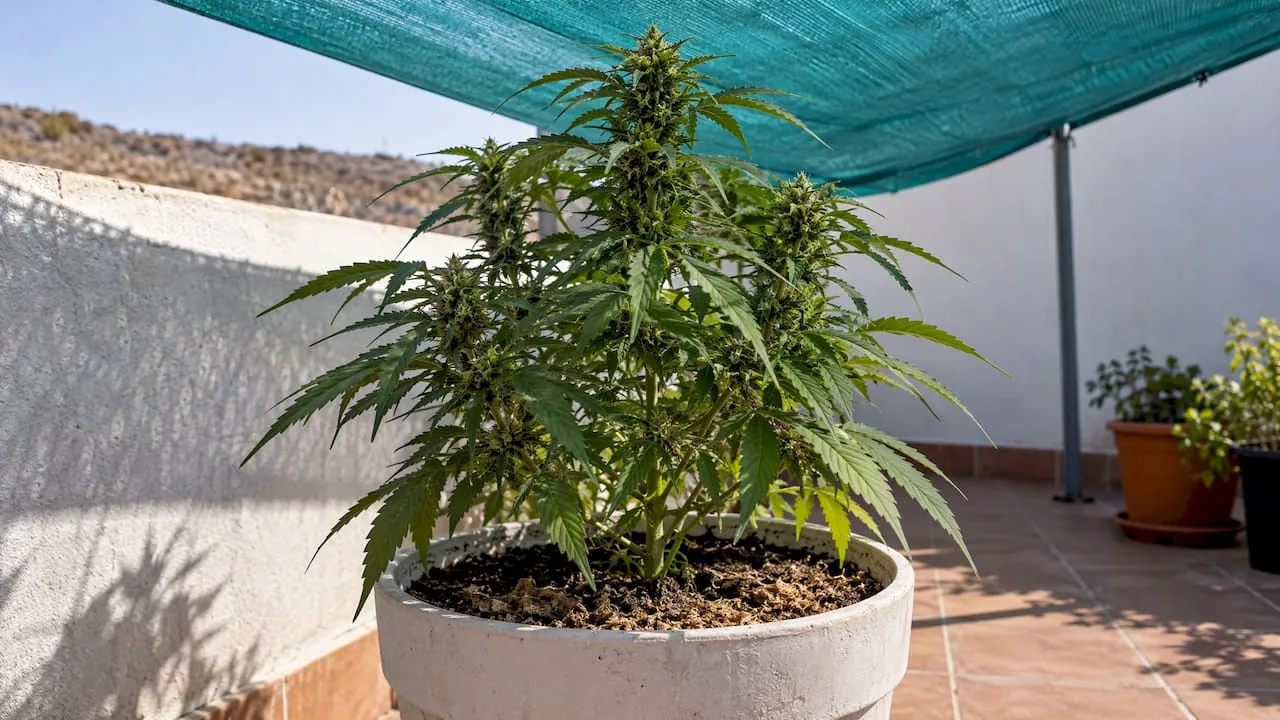


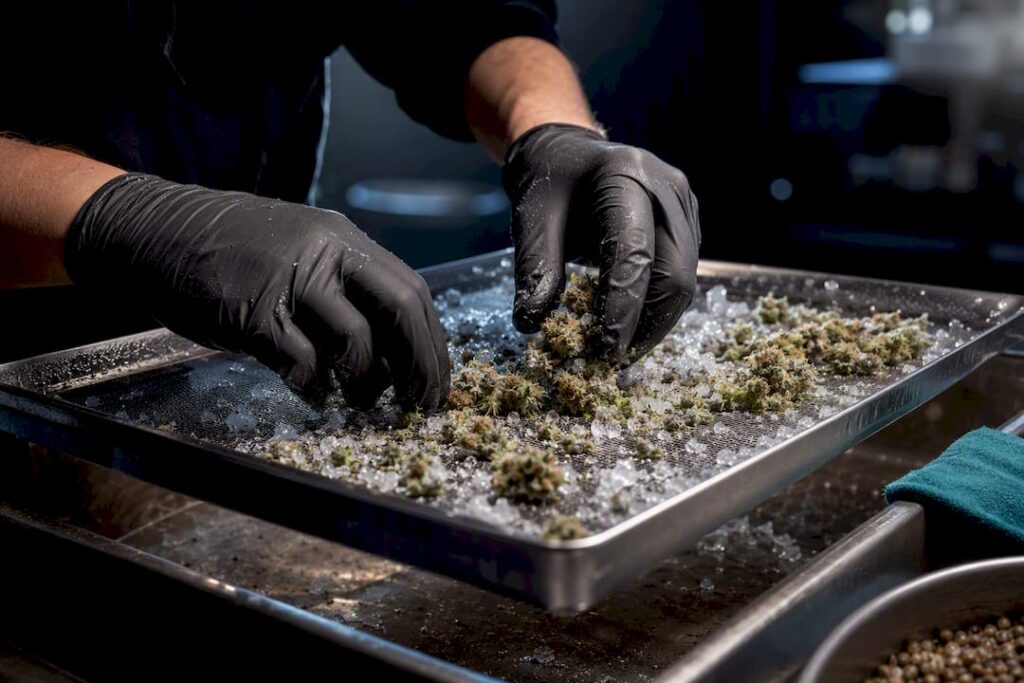
For top-quality extractions, choose seeds for extraction that produce large capitate trichomes and “sandy” resin that is easy to wash and press. Fresh-frozen handling and humidity control in the last weeks of growing make the difference between mediocre hash and full melt. Bluedog Genetics selects genetics designed for exactly that, available in its seed catalogue.
In short:
- It is essential to choose seeds with large capitate trichomes and sandy resin that are resistant to breaking during washing and pressing.
- The quantity and size of trichomes determine the quality of the extract, and a thick, well-anchored trichome with a sandy texture is preferable.
- The ripening of the trichomes and the humidity in the final weeks are key to achieving top-quality resin and aroma.
- Dense-resin varieties, high-terpene phenotypes and compact structures give better results across different extraction methods.
- Choosing premium genetics and careful post-harvest handling significantly increase the yield and purity of the final hash or rosin.
What to look for in seeds for resin extractions
Not all plants produce the same amount or quality of resin, and that is the key to choosing the right seeds for resin extraction. The most important factor is the capitate-stalked trichome, the microscopic structure that produces and stores cannabinoids and terpenes. Its size and architecture directly determine how suited a plant is to producing good extracts, so the larger and denser that trichome is, the better the yield and quality you get at the end of the process.
Diameter matters as much as quantity. A thick trichome that is well anchored to the plant tissue withstands the mechanical agitation of ice washing better, while a thin, fragile one breaks before reaching the mesh, and that broken resin is either lost or contaminates the hash with plant material.
Another decisive criterion is the texture of the resin once separated: “sandy” or “sticky”. Sandy resin breaks apart into clean granules, does not clog the screens and makes successive washes easier without clumping. Professional hashmakers prefer precisely these sandy phenotypes because the sifting process is faster and the final result is cleaner. Sticky resin, on the other hand, tends to form balls and retains more broken trichome between the layers.
When growing, you can spot these qualities before harvesting:
- Visible trichome coverage on buds, small fan leaves and bracts, not just on the top of the flower.
- Sticky feeling to the touch that persists even with gloves.
- Trichomes that come away easily when gently rubbed, a sign of good mechanical separation.
When you read variety descriptions, look out for terms such as “high resin production”, “large trichome heads” or “hash phenotype”. They are clues that the seed bank has already tested that genetics for extractions, not just for flower for direct consumption. Before buying, it’s worth reviewing how to identify premium genetics so you don’t rely only on the marketing in the description.
💡 Pro tip: always ask for macro photos of trichomes before choosing a genetic for hash. A photo taken with the naked eye can be misleading; a macro shot reveals whether the trichome has a large head or is just fine fuzz with no substance.
Our recommended genetics for each type of extract
After years of observing which phenotypes truly perform in mesh and in a rosin bag, this is our practical selection. Each entry points to a specific method, so check which one suits your equipment and your end goal.
- Dense-resin, broad-headed genetics. They aim for mesh sizes of around 90 µm, the point where the purest full melt usually concentrates. Their sandy texture makes them ideal for bubble hash and drysift, as they separate cleanly without leaving any plant residue.
- High-terpene phenotypes with early translucent resin. These tend to mature earlier in trichome colour, which means keeping a close eye on the harvest point so as not to lose the aromatic profile. They work especially well as fresh-frozen, where the terpenes are preserved almost intact.
- Varieties with a compact structure and dense flowers. Flower density concentrates more trichome surface per gram harvested, a detail that translates into a better yield per wash. Keep an eye on the trichome neck in the final phase: if it looks thin and elongated, harvest before it collapses.
- Traditional hash-lineage genetics. Inheritors of landrace varieties historically used for charas and ball hash, they tend to give resin that is stickier than sandy. They make up for it with an intense terpene profile, ideal if you want concentrates with a strong character rather than pure yield.
- Stable phenotypes for direct rosin. Here the priority is not just the amount of trichome, but the absence of chlorophyll in the trichome head, which ruins the colour and flavour of pressed rosin. These plants usually tolerate repeated freezing and thawing well without losing resin integrity.
If you’d like to start with material already geared towards these profiles, take a look at the options available in the shop of Bluedog Genetics, where you’ll find varieties selected for resin and terpenes, not just flower yield. It is also worth storing properly any surplus seeds you don’t sow this season: our guide to storage and preservation explains how to keep genetic viability intact for years.
How to grow and harvest to maximise extractable resin
The colour of the trichomes is your biological clock during the final phase of flowering. When most of them turn from translucent to milky, that is the ideal moment to cut if your goal is to preserve fresh terpenes for solventless extraction. Waiting for amber trichomes to dominate usually gives more weight in dry flower, but it degrades aroma and flavour, exactly what you want to keep in a quality extract.
The relative humidity in the last two or three weeks also directly affects the result. An environment that is too dry stresses the plant and can speed up terpene degradation too early; one that is too humid encourages mould just when the buds are most loaded with resin and most vulnerable.
Fresh-frozen means freezing the whole plant, without drying or curing, minutes after cutting. This method preserves volatile terpenes that are almost always lost during traditional drying, and it is the standard among extractors who aim for competition-grade quality. The downside is logistics: you need a freezer with enough space and have to process the material relatively quickly after harvest.
If you don’t have that capacity, a well-executed conventional cure still delivers solid results, although with more aroma loss. It is worth understanding properly why curing after harvest matters before dismissing it as an alternative.
Some practices prevent avoidable losses at this stage:
- Handle the buds as little as possible before freezing; every touch knocks off trichomes.
- Use airtight bags or containers to avoid freezer burn, which damages the structure of the trichome.
- Work with cold gloves or chilled tools if you are going to trim before freezing.
💡 Pro tip: if you are going to fresh-freeze, cut the branches into manageable sections before freezing. Thawing and handling a whole plant again to process it in parts destroys more resin than cutting it properly from the start.
Which solventless method suits your chosen genetics
Each method has its own minimum equipment and its own genetic requirements. Ice water hash needs graded mesh bags and ice-cold water; drysift requires dry sieves and patience with the cold; dry ice lets you extract hash in under thirty minutes without water, a quick and cheap option for beginners. Rosin, for its part, only needs controlled heat and pressure.
Micron size determines whether your hash is full melt or ends up as a lower-grade product. The usual range for full melt sits at a typical micron range of around 90 microns, a value often cited as the sweet spot. Genetics with large, wide-headed trichomes tend to concentrate right in that range, while small-trichome phenotypes produce more particles below 73 microns, which give a hash of lower visual quality that melts less well.
A fact that surprises many new growers: pressing six-star bubble hash usually gives rosin yields of between 50 % and 70 %, well above what you get by pressing flower directly. The hash is already concentrated and has no plant material to retain oil, so the press works with much purer raw material.
Practical points to watch for in the press:
- Low temperatures, between 71 and 85 °C, preserve delicate terpenes better than high temperatures.
- Longer presses at low pressure usually give better yields than short, aggressive pressings.
- Hash should be dry to the touch but not brittle before pressing, because excess moisture reduces yield.
The author’s perspective: practical lessons and warnings
The mistake I see repeated is harvesting late with final weight in mind and sacrificing terpenes that have already begun to degrade in amber trichomes. It is also common to underestimate fresh-frozen because of its logistics, when even freezing in small batches noticeably improves the result. Genetics sets the quality ceiling, but post-harvest handling decides whether you get close to that ceiling or fall well short of it. That is why we select varieties that tolerate this demanding handling well, not just the ones that look good in a photo.
Start your next extraction harvest with Bluedog Genetics
Bluedog Genetics is the direct route to the genetics this article describes, without relying on generic seed banks that prioritise flower yield over resin quality. The seeds selected for extraction are designed from the phenotype through to the technical sheet, with clear data on trichome density and expected performance in hash or rosin, something you rarely find detailed in other shops.

Every order arrives with discreet shipping, active tracking and a quality guarantee, backed by personalised support if you have any doubts about which variety suits your extraction equipment. Check the full catalogue in the online shop or read the purchase conditions in the terms and conditions before completing your order. If you already know what you need, add your seeds to your shopping basket and get ready for your next batch of hash or rosin with genetics designed from the very first trichome.