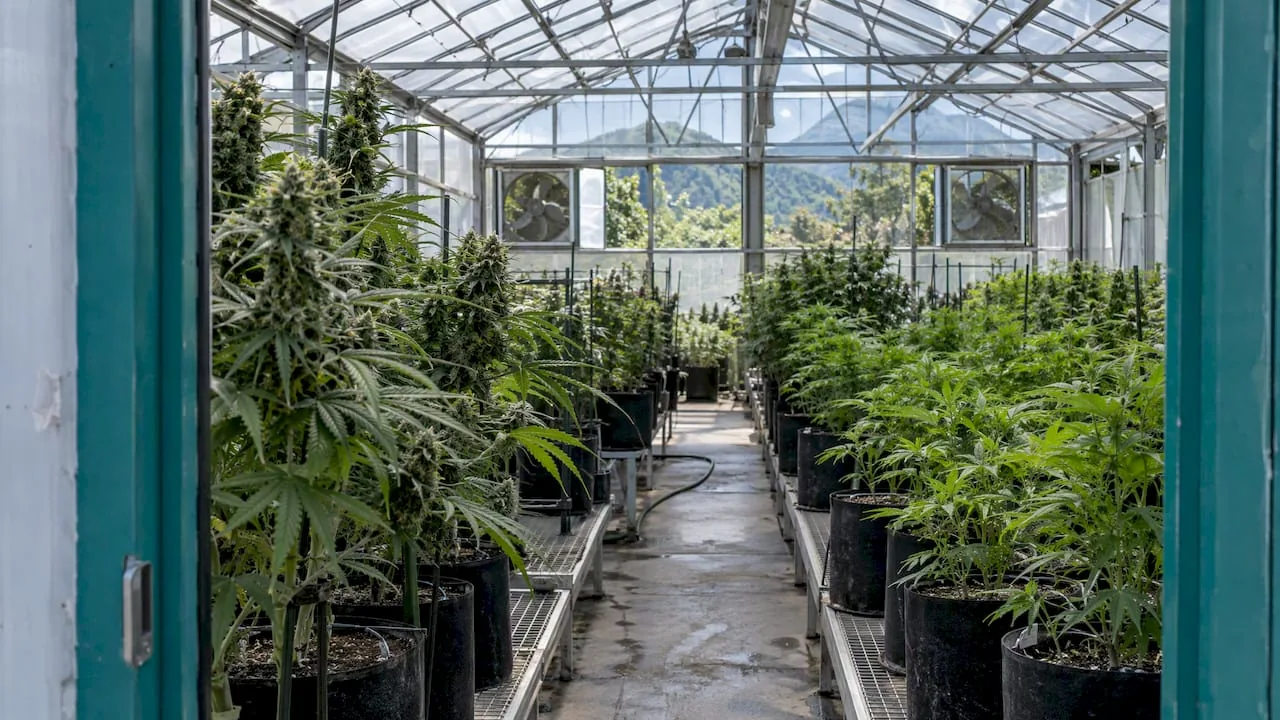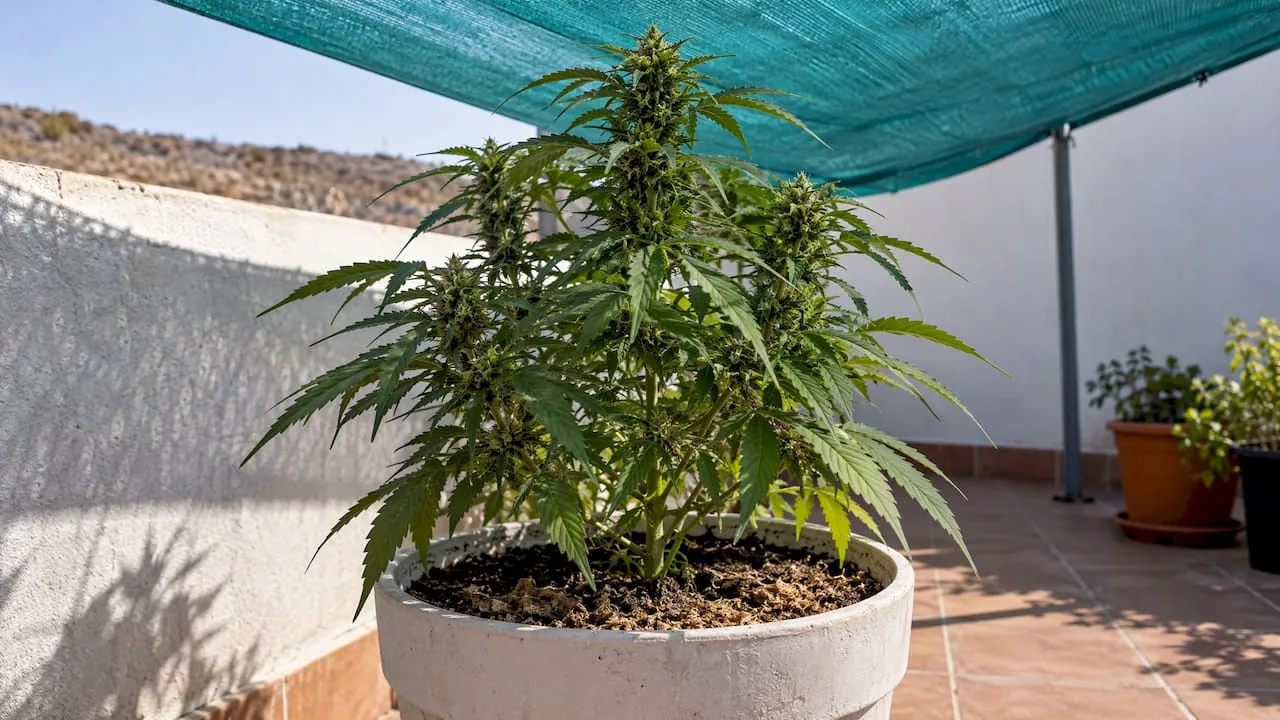


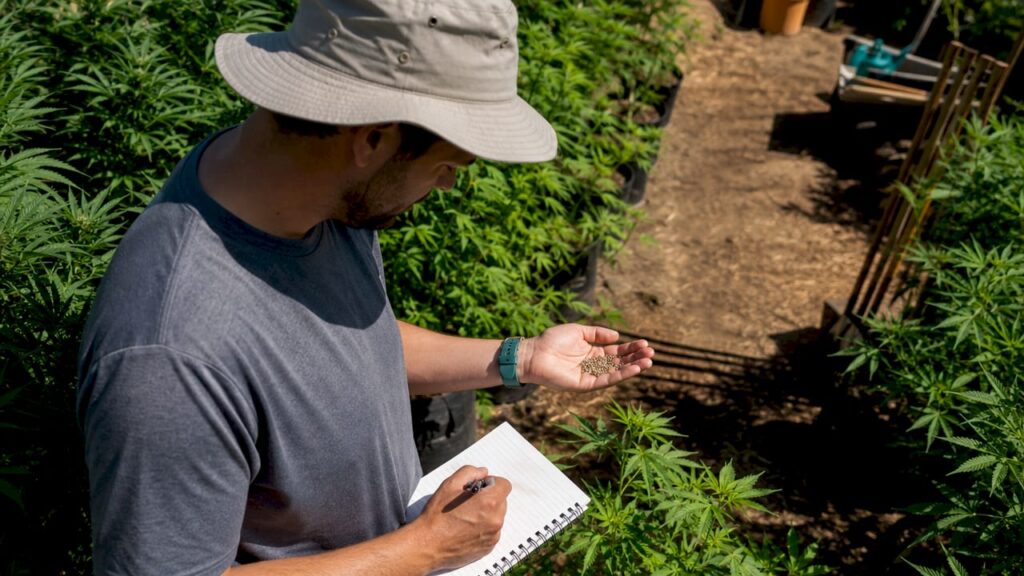
Collecting cannabis genetics is the systematic practice of identifying, preserving and documenting superior phenotypes through phenohunting and cloning, and it is the foundation of all high-level professional growing. Growers who understand the importance of genetics don’t depend on chance in every cycle: they build a living library of proven plant material, with full traceability and reproducible results. Why serious growers collect genetics and how to get started is a question that separates those who grow as a hobby from those who seek constant excellence. In this article you will find the complete process, from the fundamentals of phenohunting to the mistakes that destroy entire collections.
In short:
- Collecting genetics is a systematic process of phenohunting and cloning to preserve superior phenotypes with full traceability.
- Exceptional phenotypes are rare: they appear in between 1 in 50 and 1 in 500 plants, so trying just 30 or 50 seeds is rarely enough.
- Taking cuttings before flowering is the most critical step in the process: without rooted clones, any exceptional phenotype is lost for ever at harvest.
- Rigorous documentation of the origin, batch and cycle of each plant is what turns a pile of seeds into a genuine genetic collection.
- Separating the discovery phase (with seeds) from the preservation phase (with clones) avoids the most common mistake among intermediate growers.
Why serious growers collect strains
Phenohunting is the process of evaluating multiple plants of the same variety to find and preserve superior phenotypes through clones. It is not about growing lots of plants for the sake of it: it is about evaluating with good judgement and keeping the best. The importance of genetics lies in the fact that the genotype is the architectural blueprint and the phenotype is the building you construct from that blueprint under your specific growing conditions.
Exceptional phenotypes are not common. Rare phenotypes turn up in between 1 in 50 and 1 in 500 plants or more, depending on the variety and the genetic line. Most home growers only test between 30 and 50 seeds per cycle, which statistically makes it almost impossible to find a truly exceptional phenotype. Widening the test population is the difference between finding a good plant and finding a plant that defines your grow.
The benefits of collecting genetics go beyond immediate yield. A well-managed collection allows you to:
- Real phenotypic diversity: You get access to unique expressions of terpenes, cannabinoids and morphology that do not exist on the commercial market.
- Continuous improvement: Each selection cycle refines your genetic bank towards more precise and desirable characteristics.
- Stability and predictability: Professional breeders cross genetics to eliminate unwanted recessive genes, and you can do the same with your selected material.
- Genetic independence: With a library of clones, you don’t depend on rebuying seeds every season.
💡 Pro tip: Mentally separate two distinct phases: the discovery phase, where you use seeds to explore the phenotypic spectrum of a variety, and the preservation phase, where you use cuttings to keep what you have already found. Mixing both phases is the most common mistake among intermediate growers.
What do you need to start collecting genetics in an organised way?

The first requirement is volume. For a serious phenohunt, a minimum of 50 to 100 seeds is recommended, and more than 200 for a truly professional approach. Doubling the test population halves the observable rarity, which means that with 200 plants you have statistical access to phenotypes that simply don’t show up in batches of 20 or 30.
The second requirement is documentation infrastructure. Without accurate records, a genetic collection loses all its value over time. The following table summarises the basic tools you need:
| Tool | Role in the collection |
|---|---|
| Numbered labels and permanent markers | Assign unique IDs to each plant from germination |
| Logbook or spreadsheet | Document origin, seed batch, cycle and observations |
| Camera or smartphone | Visual record of morphology, trichomes and structure |
| Labelled cutting system | Preserving keepers before switching to flowering |
| Genetic database (such as PhenoDB) | Lineage traceability and information transfer |

The third requirement is space for clones. Before flowering any candidate plant, you must have its cuttings rooted and labelled. If you flower without cloning first, you lose the genetics for good at harvest.
💡 Pro tip: Learn how to propagate plants from cuttings properly before starting your first phenohunt. A badly taken or poorly rooted cutting can cost you the best phenotype you have ever found.
How do you select and preserve superior genetics step by step?
The disciplined selection process follows a technical sequence that allows no shortcuts. Each step has a specific purpose within the guide for serious growers.
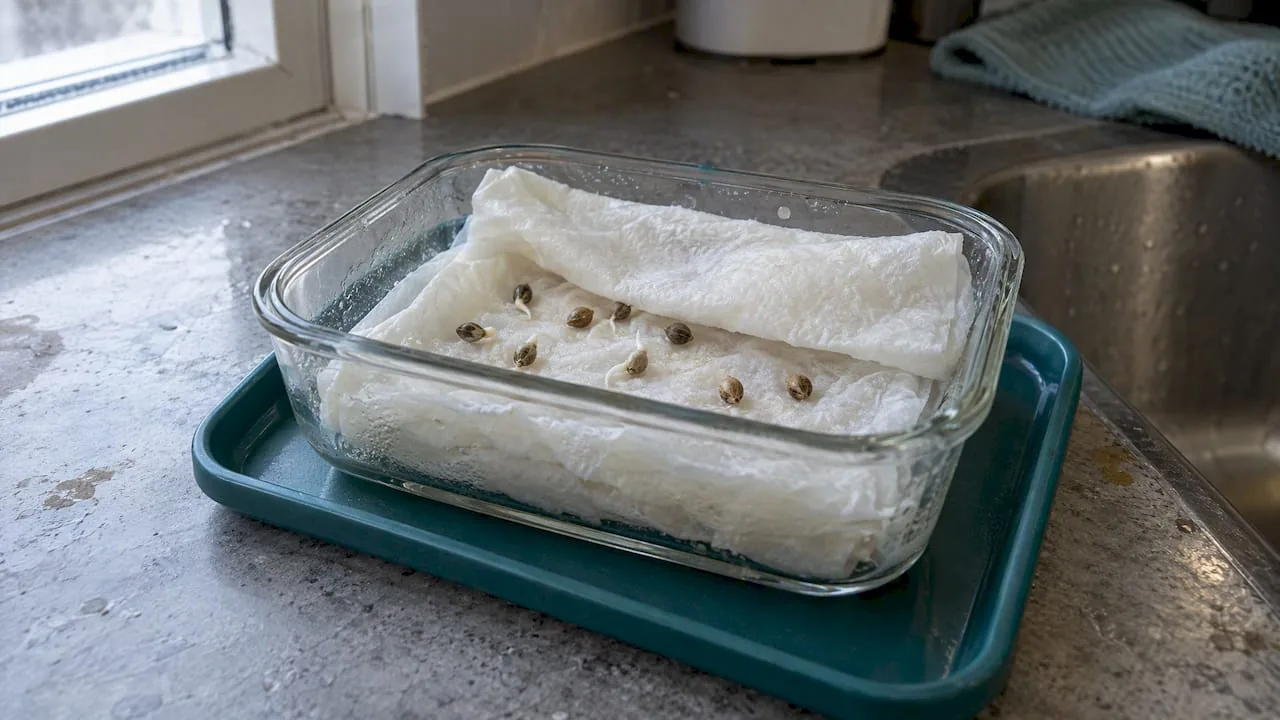
- Germination and ID assignment. Germinate all the seeds in the batch at the same time and assign a unique number to each plant from day one. Use physical labels on the pot and record the ID in your database along with the variety name, the seed bank and the germination date. Learn the best practices for germinating cannabis seeds before you start, to maximise your success rate right from the beginning.
- Assessment in vegetative growth. During the first 4 to 6 weeks, observe the structure of each plant: growth speed, distance between nodes, colour and texture of the foliage, response to training and overall vigour. Remove clearly inferior candidates to make the best use of the available space.
- Take cuttings before flowering. This is the most critical step in the whole process. Taking 2 or 3 cuttings per plant between weeks 4 and 6 of vegetative growth guarantees that you can keep any phenotype that turns out to be exceptional in flowering. Without this step, selection is irreversible and destructive.
- Flowering and sensory evaluation. Move all the candidates into flowering and assess bud structure, density, resin production, aroma profile and ripening time. Document every observation with photos and written notes. A successful phenohunt includes visual and sensory evaluation, plus sampling for laboratory analysis.
- Separate harvesting and curing. Harvest each plant separately and cure each batch independently. Mixing different plants in the same jar destroys traceability and makes it impossible to know which phenotype produced which result.
- Blind evaluation and chemical analysis. Once cured, evaluate the samples without knowing which ID corresponds to which. This method eliminates confirmation bias. If you have access to a laboratory, request a COA (Certificate of Analysis) for the final candidates: the cannabinoid and terpene data validate what your nose and your experience have already detected.
The following table compares the two most common approaches to managing a collection:
| Criterion | Collection by seeds | Collection by clones |
|---|---|---|
| Genetic variability | High, ideal for discovering | None, ideal for preserving |
| Reproducibility | Limited between cycles | Total between cycles |
| Space required | Higher during phenohunt | Lower with an established library |
| Risk of loss | Low (you can resow) | High if there is no backing |
| Recommended Use | Discovery phase | Preservation phase |
What mistakes should you avoid to keep a sustainable genetic collection?
The costliest mistakes in genetic collecting aren’t technical: they’re about process. Knowing them before you start saves you years of wasted work.
- Don’t forget to take cuttings before flowering. It’s the most common and most irreversible mistake. Once the plant enters flowering and is harvested, the genetics are lost if you don’t have rooted clones. The rule is simple: if you don’t have a cutting, you don’t have a keeper.
- Incomplete or non-existent documentation. A collection without records is a collection that doesn’t exist. PhenoDB provides traceability systems that record parents, seed batch and phenohunt cycle so that the history of the lineage is not lost. Without that information, you can’t reproduce results or pass genetic value on to other growers.
- Insufficient test population. Evaluating only 10 or 15 plants of a variety and declaring that it “doesn’t have a good phenotype” is a statistically invalid conclusion. The phenotype you’re looking for may be in plant number 80.
- Mixing the discovery phase and the preservation phase. Keeping these two phases separate is the key to stable, reproducible collections. Using clones to explore variability or seeds to preserve keepers turns the logic upside down and creates confusion in your records.
- Not validating over multiple cycles. A phenotype that produces exceptional results in a single cycle may be inconsistent. Rigorous documentation with lineage records lets you confirm that the keeper reproduces its characteristics in at least two or three consecutive cycles before you consider it a permanent part of the collection.
To identify whether a strain has keeper potential from the start, check this guide to identifying premium genetics before investing in a full phenohunt.
Key points
Collecting cannabis genetics requires a trial volume, precise documentation and a clear separation between the discovery phase with seeds and the preservation phase with clones.
| Point | Details |
|---|---|
| Minimum phenohunt volume | Germinate at least 50 seeds to find superior phenotypes with statistical consistency. |
| Cloning before flowering | Take 2 or 3 cuttings per plant between weeks 4 and 6 of vegetative growth so you don’t lose keepers. |
| Lineage documentation | Record the origin, batch and cycle of each plant to reproduce results and maintain traceability. |
| Phase separation | Use seeds to discover and clones to preserve: mixing them destroys the coherence of the collection. |
| Validation over multiple cycles | Confirm that the keeper reproduces its traits in at least two cycles before fully integrating it. |
What nobody tells you about collecting genetics
I’ve been working with cannabis genetics for years, and the mistake I’ve seen most, even among experienced growers, is confusing having lots of seeds with having a collection. Piling up packs without an evaluation system isn’t collecting: it’s storage.
What really transforms a grow is the discipline of the process. The moment I started taking cuttings systematically before each flowering and documenting every observation with photos and notes was the moment my results stopped depending on chance. I found a phenotype of a variety that had gone three cycles without standing out, and I only identified it because I had comparative records from the previous cycles.
My most direct advice: don’t start with 200 seeds if you don’t have your documentation system ready. Start with 20 well-documented plants and learn the process. Scale comes later. A living library of vegetative clones built with rigour is worth more than a thousand seeds with no records.
Start your collection with proven-quality genetics
If you already have the process clear, the next step is choosing the right genetic material for your first phenohunt. Bluedoggenetics offers a curated catalogue of premium feminised and autoflowering seeds selected specifically for growers looking for real phenotypic variability and proven genetic stability. Every variety available in the Bluedoggenetics shop is designed to maximise your chances of finding exceptional keepers, with discreet shipping and personalised support that accompanies you from the first seed to the first preserved clone.
To start your collection on the right foot, two varieties that stand out for their phenotypic diversity and selection potential are Blueberry Kush and Gorilla Glue Auto, both available in the Bluedoggenetics catalogue with a quality guarantee and order tracking.
FAQ
How many seeds do I need for a serious phenohunt?
For a serious phenohunt, we recommend germinating at least 50 to 100 seeds. A professional approach works with more than 200 plants to statistically reach rare phenotypes that appear at frequencies of 1 in 500.
What is a keeper in the context of genetic collecting?
A keeper is the superior phenotype identified during the phenohunt that is preserved through clones so its characteristics can be reproduced in future cycles. Without cloning, the keeper is lost when the mother plant is harvested.
When should I take cuttings during the phenohunt?
Cuttings should be taken between weeks 4 and 6 of vegetative growth, before switching the plants to flowering. Taking 2 or 3 cuttings per plant ensures you can keep any phenotype that turns out to be exceptional.
Why is it important to document the lineage of each plant?
Documenting lineages makes it possible to reproduce results, transfer genetic value and maintain the validity of the collection over time. Without records of parents, batch and cycle, it is impossible to know what produced which result.
Can I use the same plants to discover phenotypes and to preserve them?
No. The discovery phase uses seeds to explore phenotypic variability, and the preservation phase uses clones to maintain what has been found. Mixing both phases creates inconsistencies in the records and compromises the reproducibility of the collection.