

To pack authentic seeds so that they keep their identity and maximum viability, use an airtight container after drying the seeds to the right moisture level, and label the batch with full traceability. Prioritise materials that prevent moisture and light from getting in, and turn to sustainable options only when they do not compromise that protection. That way you avoid mistaking attractive packaging for a seed that actually germinates.
In short:
- Seeds should be stored in airtight, sealed containers, preferably with desiccants, to keep their moisture at the right level and avoid loss of viability.
- Rigid containers are ideal for small collections that are checked frequently, while laminated or heat-sealed bags protect better during prolonged storage.
- It is essential to carry out regular germination tests and record details such as humidity before sealing and harvest dates to guarantee the authenticity and preservation of the seeds.
- How long seeds last in storage depends on the species, humidity and the stability of the place, so it is advisable to check their viability before sowing.
- Sustainable options, such as plantable paper, are only suitable for presentation, not for long-term storage, and should be complemented with airtight inner containers.
Types of packaging: rigid, flexible and airtight, advantages and limitations
The choice of container depends on how many seeds you handle and what you plan to do with them: store them, swap them or sell them. A rigid container (glass jar, tin or box) protects well against knocks and is the most practical option when you keep only a few varieties and want to check them often. The technical guides from the FAO on seed packaging describe tins, jars, glazed boxes, bags and barrels as common dry containers, depending on the volume being handled.
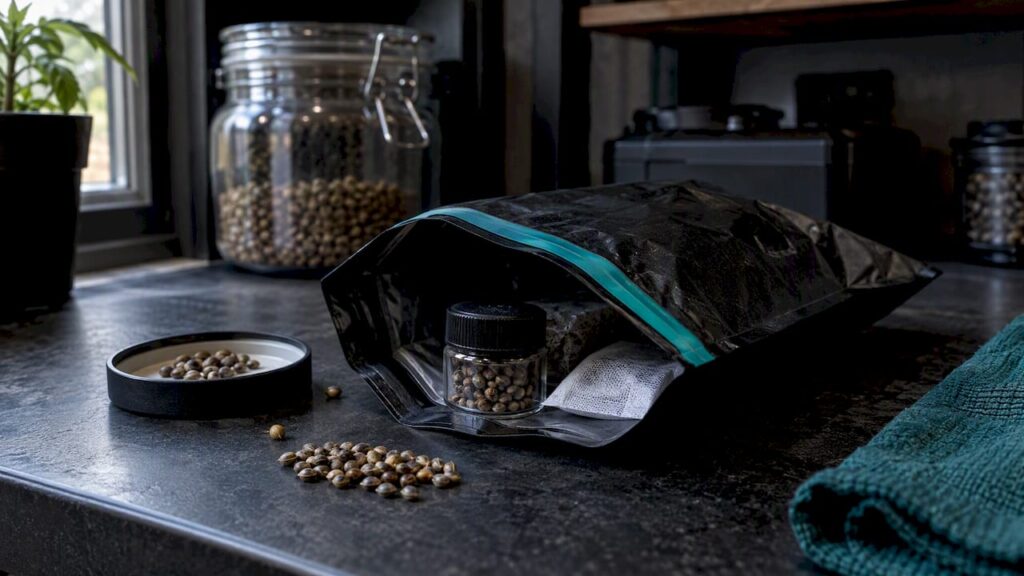
Flexible packaging, such as envelopes or simple bags, is convenient for small batches, but it lets ambient moisture through easily if it doesn’t have a proper seal. To preserve viability for longer, laminated or heat-sealed bags and airtight containers offer a better barrier against moisture, oxygen and light, factors that degrade the seed sooner than expected.
- Rigid packaging is ideal for small collections that are checked frequently.
- Flexible packaging is usually used for one-off swaps and is not recommended for long-term storage.
- A laminated or heat-sealed bag helps protect viability for a moderate period.
You can find more details about this choice in our guide to seed storage and quality preservation.
Preparing the seed before packing: drying, humidity and viability tests
A seed that is sealed with residual moisture is ruined inside its own packaging, however good the variety is. Drying should be done with dry air at room temperature, never with direct heat, which damages the embryo. Silica desiccants help finish that process without stressing the seed.
- Spread the seeds out in a dry, ventilated place for several days, away from direct light.
- Add a desiccant sachet inside the final container to stabilise the humidity before closing.
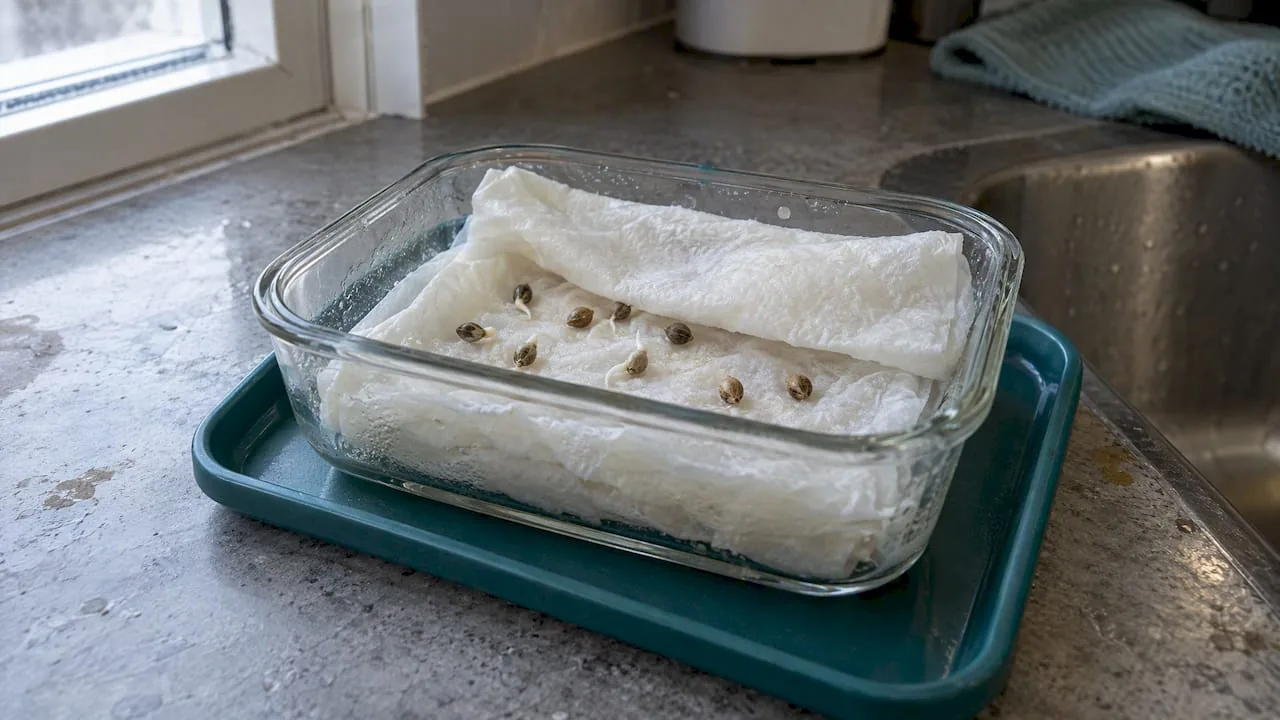
- Carry out a germination test on damp paper with a small sample from the batch before sealing the rest.
- Repeat that test every time you open the batch for use, instead of relying on a fixed date.
An airtight container only does its job if the seed goes in with the right moisture content, according to the practices described by Agroscope for seed conservation. Sealing without that control causes internal condensation and loss of viability sooner than expected.
Labelling and traceability: the minimum information every package must carry
The authenticity of a batch does not depend on the packaging, but on what is written on the label and the records that back it up. The FAO recommends that labelling should make it possible to identify the origin, date and conditions of the batch at any time, which greatly facilitates later checks or claims.
- Variety and genetic identity of the batch, without ambiguous abbreviations.
- Harvest date and packaging date, separately.
- Moisture recorded before sealing and the result of the latest germination test.
- A batch number that links to an external record: notebook, spreadsheet or photos of the process.
Adding a tamper-evident seal or strip makes it possible to detect undeclared openings; if the package is opened for inspection, it’s best to relabel it with the new date rather than leave the original label as if nothing had changed. This documentation follows the same logic we ask you to check in our guide to seed pack contents and in the one on seed quality guarantees.
Storage conditions and shelf life: temperature, humidity and regular checks
There is no universal expiry date for a well-packed seed: how long it lasts depends on the species, the moisture it had when it went into the container and the stability of the place where it is stored. What is constant is the need to check, not to guess.
Gene banks keep their samples at 4 °C for medium-term storage and at -20 °C for long-term storage, according to the practices described by Agroscope’s cereal genebank, which also seals the samples in laminated aluminium bags. Replicating that level of control at home isn’t always possible, but it works as a reference: the more stable and cold the temperature, and the lower the humidity, the longer the seed keeps its ability to germinate.

For home storage, the real priority is to avoid temperature swings and keep humidity low so that condensation does not form inside the container. Keeping the batch in a dark place at a constant temperature, away from heat sources or from a fridge that is opened several times a day, achieves this without needing specialist equipment.
Sustainable packaging options: when to use plantable paper and biodegradable alternatives
Plantable paper is an attractive option for gifting or presenting seeds, because the packaging itself becomes substrate when it is buried. It is a good choice for one-off occasions, but it does not replace an airtight inner container if the aim is to keep the seed for months.
- Plantable paper works well for presentation, never for long-term storage.
- Some biodegradable materials have poor resistance to ambient humidity and speed up deterioration.
- The most practical combination is double packaging: sustainable packaging on the outside, an airtight bag or jar on the inside.
This formula reduces waste without sacrificing real protection for the seed, which is still what determines whether it germinates or not.
Why authenticity doesn’t automatically mean viability
Authenticity and identity are two different things that are often confused. A batch can be perfectly labelled and traced and still have lost its ability to germinate if it wasn’t stored properly. According to Agroscope, seed certification verifies identity, purity and germination capacity through tests on samples from the batch, such as tetrazolium tests on lots of 400 seeds, and those results are recorded alongside the labelling.
That means authenticity depends above all on traceability and batch records, while viability requires active, periodic checking. For a grower, the useful practice is simple: record every batch, repeat the germination test every time you open it, and relabel it if conditions have changed. You can see how this translates into a real purchase in our post on germination guarantee for seeds.

Practical perspective: common mistakes and shortcuts that save you headaches
The most common mistake is sealing with residual moisture, thinking that an airtight container will “fix” what the drying did not do properly; the result is almost always mould or loss of vigour. The second mistake is using translucent containers, which expose the seed to constant light even when closed. A shortcut that really works: always keep a duplicate sample of the batch outside the main container, labelled the same way, so you can test germination without opening the whole reserve. When you receive a package, check that the label matches the contents and that the seal is intact before anything else.
Final recommendation: choose authentic, well-packaged seeds
None of the above makes sense unless the batch you receive has already been well handled from the start. We select varieties from reputable seed banks, with order tracking and discreet shipping, so that what you open at home matches what you ordered. Before buying, always check the product page and the germination guarantee that come with each batch.
Whether you want to start with feminised seeds or prefer the convenience of autoflowering ones, both categories are designed so that the care you put into packing and storing your seeds at home makes sense from day one. Explore the full catalogue in our shop and check the traceability of each variety for yourself before adding it to your basket.
Sources
Frequently Asked Questions
What is the outer covering of seeds called?
It is usually called simply seed packaging, and it can be a jar, a tin, a laminated bag or an envelope, depending on the quantity and intended use. What matters is not the name but that it keeps out moisture and light, as the FAO describes.
What does it mean for a seed to be certified?
It means it has passed tests that confirm its identity, purity and germination capacity, following procedures such as those described by Agroscope. Certification guarantees traceability, but it’s worth remembering that real viability is confirmed with your own germination test.
What are the 3 types of packaging?
In practical terms, there are rigid containers such as jars or tins, flexible containers such as sachets or simple bags, and specialised airtight containers such as laminated or heat-sealed bags. Each type offers a different level of protection against moisture, light and oxygen.
How long do packaged seeds last?
There is no fixed duration: it depends on the species, the moisture level at which the batch was sealed and the stability of storage. Gene banks keep samples for long periods at 4 °C and -20 °C, but at home the most reliable approach is to repeat a germination test before sowing, rather than relying on an estimated date.