

Su: seeds-for-humid-climates
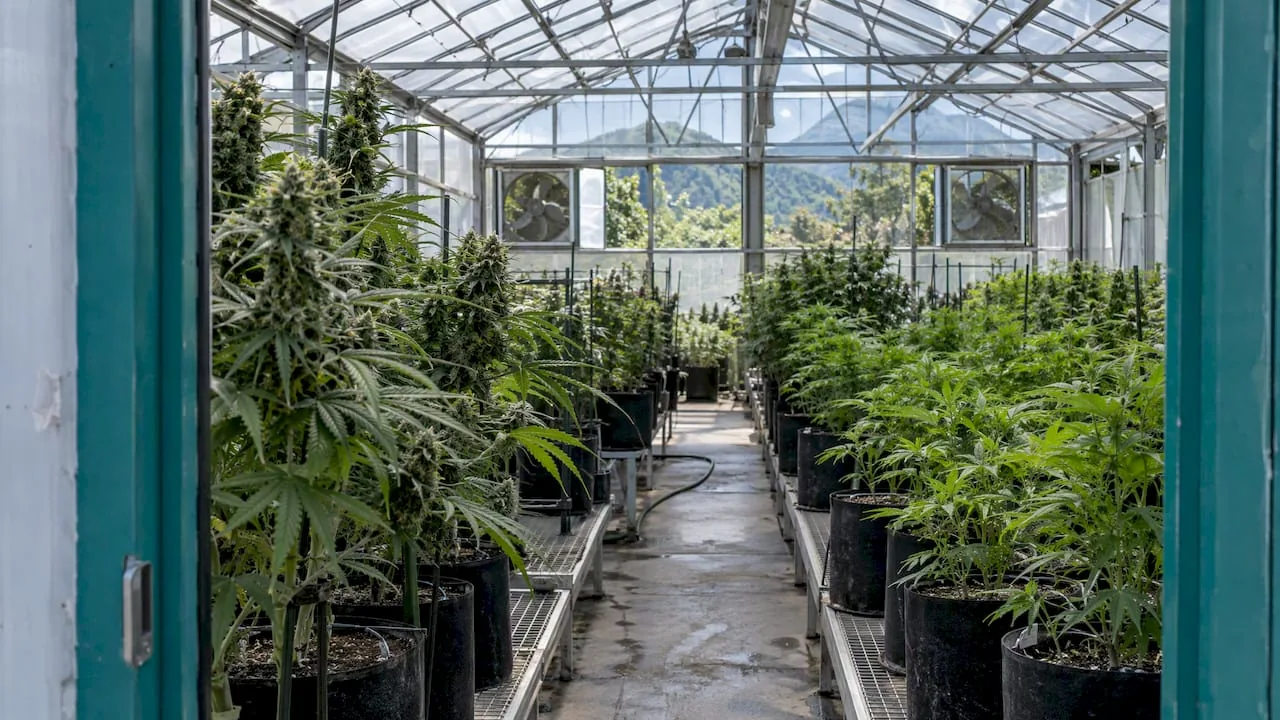
If you grow in a humid, warm climate, choose seeds with an airy flower structure and short flowering, preferably crosses with sativa influence that open up the bud rather than compacting it. That genetics alone isn’t enough: pair it with constant cross ventilation, active control of VPD and relative humidity, and generous spacing between plants. Without those three measures, even the best genetics can be lost in the last weeks of flowering.
In short:
- When choosing genetics, prioritise varieties with an airy flower structure and fast flowering to reduce exposure to humidity in damp climates.
- Keeping strict control of VPD and relative humidity during flowering helps reduce the risk of bud rot, especially in the final weeks.
- It is advisable to space plants out and use well-drained substrates to avoid moisture build-up in the roots and buds.
- Seeds with a short cycle, autoflowering and with documented mould resistance are the safest options in high-humidity environments.
- Early detection and proper environmental management, such as increasing air circulation and reducing humidity, are key to preventing botrytis damage.
Seeds that perform well in humid climates and why
Genetics make the difference between a healthy harvest and one that rots from the inside without warning. What we are looking for is not a miracle variety, but a set of traits that repeat in the genetics that best tolerate humidity: buds with space between bracts, short flowering cycles and vegetative vigour that makes up for losses from sanitary pruning.
These are the profiles that tend to work best in humid environments, with the specific reason behind each one:
- Pure sativas or sativa-dominant hybrids: their elongated, less dense buds allow air to circulate between the flowers, reducing the pockets of moisture where mould takes hold.
- Short-flowering varieties (7 to 9 weeks): they finish before the late-season rains arrive, a factor that grow guides point to as decisive for escaping the risk of bud rot outdoors, according to this practical guide to botrytis.
- Fast-cycle autoflowering plants: as they don’t depend on the photoperiod, you can sow them several times a year and sync the harvest with the driest weeks.
- Hybrids with marked hybrid vigour: they grow more strongly and develop stems and branches able to hold up buds without bending and touching each other.
- Genetics of tropical or equatorial origin: they have spent generations adapting to ambient humidity, which usually translates into naturally less compact buds.
- Varieties with spaced calyxes: although it isn’t always stated on the seed’s product page, the loose-calyx phenotype is preferable to the “bullet” type bud in humid climates.
- Crosses with documented mould resistance: more and more seed banks are selecting lines specifically for their tolerance to fungi, a criterion worth prioritising over aroma or effect if you live in a humid area.
- Staggered-flowering genetics within the same batch: some lines mature unevenly between plants, which lets you harvest in stages and reduce the time each bud spends exposed to ambient humidity.
Various seed banks select feminised and autoflowering lines that stand out for their performance in real growing conditions. You can browse the full catalogue of feminised seeds or explore the autoflowering ones if you want short cycles that dodge the rainy season. To dig deeper into exactly what to look for on the genetic label, this article on mould-resistant seeds goes into more detail.
Genetic traits that reduce susceptibility to mould
Not all moisture-resistant genetics are advertised in the same way on product pages, so it’s worth knowing what to look for. Three traits do the heavy lifting: bud structure, flowering duration and phenotypic variability within the same line.
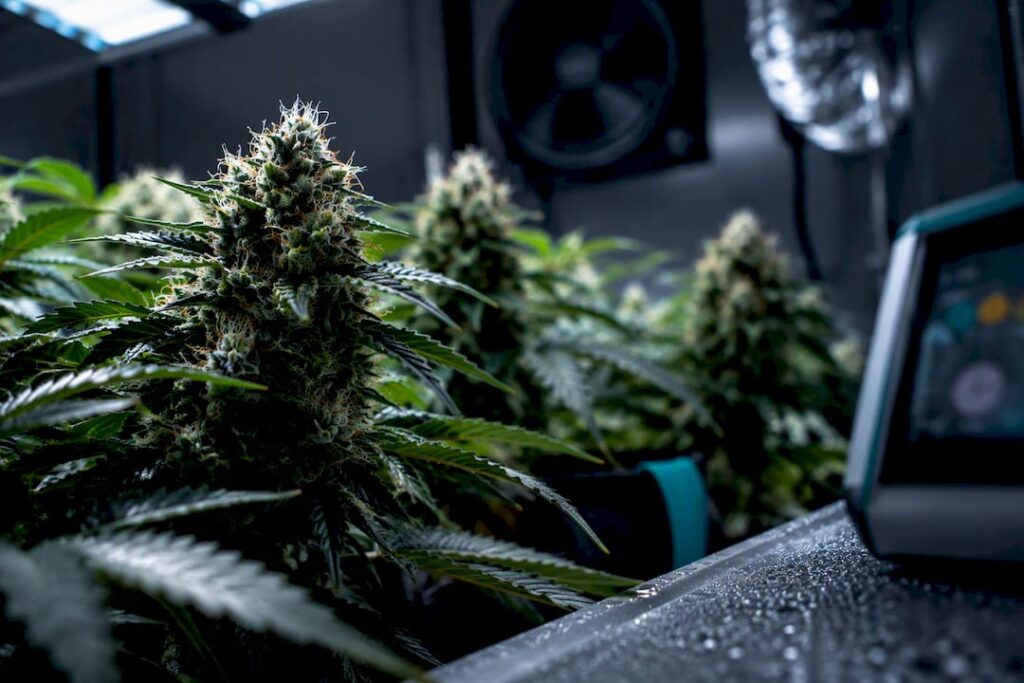
Flower structure is the most visible factor. A dense, compact bud holds moisture inside like a sponge, and that trapped moisture is exactly the environment Botrytis cinerea needs to take hold, something documented in detail in this study on bud rot in greenhouse-grown cannabis. A bud with space between the bracts, on the other hand, lets air reach the centre of the flower and dry out normally after watering or overnight dew.
The length of the cycle matters almost as much as the shape of the bud:
- Flowering times of 7 to 9 weeks reduce the window of exposure to ambient humidity compared with varieties of 10 weeks or more.
- Autoflowering plants let you sow in the most favourable climate window of the year instead of depending on a single annual photoperiod cycle.
- Genetics with staggered maturity make it easier to harvest the upper buds first, before humidity affects the more exposed flowers.
The third trait, phenotypic variability, is the one that is discussed least but has the most impact in the long term. Within the same pack of seeds, the structure of the plants’ buds can vary, with some showing more compact buds and others more open structures, even when they are genetically similar on paper. Selecting mother plants by their real phenotype, and not just by the genetic label, is a common practice among growers who work in humid areas.
Pro tip: mark with tape the plants with the more open flowering in your first cycle with a new genetic: they are the ones you’ll want to repeat or clone next season.

Temperature and humidity values to monitor during flowering
The most useful indicator for managing humidity in flowering is not just relative humidity, but vapour pressure deficit, or VPD. VPD measures the difference between the moisture the air could hold and what it actually holds, and determines how much water the plant can evaporate into the environment. A VPD that is too low means the plant barely transpires and humidity stagnates around the flowers.
In late flowering, keeping the VPD within a suitable range helps the flower release moisture instead of retaining it, which directly reduces the risk of bud rot. High relative humidity combined with moderate temperatures favours the appearance of Botrytis, especially when relative humidity exceeds high values and temperatures are moderate, according to the scientific review on bud rot in greenhouse conditions.
These relative humidity ranges in flowering below 50-60 %, lowered even further in the final weeks, match what practical guides on managing grey mould recommend, which also warn about the added risk of night-time condensation on the flowers.
To get close to these values in practice:
- Use a dehumidifier sized to the real volume of your growing space, not to the size of the whole room.
- Place the fans diagonally, pointing at the foliage and not directly at the buds, to get circulation without damaging the flowers.
- Avoid letting the temperature difference between day and night exceed 8 °C, because that thermal swing encourages condensation on the flowers, just as mist forms on a cold windowpane.
- Outdoors, bring watering forward to first thing in the morning so the foliage has all day to dry before the night-time humidity sets in.
If you grow outdoors in an area with wet winters, this article on how to grow marijuana in cold, wet climates expands on the environmental management techniques that apply to your particular situation.
Growing practices that reduce localised humidity
The microclimate that forms around each plant matters as much as the general climate of your grow room or garden. Inside a dense inflorescence, the temperature can be several degrees higher and the humidity noticeably greater than in the surrounding air, which creates ideal conditions for infection without the rest of the crop showing it, as described in this study on the epidemiology of botrytis in cannabis. These are the practices that make the difference:
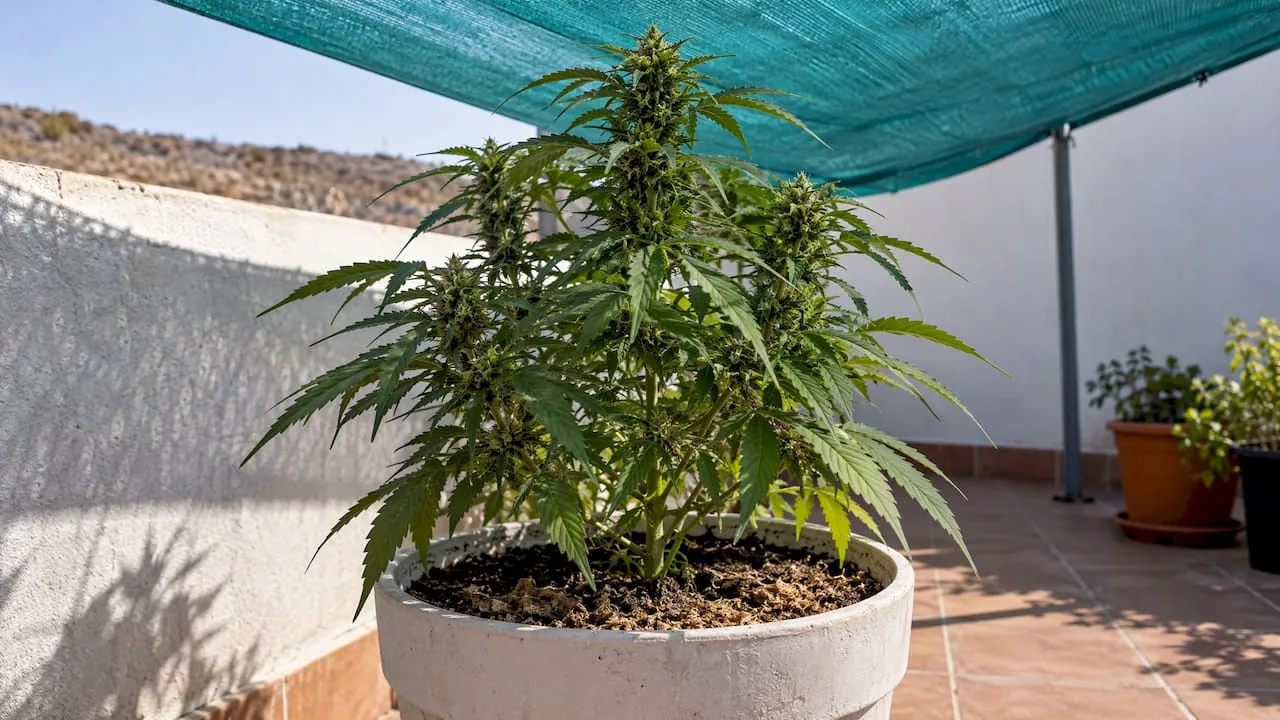
- Choose your sowing date with the rainy season in mind. If your region has a predictable rainy period, sow so that late flowering, the most vulnerable phase, does not coincide with those weeks.
- Use aerated substrates with good drainage. Mixes with perlite or well-aerated coco fibre prevent waterlogging in the root zone, which in turn reduces the water stress that weakens the plant’s natural defences.
- Water according to real demand, not the calendar. Overwatering in an already humid environment does nothing for the plant and only raises the ambient humidity around the substrate.
- Prune and defoliate strategically before and during flowering. Removing large leaves that cover inner buds improves air circulation without sacrificing yield, as long as it’s done in moderation.
- Space plants further apart than seems necessary. Contact between the branches of neighbouring plants creates pockets of stagnant air where humidity has nowhere to go.
- Pay particular attention to weeks 5 to 8 of flowering. Most bud rot outbreaks happen in that final stretch, according to the review on bud rot in greenhouses, so it is the time for maximum attention.
- Adjust the humidity during drying and curing. Drying too quickly leaves the buds brittle, but drying slowly in a humid environment reopens the door to mould just when you think the work is done; ventilate the drying space just as you ventilated the grow.
These practices work better when combined rather than applied in isolation. A genetic line with a short flowering time, sown at the right moment and with enough space between plants, makes the rest of the management far less demanding.
How to detect and stop botrytis before it ruins the harvest
Botrytis cinerea rarely starts where you first see it. It usually settles in the central stem of the bud or in the area where the bracts touch each other, places where moisture gets trapped and the air barely circulates. Before the typical powdery grey patch appears, the bud may feel slightly spongy to the touch or give off a damp or mouldy smell that wasn’t there before.
As soon as you spot any sign:
- Isolate or mark the affected plant so you can check it more often and avoid handling it alongside healthy plants without disinfecting your tools first.
- Prune with scissors disinfected with alcohol between each cut, removing not only the visible part of the damage but also a generous margin of healthy tissue around it.
- Increase ventilation and lower the relative humidity immediately, even if that means sacrificing some environmental comfort in the rest of the growing space.
- Check the rest of the plants from the same genetic batch, because spores travel through the air and tend to affect more than one plant when conditions are favourable.
An integrated management approach that combines tolerant genetics, environmental control and biological applications can significantly reduce the incidence of bud rot, and improving air circulation alone has been shown to reduce bud rot incidence by between 66% and 92% in protected production studies, according to this thesis on integrated botrytis management in greenhouse cannabis. That same research documents that preventive applications of Trichoderma spp. and Bacillus spp. reduce the incidence of root diseases and bud rot when applied in the early stages of growing, although their effectiveness varies, depending on environmental conditions and the exact timing of application. Applying these biocontrol agents before the first symptoms appear, not after, is what makes the difference between prevention and damage control.
Germinating and handling seeds without encouraging pathogens
A seed’s first days of life are also the most vulnerable to fungi, so the humid environment you plan to use in flowering calls for extra care during germination. The aim at this stage is not to maximise humidity, but to keep it constant and controlled, without ever waterlogging the substrate.
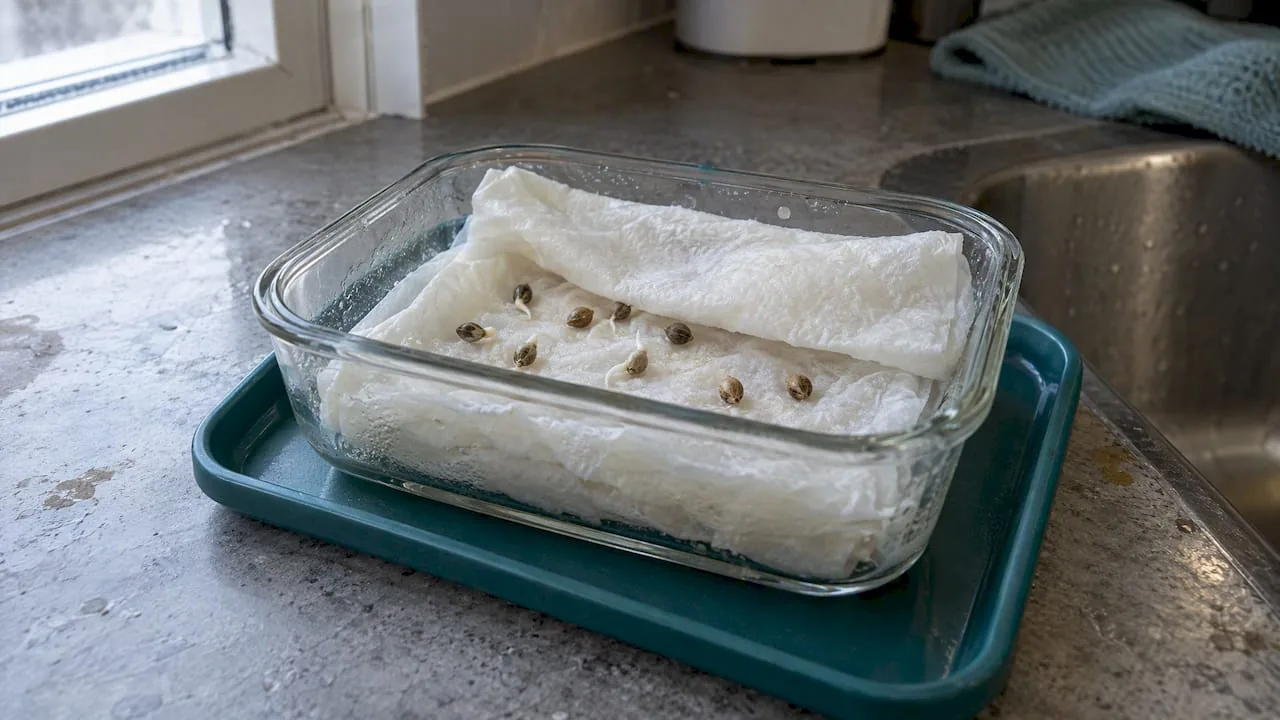
- Use the glass of water or damp towel method sparingly. The substrate should feel moist to the touch, never soaked, because excess water encourages damping-off, a fungus that attacks the stem of the newly germinated seedling.
- Choose well-drained substrates from day one. Mixes with perlite or well-aerated coco prevent water from stagnating around the emerging root, a basic factor in preventing disease in seedlings, as recommended by the cannabis disease identification and prevention guides.
- Disinfect any tool or container that touches the seed. A reused glass or tray that hasn’t been cleaned can introduce fungi, which multiply quickly in a humid environment.
- Transplant when the seedling has its first pair of well-developed true leaves. Waiting too long in a damp seedling tray increases the risk of the roots drowning from lack of oxygen.
- Harden off seedlings gradually before taking them outdoors. Exposing them for a few hours a day to real outdoor humidity and temperature for a week avoids the shock that leaves them vulnerable to fungi in their first days outside the propagator.
If it is your first time germinating or you want to go over the process step by step, this complete guide to germinating cannabis seeds covers each stage in more detail.
Applied experience and guarantees behind this guide
This guide is written by Omar, an author who specialises in cannabis growing for difficult climates, and you can read the rest of his articles on the Bluedog Genetics blog. The approach here isn’t theoretical: each recommendation aims to solve a real problem faced by anyone growing in areas with high humidity for much of the year.
This selection of varieties is complemented by discreet shipping, quality guarantees on every order and customer service that supports you from purchase through to harvest. Their catalogue of cannabis seeds is curated precisely so that you don’t have to guess which genetic performs well in your climate, something especially valuable when the difference between one variety and another can be the difference between harvesting or losing everything in the final week.
What really matters when you grow in a humid climate

If I had to rank the priorities for someone growing in a humid climate, I would do it like this: genetics first, then microclimate control, and lastly supporting cultural practices. Many growers do the opposite: they invest in expensive dehumidifiers while still planting long-flowering varieties with dense buds, and wonder why they keep losing harvests every year.
Genetics doesn’t remove the need to keep an eye on VPD or to space your plants, but it reduces the margin for error when something slips past you, and in a humid climate something always will. The last two or three weeks of flowering demand the most intense vigilance of the whole cycle: it’s the moment when a dense bud and a night of high humidity can ruin months of work in a matter of days.
Why Bluedog Genetics makes this decision easier
Choosing the right genetics for a humid climate shouldn’t depend on trying varieties at random until you find one that holds up. Some suppliers select their lines with growers in mind who need consistent results, with quality guarantees on every order, discreet shipping and tracking that supports the process beyond the checkout.
If you’re looking for uniform plants with good yields, check out the feminised seeds catalogue. If you prefer short cycles that let you dodge the rainy season with more than one sowing a year, autoflowering seeds are the most direct option for your next grow.
Sources
For anyone who wants to go deeper into the mould biology and environmental management covered in this guide:
- Understanding bud rot development, caused by Botrytis cinerea, on cannabis (Cannabis sativa L.) plants grown under greenhouse conditions
- Integrated disease management and epidemiology of Botrytis cinerea in greenhouse cannabis production (thesis / review)
- Budrot erkennen & verhindern: Der Guide gegen Grauschimmel im Cannabis-Anbau
Frequently Asked Questions
What to sow in damp ground?
In damp conditions it’s best to prioritise varieties with short flowering and an open flower structure, which lets air circulate between the bracts. Crosses with sativa influence and fast-cycle autoflowering plants tend to adapt better than dense-bud, long-flowering genetics.
What are the best seeds for outdoor growing in a humid climate?
The best options for damp outdoor growing are varieties with a flowering time of 7 to 9 weeks and loosely packed buds, because they reduce the time spent exposed to ambient humidity and stop water from becoming trapped inside the flower. Combining that genetics with good spacing between plants noticeably improves results.
What is the ideal temperature for germinating seeds in a humid environment?
What matters in germination is not just temperature, but keeping the substrate moist without waterlogging it, using well-drained mixes such as those that include perlite or aerated coco. A substrate that is constantly soaked in an already humid environment encourages damping-off in freshly germinated seedlings.
Which seeds can be sown in warm, humid soil?
In hot, humid soil, genetics of tropical origin and hybrids with marked vigour work well, as they tolerate sustained heat combined with ambient humidity better. The feminised seeds from Bluedog Genetics include lines selected for this kind of conditions.
How do you prevent bud rot during flowering?
Bud rot is prevented by keeping relative humidity below 50-60 % during flowering and closely monitoring weeks 5 to 8 of the cycle, the period when most outbreaks are concentrated according to the scientific review on bud rot in greenhouse cannabis. Cross ventilation, spacing between plants and choosing genetics with airy buds directly reduce the risk.