


¡Tu carrito está actualmente vacío!
Cannabis phenotype selection: grow smarter and maximize yields
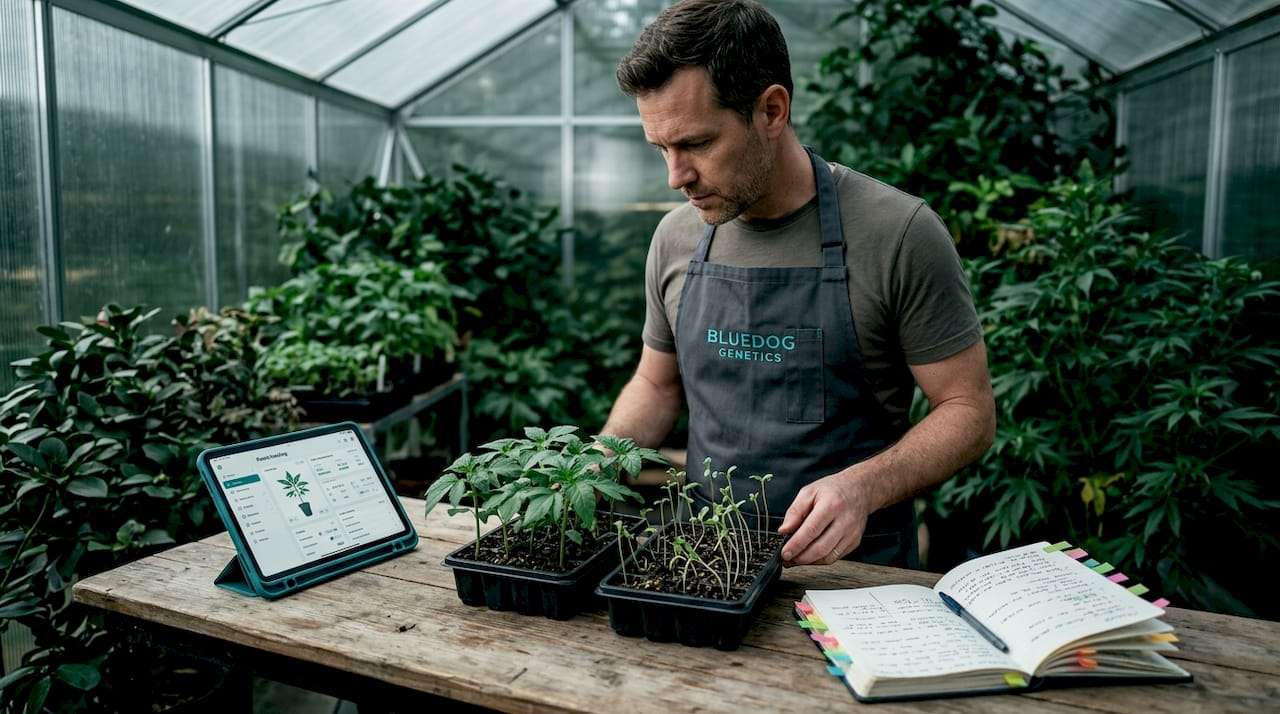
Every home grower has experienced the surprise of popping seeds from the same pack and watching completely different plants emerge. One grows tall and stretchy, another stays compact, and a third explodes with resin while its sibling barely frosts up. This is phenotypic variation at work, and understanding it is one of the most powerful skills you can develop as a cultivator. Phenotype selection is not just for breeders or commercial operations. It directly shapes your yield, potency, scent, and overall harvest quality. This guide breaks down exactly how to identify, evaluate, and select the best phenotypes from your grow so every future crop is better than the last.
Table of Contents
- What is phenotype selection in cannabis cultivation?
- The phenotype selection process: steps and criteria
- Stable genetics versus hunting for the ‘unicorn phenotype’
- Managing hermaphroditism and genetic instability
- Balancing elite selection with genetic diversity
- Our take: avoiding common mistakes and finding your ideal selection style
- Refine your grow with the right seeds and genetics
- Frequently asked questions
Key Takeaways
| Point | Details |
|---|---|
| Not all seeds are identical | Even named strains can produce different plant traits, so selection matters. |
| Stability versus unicorns | Choosing between stable genetics and unique phenotypes affects your grow’s consistency and excitement. |
| Scout for hermaphrodites | Early identification and removal of intersex plants prevent poor quality and accidental seeding. |
| Balance diversity | Maintaining genetic variety can make your garden more resilient to future stress or disease. |
| Track and adapt | Taking notes and observing your plants at each stage leads to more successful phenotype selection. |
What is phenotype selection in cannabis cultivation?
A phenotype is the set of observable traits a plant expresses based on the interaction between its genetics and its environment. Think of it this way: the genotype is the blueprint, and the phenotype is the actual building that gets constructed. Two seeds from the same strain share a similar blueprint, but differences in light, temperature, humidity, nutrients, and even random genetic expression can produce very different buildings.
This is why buying a pack of ten seeds labeled with a popular strain name does not guarantee ten identical plants. The genetics are similar, but the expression varies. Some of those variations are minor. Others are dramatic enough to completely change your harvest outcome.
Key traits that vary between phenotypes include:
- Plant structure: Height, branching density, internodal spacing
- Flowering time: Some phenos finish days or even weeks earlier
- Resin production: Trichome density and coverage differ noticeably
- Scent and terpene profile: One pheno might smell like fuel, another like fruit
- Yield potential: Bud density and overall weight per plant
- Resistance: Tolerance to heat, cold, pests, and mold varies between phenos
Understanding these differences allows you to make intentional choices rather than leaving your results to chance. When you start with premium feminized seeds from reputable genetics, you reduce variability from the start, but phenotype selection still matters even with the best seeds on the market.
As noted in The 2026 Genetics Selection Guide, phenotype hunting can find standout individuals, but for production consistency many growers favor more stable lines or proven genetics because seed batches inherently vary in expression even when marketed as a named strain. This is a critical insight for home growers who want reliable, repeatable results. Explore practical growing tips to help you document and track these differences from the very first seedling.
🌱 Key insight: No two seeds are exactly alike. Phenotype selection is how you turn that variability from a problem into an advantage.
The phenotype selection process: steps and criteria
Understanding why phenotype selection is important leads directly to how you can actually do it in your own grow. The process is not complicated, but it does require consistency, observation, and good record keeping.
Here is a clear step-by-step approach to evaluating phenotypes from germination through harvest:
- Germinate and observe seedling vigor. Healthy, fast-germinating seeds that produce strong taproots and push through the medium quickly are your first positive indicator. Weak or slow seedlings often signal lower genetic expression.
- Track vegetative growth patterns. Note which plants grow faster, bushier, or taller. Measure internode spacing. A tight internodal structure often means denser buds later. Observe leaf color, width, and overall health.
- Assess response to training. When you top, LST, or apply other techniques, watch which plants recover quickly and respond well. Resilient plants that bounce back fast tend to be stronger phenotypes.
- Monitor the transition to flowering. Note how quickly each plant shows sex and begins developing bud sites. Early flowering phenos can be a huge advantage in a timed grow cycle.
- Evaluate resin and scent development. By weeks three to four of flowering, trichome development and terpene production become visible and detectable. Use a loupe or microscope to assess trichome density.
- Assess bud structure and density. Dense, well-formed buds with minimal airy sections typically indicate stronger genetics and better yield potential.
- Final harvest evaluation. Weigh each plant separately if possible. Note the dry weight, cure quality, and final scent and potency.
The following table gives you a quick reference for the most important traits to track at each stage:
| Stage | Key traits to evaluate | What to look for |
|---|---|---|
| Seedling | Germination speed, taproot strength | Fast, uniform emergence |
| Vegetative | Growth rate, structure, leaf color | Tight internodes, deep green |
| Early flower | Sex expression, bud site density | Clear pistils, no male sacs |
| Mid flower | Resin, scent, bud formation | Heavy trichomes, strong aroma |
| Late flower | Density, color, trichome maturity | Amber/cloudy trichomes |
| Harvest | Yield weight, cure quality | Dense, fragrant, potent buds |
One critical area that demands early attention is hermaphroditism. As highlighted in research on cannabis sex-system instability, stress and inherited instability can cause intersex expressions, and scouting for early signs in flowering reduces the risk of unwanted pollen set. A single undetected hermaphrodite can seed your entire crop.
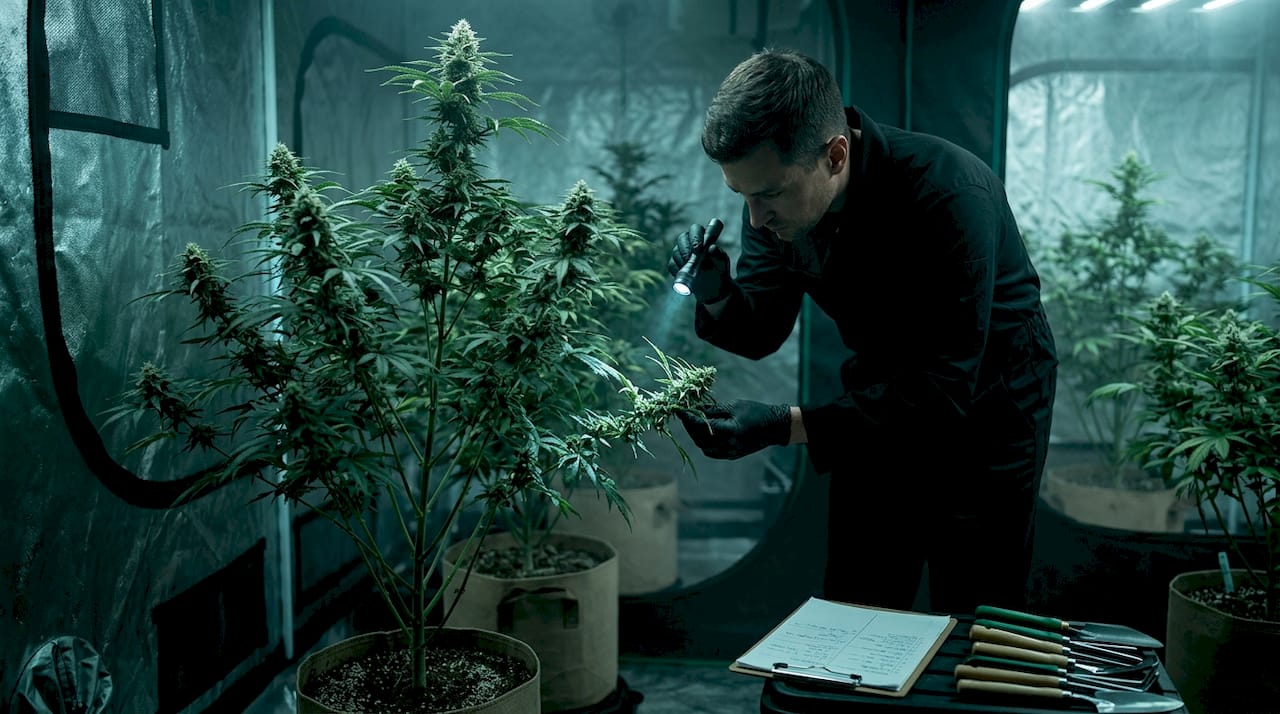
💡 Pro Tip: Keep a dedicated grow journal or use a simple photo log on your phone. Date every observation and note which plant is which using numbered tags. When you look back after harvest, you will have clear data to guide your next selection decision instead of relying on memory.
Starting with a solid foundation matters. A detailed germination guide can help you set up each seedling for the strongest possible start before you begin your evaluation process.
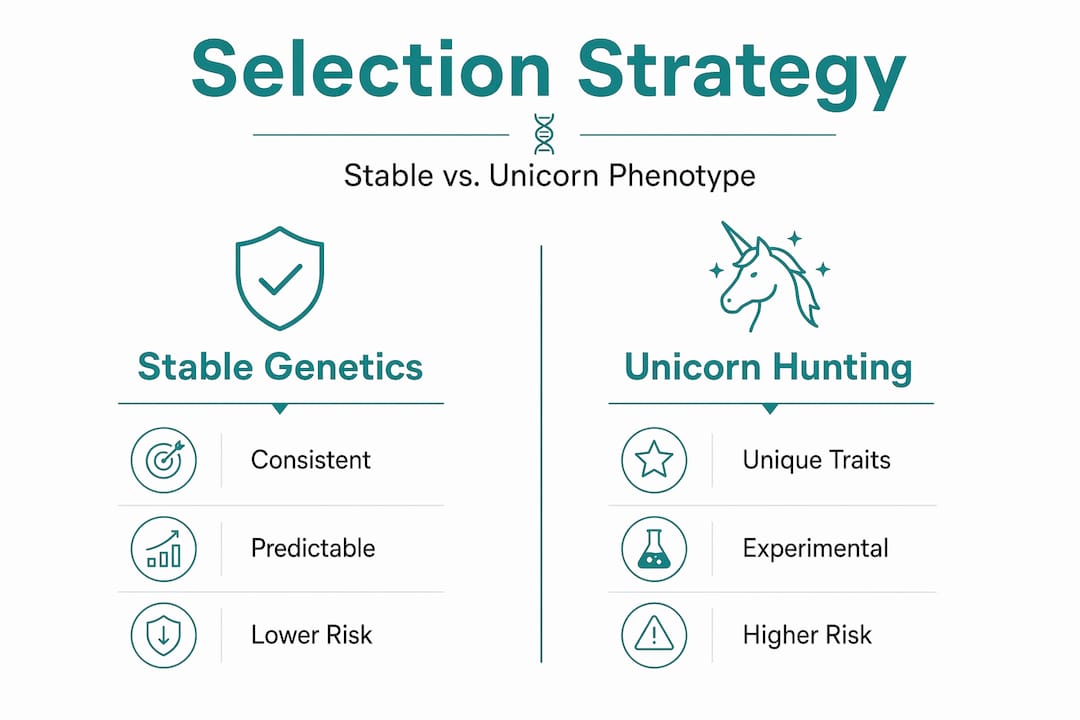
Stable genetics versus hunting for the ‘unicorn phenotype’
Once you know how to identify different phenotypes, you will face the important strategic choice between seeking consistent results or chasing that standout plant. Both approaches have real merit, and the right choice depends entirely on your goals.
Stable genetics: the case for predictability
Stable genetics produce plants that express similar traits generation after generation. When you grow a stable line, you know roughly what to expect in terms of height, flowering time, yield, and potency. This makes planning much easier, especially if you are working with a fixed grow space, a set light schedule, or a specific harvest window.
- Easier to scale and repeat
- Lower risk of surprise hermaphrodites or extreme variation
- Simpler nutrient and training programs since plants behave similarly
- Better suited to growers who want consistent quality over novelty
Unicorn phenotype hunting: the case for rare finds
A unicorn phenotype is that one-in-twenty plant that blows everything else out of the water. It might have an extraordinary terpene profile, exceptional resin production, or a unique color that no other plant in the batch shows. Hunters run large numbers of seeds specifically to find these outliers.
- Potential for extraordinary quality and uniqueness
- Exciting and rewarding process for enthusiasts
- Requires more space, time, and resources
- Higher risk of wasted effort if the standout pheno is not found
| Factor | Stable genetics | Unicorn hunting |
|---|---|---|
| Predictability | High | Low |
| Resource demand | Moderate | High |
| Risk level | Low | High |
| Reward potential | Consistent | Exceptional |
| Best for | Production grows | Enthusiast/breeder grows |
As the 2026 Genetics Selection Guide confirms, production consistency drives many growers toward stable lines, while phenotype hunting remains a passion project for those with the space and patience to run it properly.
💡 Pro Tip: You do not have to choose just one approach. Run a stable line for your main crop to guarantee a solid harvest, and dedicate a small corner of your grow to a phenotype hunt. This way you protect your yield while still exploring new genetics. Learn more about triploid genetics and diversity as an advanced option for growers ready to push boundaries.
Managing hermaphroditism and genetic instability
Choosing your selection strategy means you must also be prepared to deal with the risks of genetic instability and sex expression. Hermaphroditism is one of the most frustrating problems a home grower can face, but it is also one of the most preventable with the right habits.
What causes hermaphroditism?
Hermaphroditism in cannabis occurs when a female plant develops male reproductive structures, typically pollen sacs or banana-shaped stamens called nanners. The two main causes are environmental stress and inherited genetic instability.
Environmental triggers include:
- Light leaks during the dark cycle
- Extreme temperature fluctuations
- Overfeeding or nutrient deficiencies
- Physical damage to the plant
- Harvesting too late
Genetic causes occur when the seed stock itself carries instability. This is why maintaining consistent seed batches from reliable banks matters so much. Low-quality or poorly stabilized genetics are far more prone to intersex expression even under ideal conditions.
Here is how to manage hermaphroditism effectively:
- Inspect daily during the first three weeks of flowering. This is the window when male structures most commonly appear. Use a magnifying glass or jeweler’s loupe for close inspection of bud sites.
- Look for pollen sacs and nanners. Pollen sacs appear as small round balls clustered near bud sites. Nanners are elongated, banana-shaped structures that emerge directly from within the flower.
- Act immediately. If you spot a confirmed hermaphrodite and the plant is not critical to your selection goals, remove it from the grow space right away. Even a single burst pollen sac can fertilize nearby females.
- Isolate and evaluate borderline cases. If a plant is otherwise exceptional but shows one or two nanners, you can carefully remove them with tweezers and monitor closely. Do not let sentiment override practicality.
- Review your environment. After any hermaphrodite event, audit your grow room for light leaks, temperature spikes, and other stressors.
⚠️ Critical reminder: As research on cannabis sex-system instability confirms, inherited instability and environmental stress both contribute to intersex expressions. Scouting early is your best defense against a seeded crop.
Balancing elite selection with genetic diversity
Beyond immediate choices, the way you select phenotypes shapes the future adaptability and success of your plants. Many growers focus entirely on locking in the best phenotype they have ever grown, which makes sense on the surface. But there is a real risk in over-tightening your genetic pool.
When you clone and preserve only one elite phenotype indefinitely, you gain repeatability but lose resilience. If that single pheno has a weakness, whether it is susceptibility to a specific mold, sensitivity to heat, or poor performance under certain light spectrums, your entire operation is exposed to that vulnerability with no genetic backup.
Research on cannabis genetic diversity highlights this trade-off clearly: selection can increase control and quality, but cloning only the best expression can reduce genetic diversity, and if you over-tighten for one phenotype you may increase vulnerability to future environmental changes or stresses.
Practical ways to balance elite selection with diversity:
- Maintain two to three phenotypes from each strain rather than committing to just one
- Rotate new genetics into your grow every few cycles to introduce fresh variation
- Keep seed stock from multiple batches as a backup in case your primary pheno fails
- Experiment with new strains alongside your proven performers
- Document the traits of all phenotypes you grow, not just the winner, so you have a reference library for future decisions
🌿 Perspective: Diversity is not the enemy of quality. It is the insurance policy that keeps your grow resilient when conditions change.
Growers who want to expand their outdoor resilience should explore outdoor cultivation strategies that account for variable environmental pressures, where genetic diversity becomes even more valuable.
Our take: avoiding common mistakes and finding your ideal selection style
Most articles about phenotype selection focus on the mechanics. What they miss is the mindset shift that separates growers who make real progress from those who repeat the same mistakes cycle after cycle.
New growers almost always underestimate stress. They see a plant that looks a little off and assume it is a nutrient issue, when in reality it is showing early signs of genetic instability or intersex development. The tendency to explain away problems rather than investigate them is the single most costly habit in phenotype selection. Train yourself to investigate first and assume later.
The other major mistake is growing by memory. You cannot accurately compare a plant you harvested six months ago to one you are looking at today without documentation. The moment you start taking dated photos, keeping weight records, and noting terpene observations, your selection process transforms from guesswork into something closer to science. Check out real-world grow diaries for inspiration on how other cultivators track and evaluate their grows.
Here is our honest take: it is completely fine to prioritize fun over efficiency, especially if you are a home grower who enjoys the process of hunting for that special plant. But be strategic about it. Know your goal before you pop seeds. If you need a reliable harvest for personal use, lean toward stable genetics and focus your selection on the top one or two performers. If you are growing for the love of the craft and want to find something extraordinary, set up your hunt intentionally with enough plants and enough space to give it a real chance.
The best growers we have seen combine both approaches. They run a core of stable, proven genetics for their main harvest and dedicate a small portion of their grow to exploration. This keeps the lights on, so to speak, while still leaving room for discovery. Expect the unexpected, track everything, and adjust based on data rather than gut feeling alone.
Refine your grow with the right seeds and genetics
Everything you have learned about phenotype selection becomes far more powerful when you start with quality genetics. The best evaluation process in the world cannot compensate for unstable or poorly bred seeds. Starting strong means fewer surprises, less wasted effort, and a much higher chance of finding that standout plant you are looking for.

At Bluedoggenetics.com, we connect home growers with premium cannabis seeds from trusted genetics brands around the world, including feminized, autoflowering, and regular seed options suited to every cultivation style. Whether you are building a stable production grow or gearing up for a serious phenotype hunt, the right starting point matters. You can also explore reliable banks to find consistent, well-documented genetics that give your selection process a real foundation. Better seeds mean better data, better selection, and ultimately, better harvests.
Frequently asked questions
What makes a cannabis phenotype ‘stable’?
A stable phenotype consistently produces the same traits across multiple plants and generations, making your grow more predictable and easier to manage. As genetics selection research confirms, seed batches inherently vary in expression, so stability comes from careful breeding over many generations.
How can I spot hermaphroditic cannabis plants early?
Inspect your plants daily during the first three weeks of flowering, specifically looking for round pollen sacs or banana-shaped nanners emerging near bud sites. Early scouting is the most effective way to prevent unwanted pollination and a seeded crop.
Why not always clone the best plant?
Cloning your best plant locks in quality and repeatability, but it also narrows your genetic base. Research on cannabis genetic diversity shows that over-tightening for one phenotype can increase vulnerability to pests, disease, or environmental stress over time.
What are some easy-to-track traits for home growers?
Focus on plant height, bud density, scent intensity, and how each plant responds to stress or training. Take dated photos at each stage and record dry weight at harvest so you have concrete data to compare across grows.
Recommended
- Semillas Feminizadas y Autoflorecientes Premium- BLUEDOG GENETICS Seeds
- Cannabis blog – Your cannabis garden – BLUEDOG GENETICS Seeds
- Semillas Feminizadas y Autoflorecientes Premium- BLUEDOG GENETICS Seeds
- Genéticas triploides de cannabis – La próxima revolución del cultivo – BLUEDOG GENETICS Seeds
Deja una respuesta
Lo siento, debes estar conectado para publicar un comentario.