

Setting up your first legal grow in Germany has been possible since 2024 thanks to the Cannabis Act (CanG), which allows any adult to grow up to three live female plants per household for personal use. This legal framework makes growing at home a real option, as long as you meet specific conditions on discretion, possession limits and protection of minors. In this guide you will find the legal requirements, the materials you need and a step-by-step process to get your grow started without making the mistakes that penalise beginners the most.
In short:
- The Cannabis Act (CanG) allows adults to grow up to three live female plants each and to possess up to 50 g of dried cannabis at home.
- Plants must not be visible from the public highway or from third-party properties: visual discretion is required by law.
- The basic equipment for a first legal grow includes a full-spectrum LED, an extractor fan with an activated carbon filter, 11–15 litre pots and a substrate with perlite.
- Feminised and autoflowering seeds are the safest option for beginners, with cycles of 60–75 days in the case of autoflowering varieties.
- Most of the conflicts home growers face are not legal but social: lack of discretion around neighbours and the visibility of the plants.
What are the legal requirements for growing cannabis in Germany?
The CanG Cannabis Law sets clear limits: a maximum of three living female plants per adult and up to 50 g of dried cannabis stored at home. In public spaces, the limit drops to 25 g. Exceeding either of these figures turns legal growing into a criminal offence.

Selling, distributing and any transfer to third parties, especially to minors, remain illegal and are punishable by severe penalties. Legal home growing covers only the personal consumption of the adult who holds the home. Sharing the harvest, even for free, falls into a legal grey area that is best avoided.
The key points you should follow are:
- A maximum of three live female plants per adult at home.
- Maximum possession of 50 g at home and 25 g in public spaces.
- Absolute ban on sale and distribution, including gifts to minors.
- Visual discretion is mandatory: plants must not be visible from the public highway or from third-party properties.
- Exclusively private growing: growing for commercial purposes is still punishable.
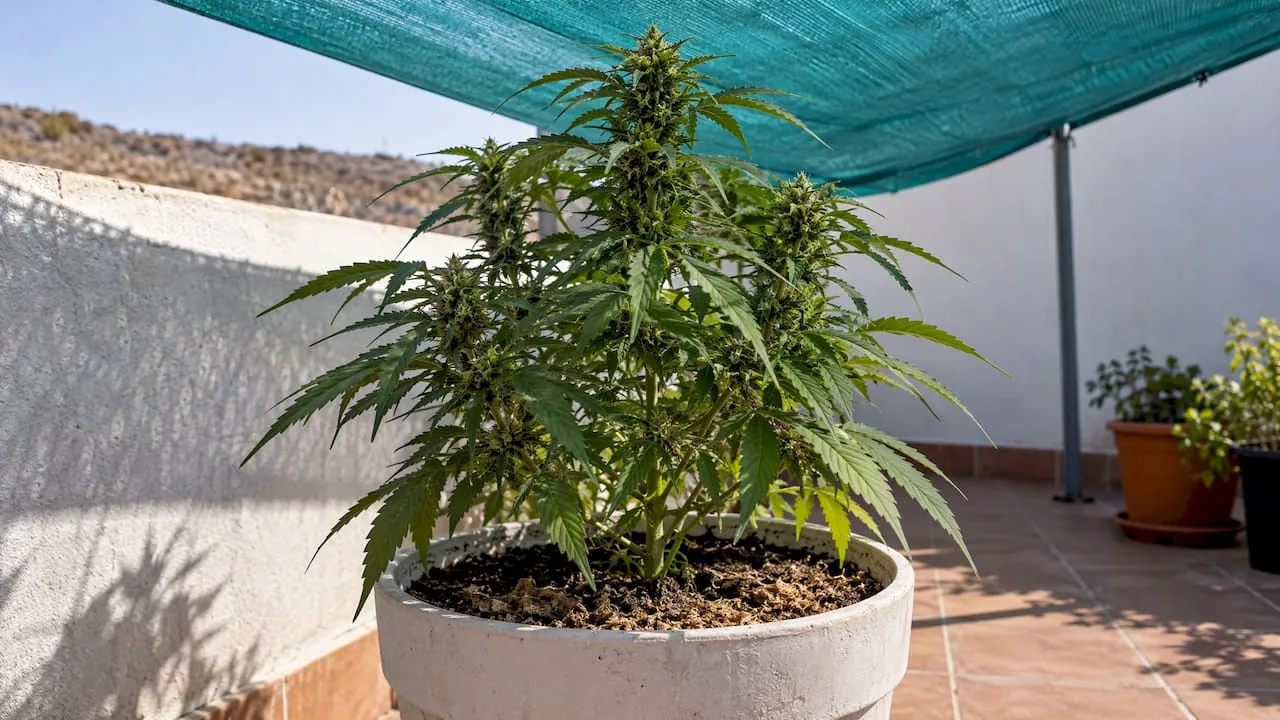
Outdoor growing demands strict visual protection so that no plant is visible from the street or by minors. Privacy screens, dense hedges or physical barriers are the most common solutions. Ignoring this point is the mistake that generates the most complaints among home growers in Germany.
Essential tools and materials for your first home grow
The basic equipment for legal indoor growing doesn’t require a huge investment, but it does require choosing well from the start. A poorly planned setup creates problems with humidity, odours and yield that build up throughout the whole harvest.
Seeds: the most important starting point
Feminised and autoflowering seeds are the most suitable choice for beginners in Germany. Feminised seeds guarantee that all the plants are flower-producing females. Autoflowering plants flower with age, not with the photoperiod, which simplifies light control and shortens the growing cycle to 60–75 days. You can legally buy them from suppliers within the European Union, including Spain and the Netherlands.
Essential equipment by category
| Category | Recommended option | Basic specification |
|---|---|---|
| Lighting | Full-spectrum LED panel | 200–300 W for 1–3 plants |
| Pots | Fabric or plastic pots | 11–15 litres per plant |
| Substrate | Soil with perlite (20–30%) | Good drainage and aeration |
| Ventilation | Extractor + activated carbon filter | Minimum flow 100 m³/h |
| Measurement | Hygrometer and digital thermometer | Range 22–26 °C, 40–60% RH |
Control of climate, ventilation and substrate directly determines the quality and quantity of the harvest. A constant temperature between 22 and 26 °C with relative humidity of 40–60% creates the ideal conditions for the development of trichomes and resin.
The additional materials you need are:
- Light timer to automate lighting cycles.
- pH meter to adjust the irrigation water (optimal range: 6.0–7.0 in soil).
- Stake or SCROG net to guide the growth of the plants.
- Drip tray to prevent waterlogging and damage to the floor.
💡 Professional tip: Install the activated carbon filter before switching on the extractor for the first time. Carbon filters and silent fans are essential in residential settings to keep good relations with your neighbours and meet your social responsibility as a grower.
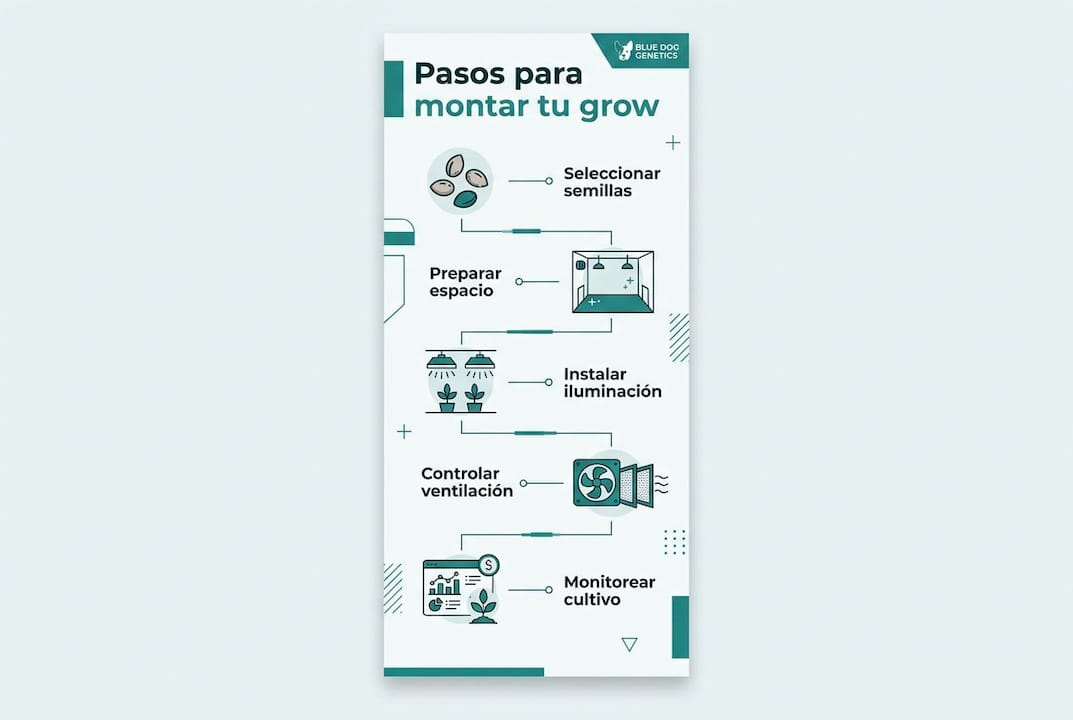
Step by step to set up and start your legal growing space
Setting up your grow room properly from day one saves weeks of corrections. Follow this process in order and don’t skip steps.
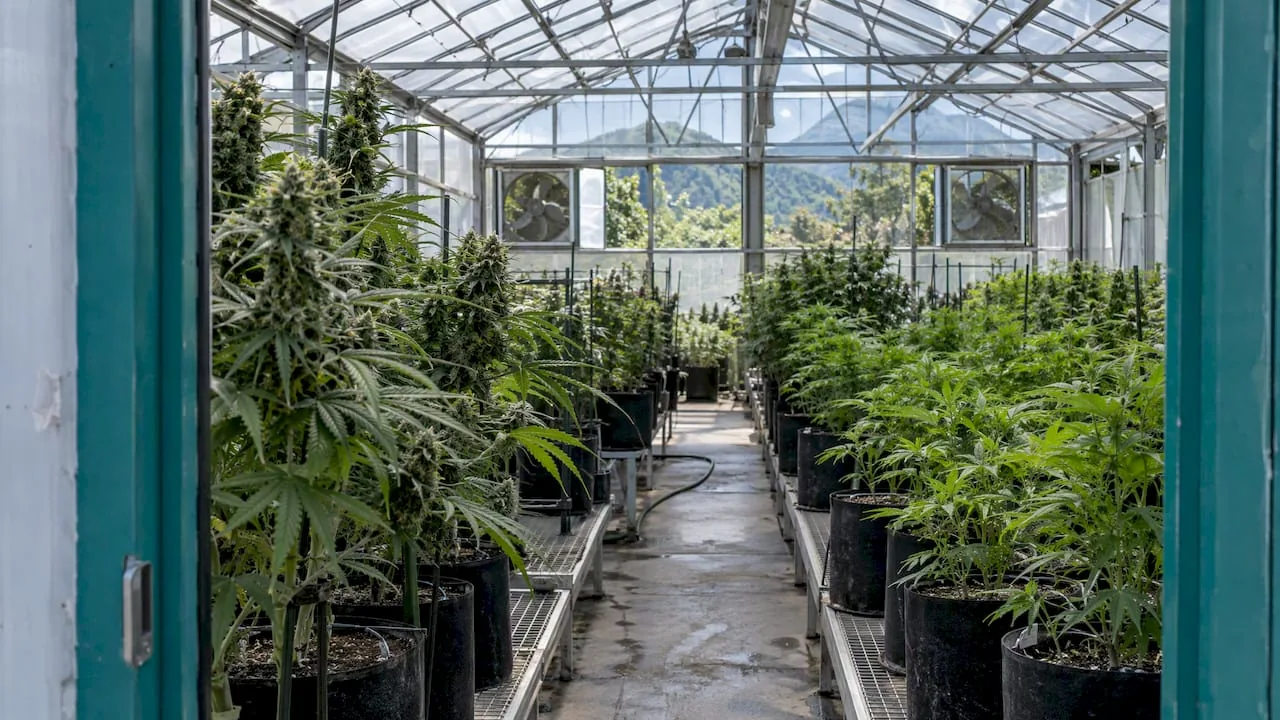
- Choose your space. A wardrobe, a small room or a grow tent are the most common options for indoor growing. The minimum recommended space for three plants is 1,2 m × 1,2 m × 2 m high. For outdoor growing, choose a private area that isn’t visible from any public place.
- Prepare the space. Line the inside walls with reflective material (Mylar or matt white paint) to make the most of the light. Seal any crack where light could escape or dust could get in.
- Install the ventilation before the light. Place the extractor at the top of the space, connected to the activated carbon filter. Air should circulate from bottom to top. Add an internal fan to simulate a breeze and strengthen the stems.
- Set up the lighting system. Hang the LED panel at the distance recommended by the manufacturer (generally 40–60 cm in the vegetative stage). Connect the timer: 18 hours of light and 6 of darkness for the vegetative stage; 12 and 12 for flowering in photoperiod varieties.
- Prepare the pots and substrate. Fill 11–15 litre pots with soil mixed with perlite. Moisten the substrate before placing the seed or cutting.
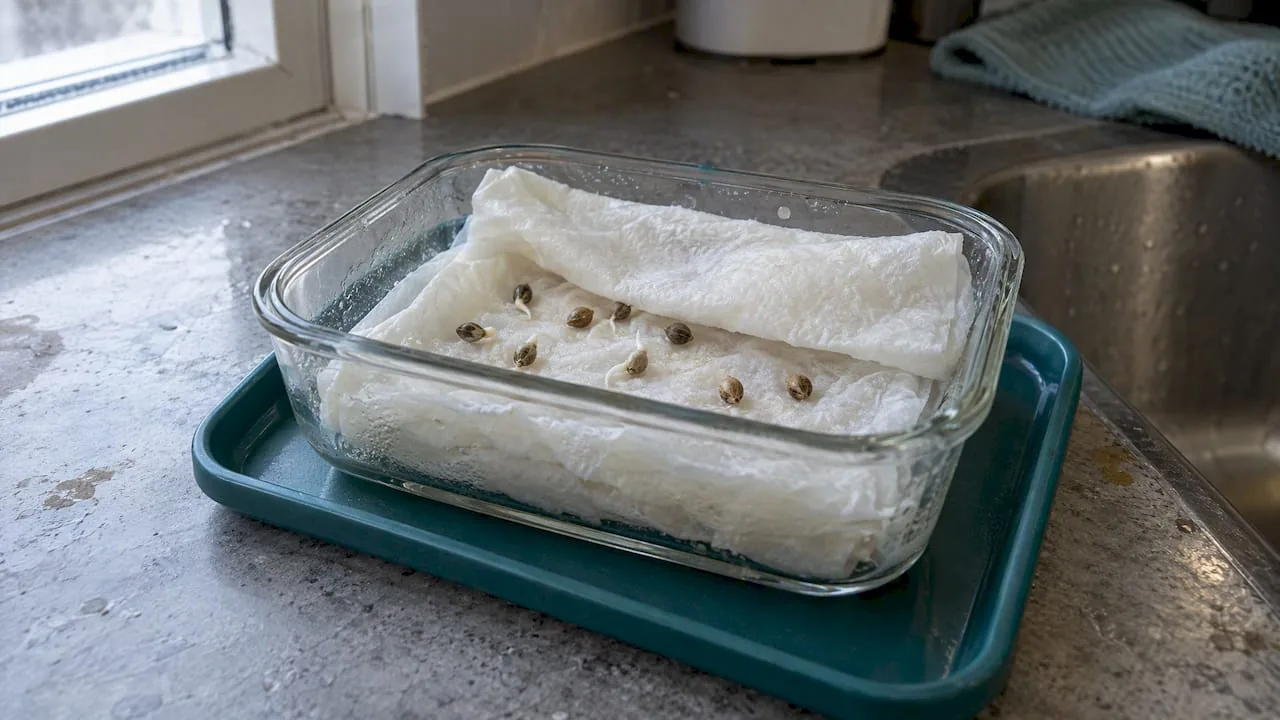
- Germinate the seeds. The damp paper towel germination method is the most reliable for beginners. Place the seeds between two layers of damp kitchen paper, on a covered plate, at 22–25 °C. The main root appears within 24–72 hours. Transfer the germinated seed to the substrate with the root pointing down and cover it with 1 cm of soil. You can follow our germination guide for more details.
- Water sparingly during the first weeks. Seedlings need little water. Water when the top 2–3 cm of the substrate feel dry to the touch. Overwatering is the number one cause of death in seedlings.
- Protect the space from prying eyes. If you grow on a terrace or outdoors, put up privacy screens or plant barriers before the plants get big. Active discretion is your best protection against disputes with neighbours and theft.
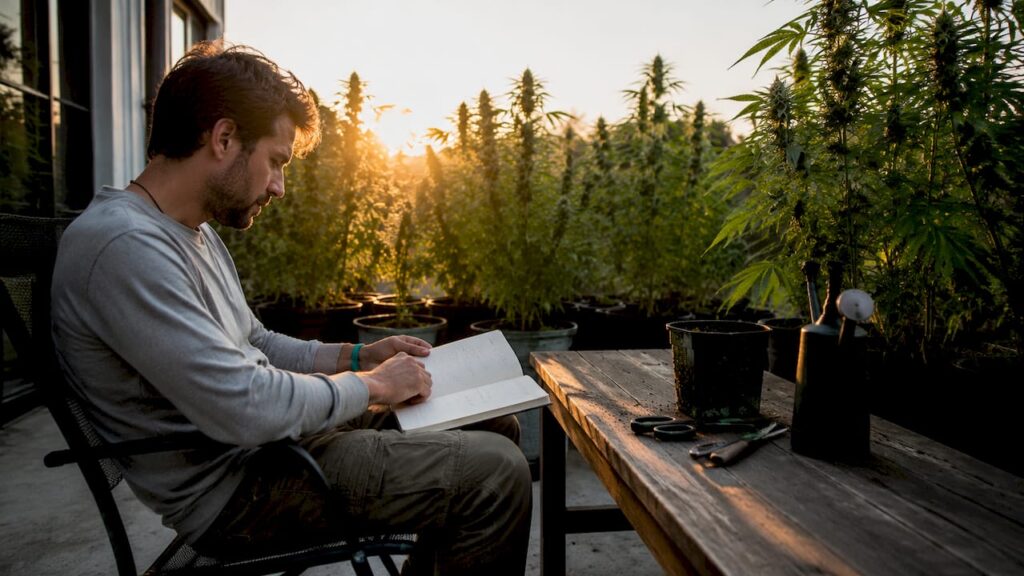
💡 Pro tip: Keep a grow diary from day one. Note down temperature, humidity, amount of water and any visual change in the plants. This record lets you spot problems before they get worse and learn from each cycle.
What are the most common mistakes when starting a legal grow in Germany?
“The main challenge for a first legal grow is not the law itself, but achieving the discretion needed to avoid social conflicts and theft.” — Hanf Magazin, 2026
This observation sums up what experienced growers see time and again. Direct legal problems are less common than conflicts caused by a lack of discretion. Knowing the most common mistakes lets you avoid them from the start.
- Public visibility of the plants. Growing on a terrace with no visual screening is the most frequently reported mistake. Conflicts with neighbours and the risk of theft increase dramatically when the plants are visible. Put up netting or barriers before the plants exceed 50 cm.
- Poor humidity and ventilation management. Humidity above 70% during flowering encourages the appearance of Botrytis (grey mould), which can destroy an entire harvest in days. Keep it in the 40–60% range and ventilate properly.
- Exceeding the legal limits without realising. Three plants can produce more than 50 g if grown properly. Plan your harvest in advance and don’t store more than is permitted.
- Using seeds of unknown origin or illegal propagation. Buying seeds from private individuals without guarantees exposes the grower to unstable genetics and possible legal problems. Always buy seeds from verified suppliers within the EU.
- Neglecting weekly maintenance. Cannabis plants need constant checking: water pH, the condition of the leaves, the presence of pests and the working of the ventilation system. A problem caught in time is solved in hours; one that is ignored can ruin the grow.
Key points
Setting up a legal grow in Germany requires complying with the CanG, choosing the right equipment and applying active discretion from day one to avoid social and legal risks.
| Point | Details |
|---|---|
| CanG legal limits | Maximum of three living female plants and 50 g at home per adult. |
| Discretion as a priority | Install visual barriers before the plants become visible from outside. |
| Essential basic equipment | Full-spectrum LED, carbon filter, 11–15 litre pots and a substrate with perlite. |
| Germination in a damp towel | The root appears in 24–72 hours; carefully transfer it to the prepared substrate. |
| Feminised or autoflowering seeds | They are the safest and simplest choice for a beginner’s first grow. |
What nobody tells you about your first legal grow in Germany
I’ve been growing and advising growers in different countries for years, and legalisation in Germany has brought something few guides mention: social pressure is greater than legal pressure. The law is clear and reasonably permissive. What really puts your grow at risk isn’t the police, but the neighbour who smells something odd on the landing or the person who sees your plants from the street.
My most honest advice is this: invest in discretion before production. A quality carbon filter and some privacy screens cost less than any legal or social problem. And when the people around you don’t know that you grow, you grow in peace.
I have also seen many beginners become obsessed with genetics before mastering the basics. The most expensive variety on the market doesn’t make up for poor ventilation or overwatering. Start with a robust autoflowering variety, learn to read your plants and scale up when you feel confident. Legal home growing is a personal responsibility, and treating it that way from the start makes the difference between a mediocre harvest and one you can be proud of.
Legalisation in Germany isn’t just a regulatory change. It’s an opportunity to develop a more conscious and responsible relationship with cannabis. Make the most of it.
Where to buy seeds for your legal grow in Germany
The first step to a successful grow is choosing certified-quality seeds. At Bluedoggenetics you will find a curated catalogue of feminised and autoflowering seeds selected specifically for growers looking for consistent results from the very first cycle. Each variety comes with detailed information on flowering time, yield and cannabinoid profile, which makes choosing easier for beginners.
Bluedoggenetics offers discreet shipping within the EU, a quality guarantee and order tracking. For a first legal grow in Germany, we recommend exploring short-cycle autoflowering varieties available in the Bluedoggenetics shop, where you will find options suited to small spaces and indoor conditions. Buying seeds from a verified supplier is the foundation of any legal and responsible grow.
Frequently Asked Questions
How many plants can I legally grow in Germany?
The Cannabis Act (CanG) allows up to three living female plants per adult to be grown in a private home. This limit is per person, not per dwelling.
Do I need a licence to grow cannabis at home in Germany?
No licence is required for private home growing in Germany. You just need to respect the limits of the CanG: a maximum of three plants and 50 g in possession within the home.
Can I grow cannabis on my terrace or in my garden?
Yes, as long as the space is private and the plants are not visible from the public highway or to minors. Outdoor growing requires visual protection using netting, barriers or hedges.
Which type of seeds are best for a first legal grow?
Feminised autoflowering seeds are the most recommended for beginners. They flower on their own schedule, simplify light control and have cycles of 60–75 days, which reduces the margin for error.
How do I avoid problems with neighbours when growing at home?
Install an activated carbon filter connected to the extractor to eliminate odours, use quiet fans and make sure the plants aren’t visible from outside. Active discretion is the best prevention against conflicts.
Recommendation
- Legal Grow Design: How to set up your room for 3 plants – BLUEDOG GENETICS Seeds
- The Ultimate Guide to Cannabis Home Cultivation in Germany – BLUEDOG GENETICS Seeds
- Your Cannabis Garden – Cannabis Blog: Growing Guides, Curiosities and Culture
- The 5 Best Cannabis Strains to Grow in Germany – BLUEDOG GENETICS Seeds