

Good seed customer service should guarantee three things: discreet, trackable shipping, a clear policy for seeds that don’t germinate, and real advice on which variety suits your grow. Before paying, check the seller’s terms and conditions, their shipping options and the contact channel available. If any of that is missing or unclear, look for another supplier.
In short:
- Customer service for seeds should include discreet shipping, a clear policy for seeds that don’t germinate and reliable technical advice.
- It is essential to check the reputation of customer support by getting in touch with simple questions before buying, and to verify response times and tracking options.
- A low germination rate may be due to environmental conditions or method, but if it affects several seeds from the same batch, you should make a claim with clear documentary evidence.
- Delays in international shipments can be due to customs holds, so you should check the seller’s policy and follow the parcel’s status carefully.
- How a seller responds to problems reveals their level of professionalism and commitment, and they stand out in trust if they offer diagnosis, transparency about storage and technical support.
What support should include for quality seeds
Discreet packaging is not a luxury, it is a minimum standard. Always ask which courier the seller uses, whether the parcel carries any external markings and how long it takes to leave the warehouse after payment is confirmed. A serious seller will have no problem explaining this to you in detail before you buy.
The product page also says a lot about how serious a seed bank is. It should include the stated germination rate, technical details of the variety (genetics, flowering, approximate yield) and some basic growing recommendations. Bluedog Genetics sets out these details in its complete guide to germinating cannabis seeds, a resource that also serves as a technical reference when a question comes up after your purchase.
Also watch for these signs:
- Terms and conditions written clearly, with no ambiguous small print about guarantees.
- A blog or guides section with useful content on germination, storage or troubleshooting.
- Order tracking system available from the very start.
- Visible contact channel, with reasonable response times.
Pro tip: Before buying, send a simple question to support (for example, about delivery times to your area). The speed and quality of that first reply tells you more about the seller than any review.
What to do if seeds don’t germinate
A low germination rate doesn’t always mean poor genetics. Sometimes the problem lies in the method used or in the environmental conditions, but when the fault is clear and affects several seeds from the same batch, it’s time to make a claim. Follow this order:
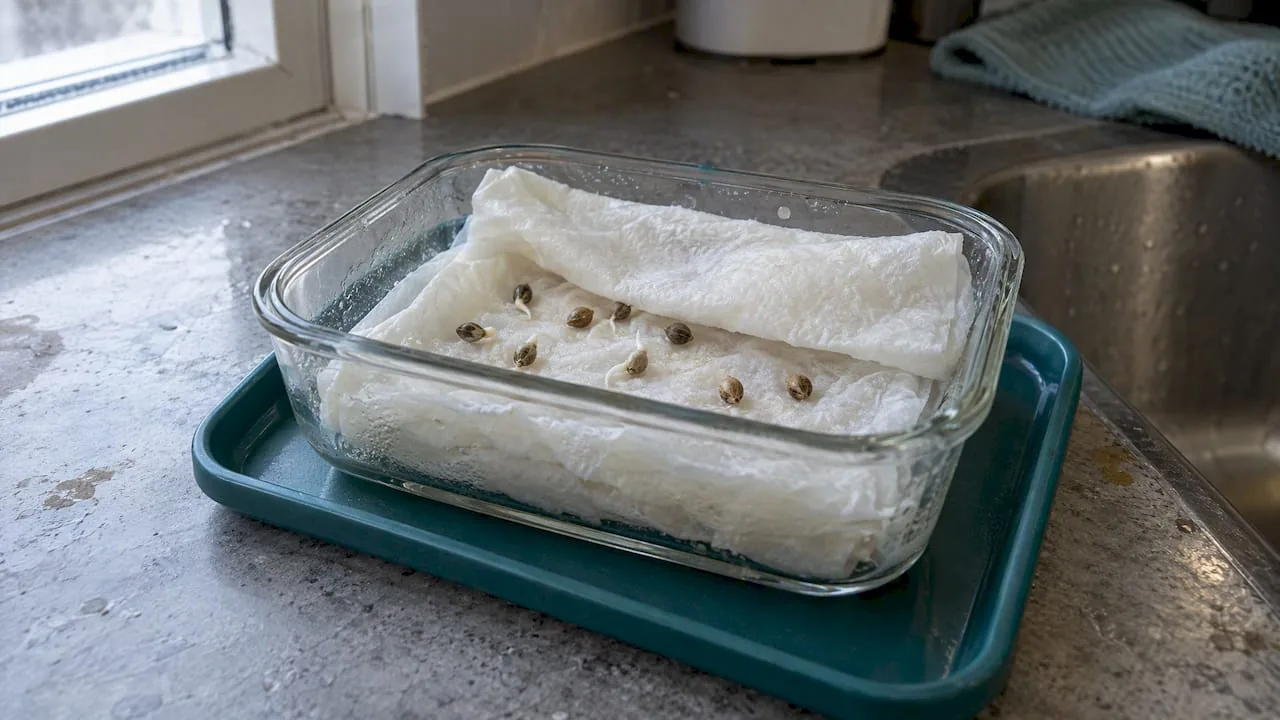
- Review the germination process you used. Compare what you did with what is recommended in your germination guide, including temperature, humidity and soaking time.
- Document the case with photos. Date, time and visible condition of the failed seeds or seedlings, before throwing anything away.
- Find the proof of purchase and the batch or serial number, if the seller provides it with the shipment.
- Contact support with all that information gathered, explaining the method used and the exact environmental conditions.
- Expect a response proportionate to the case: a replacement, credit towards a future purchase, or at least technical advice to rule out a handling error.
A seller who, grow after grow, just repeats “check your method” without offering any solution is not paying attention to the real customer. The warranty and claims policies should specify exactly what happens when the stated germination rate is not met, and how long you have to report it.
Shipping delays: courier, transit and customs
Not all delays mean the same thing. A parcel “in transit” for a few days is usually normal, especially on international shipments. It’s another matter if the status doesn’t change for a week or more, or if it appears as held by customs, something that happens fairly often with international seed purchases, as they can be held up by customs control depending on the destination country.
Before you buy, ask the seller directly:
- Do you ship to my country and which courier do you use for international orders?
- What policy applies if a package is lost or held up in customs?
- Do they offer a reshipment or refund in those cases?
Order tracking is your main tool for telling a normal delay from a real problem. If the tracking number has not updated for a long period since dispatch, it is reasonable to open a case with the seller. To reduce risks with international shipments, it is a good idea to check the seed bank’s original packaging and its shipping policies in advance, before completing your purchase.
How to tell a good service from a mediocre one
Comparing sellers by their customer service is more reliable than looking at price alone. Before deciding where to buy, check these points:
- A visible, specific guarantee policy, not a generic “satisfaction guaranteed” phrase.
- Active order tracking from dispatch to delivery.
- Our own technical resources: guides on germination, storage or solving common problems.
- Terms and conditions that are easy to find and understand, without referring to scattered small print.
- Multiple contact channels (email, form, chat) with stated response times.
- Secure and recognised payment options.
The warning signs are just as clear: no tracking system at all, vague or non-existent guarantee policies, and no technical documentation on the varieties they sell. If a seller can’t explain to you what happens when something goes wrong, they probably don’t have a plan for when it does.
Questions and checklist for contacting support
Before writing to customer service, prepare these questions:
- What type of packaging and courier do you use for my area?
- What is the stated germination rate for this variety?
- What policy applies if the parcel is lost or held by customs?
- Do you offer reshipment, refund or credit, and under what conditions?
If you are going to make a claim, always attach: dated photos, batch or serial number, the exact germination method and environmental conditions (temperature, humidity). Keep a copy of every message with a timestamp. That documentation avoids unnecessary back and forth and speeds up any resolution.
What good support reveals about the seller
For years I have been watching how seed banks behave when something doesn’t go as expected, and that is where the real difference shows. Anyone can promise perfect germination on the product page. Few respond with the same confidence when a customer writes to say that three out of five seeds didn’t sprout.
The point almost nobody mentions: good after-sales service isn’t limited to replacing seeds. It diagnoses. It asks about the method used, the ambient temperature, the substrate. That is what separates a seller who understands genetics from one who just processes orders.
Bluedog Genetics documents its storage and preservation processes precisely because poor conservation in transit can ruin seeds that were perfectly viable at source. That kind of technical transparency is what you should look for in any seller.
How Bluedog Genetics meets these demands
This seller covers the key points mentioned: discreet shipping with no external markings, active tracking from the moment the order leaves the warehouse, and a guarantee policy designed for real cases of low germination. Its guides on germination and storage are designed so that you can resolve technical questions without relying solely on email support, although that is also available.
Before buying, take your time to read the terms and conditions, which set out the guarantee and claims conditions. Then head to the shop and compare varieties according to your experience and growing space. If you already know what you are looking for, you can go straight to checkout.

For beginners, Northern Light Automatic is a hardy, easy-to-handle option, ideal for practising germination without complications. If you’re looking for something with more genetic character and good indoor yield, Gorilla Glue #4 is one of the varieties most often looked up by growers with some experience. You can check both in the seeds category before you decide.
Frequently Asked Questions
What should I check before buying seeds online?
Check for discreet packaging, the stated germination rate, the guarantee policy and whether order tracking is available. Bluedog Genetics sets out these points in its terms and conditions and in its technical guides.
How long should I wait before complaining about a delayed shipment?
If the tracking has not been updated for a prolonged period after dispatch, it is reasonable to contact the seller to open a case, especially for international shipments subject to customs control.
What happens if my seeds don’t germinate?
Document the case with photos, the batch and the germination method used, and contact support. A reputable seller offers a replacement, credit or technical advice according to their guarantee policy.
How do I know if a seller has good customer service?
Look at the clarity of their terms and conditions, the availability of order tracking, their technical resources (guides) and how quickly they respond to pre-purchase enquiries.
Is it legal to receive international seed shipments in Spain?
Each buyer should find out about the regulations that apply to their particular situation; a responsible seller offers discreet packaging and traceability, but this does not replace the buyer’s own legal judgement.