


Dein Warenkorb ist gerade leer!
Cannabis seed collection best practices for home growers

Preserving valuable cannabis genetics starts long before a seed ever touches soil. If you’ve spent months developing a standout phenotype or finally sourced a rare strain, losing that genetic line to poor seed handling is a frustrating and entirely avoidable outcome. Proper seed collection is the foundation of every successful grow, whether you’re building a personal library of genetics or producing seeds for future seasons. This guide walks you through every stage, from timing your harvest to long-term storage, so you start each grow with seeds that are genuinely ready to perform.
Table of Contents
- Understand seed collection criteria and timing
- Steps for controlled seed production
- Best practices for cleaning and drying seeds
- Storing seeds for long-term viability
- Testing seed viability before your next grow
- Comparison of common seed storage methods
- A seasoned grower’s perspective: What most guides don’t tell you
- Take your cannabis seed collecting to the next level
- Frequently asked questions
Key Takeaways
| Point | Details |
|---|---|
| Harvest at full maturity | Wait until seeds are dark and firm for optimal germination potential. |
| Clean and dry thoroughly | Remove all debris and ensure complete drying before storing to prevent spoilage. |
| Store in optimal conditions | Use air-sealed, light-proof containers with desiccant in a cool, dark space. |
| Test viability regularly | Conduct germination tests on stored seeds every year to maintain a healthy collection. |
| Document genetics carefully | Label seed batches with strain and parentage info to track your valuable genetics. |
Understand seed collection criteria and timing
Timing is everything in seed collection. Harvesting too early means seeds that won’t germinate reliably, while waiting too long risks seeds dropping from the plant and getting lost. Fully mature seeds are darker in color, firm to the touch, and often display the characteristic tiger stripe pattern. Seed-bearing plants also take longer to mature than sensimilla, so adjust your harvest timeline accordingly.
Before you even reach harvest, your setup matters. Isolating seed-producing females from other plants is non-negotiable for controlled breeding. Accidental cross-pollination can ruin an entire crop of sensimilla and introduce unwanted genetics into your seed stock. Keeping your breeding area physically separate, or staggering grow schedules, protects the integrity of both your seed and flower production.
Here are the key criteria to evaluate before collecting:
- Seed color: Mature seeds range from dark brown to gray, often with mottled or striped patterns. Pale or white seeds are immature.
- Seed firmness: Squeeze gently. A mature seed resists pressure. Soft seeds are not ready.
- Calyx swelling: The seed-bearing calyx should be visibly swollen and beginning to split.
- Timing relative to pollination: Allow adequate development time after pollination before harvesting.
If you’re exploring your seed variety selection before starting a breeding project, understanding how different varieties mature will help you plan your collection windows more accurately.
Remember: Seeds produced for preservation behave differently from seeds grown for commercial yield. Treat each batch with its own timeline and expectations, especially when you’re working to preserve unique genetic lines that took years to develop.
💡 Pro Tip: Keep a simple calendar noting when you pollinated each plant. This gives you a reliable countdown to harvest rather than guessing by visual cues alone.
Steps for controlled seed production
Once you understand when and what to collect, the next step is following a reliable process. Controlled seed production isn’t complicated, but it does require discipline and attention to detail at each stage.
- Isolate your breeding females at least one week before introducing pollen. Move them to a separate room or tent to prevent stray pollen from reaching your sensimilla plants.
- Introduce pollen at the right moment. Pollinate during early flowering, around 2 to 3 weeks after switching to a 12/12 light cycle. This gives the plant enough time to develop fully formed seeds.
- Allow 4 to 6 weeks for seed development after pollination. Rushing this stage produces underdeveloped seeds with poor germination rates.
- Harvest gently. Cut seed-bearing branches carefully, handling them over a clean tray to catch any seeds that fall loose.
- Sort immediately. Discard any seeds that are visibly underdeveloped, crushed, or discolored. Only keep seeds that meet your maturity criteria.
A good grow planning guide will help you integrate seed production into your broader grow schedule without disrupting your regular harvest cycles.
💡 Pro Tip: Use a dedicated pollen brush or small paintbrush to apply pollen to specific branches rather than the whole plant. This lets you produce seeds from a controlled section while keeping other buds sensimilla.
Best practices for cleaning and drying seeds
With mature seeds in hand, the next essential practice is proper post-harvest handling. This step is where many home growers cut corners, and it’s where long-term viability is won or lost.
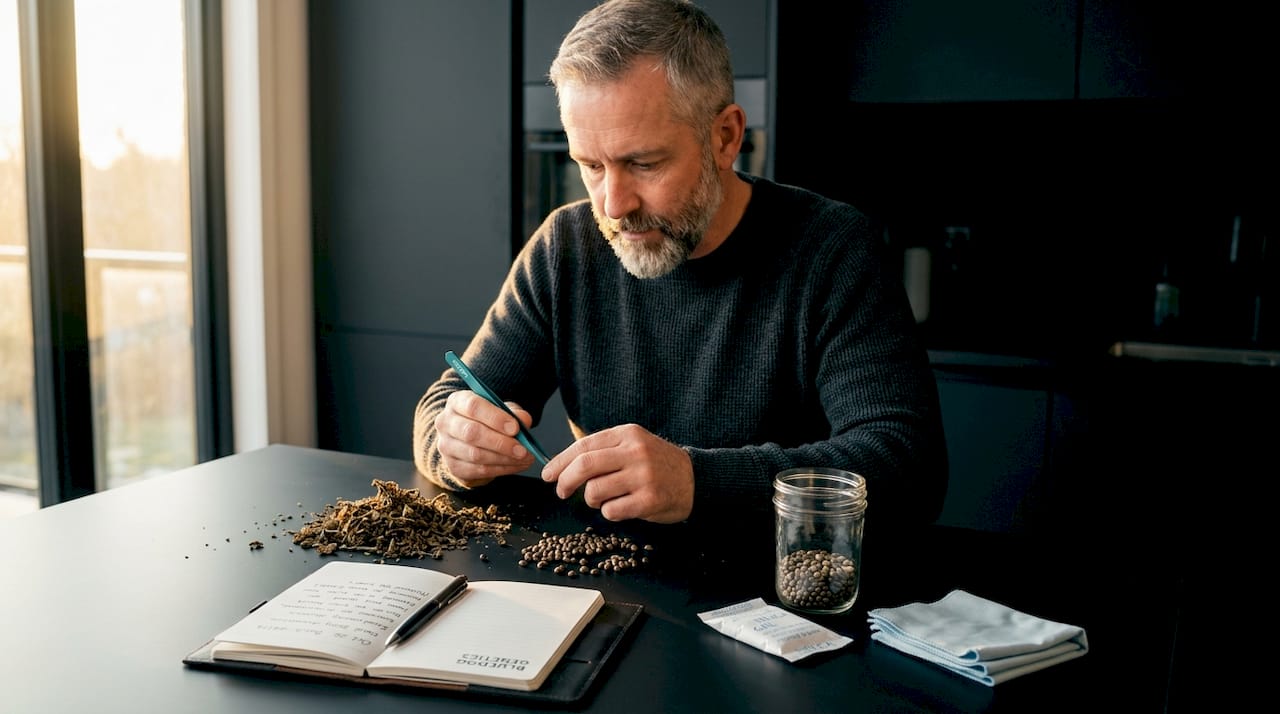
Removing plant debris from your seeds is the first priority. Leftover plant material traps moisture, encourages mold, and introduces bacteria that degrade seeds during storage. Sift seeds through a fine mesh screen, then use a soft brush to remove any remaining debris.
Follow these cleaning and drying steps:
- Sift seeds through a fine mesh or screen to separate them from bract material and leaf fragments.
- Brush gently with a soft-bristled brush to remove fine debris without scratching the seed coat.
- Spread seeds in a single layer on a clean paper towel or ceramic plate.
- Air-dry in a cool, dark location for 1 to 2 weeks before storing. Avoid direct sunlight or heat sources.
- Check for residual moisture by pressing a seed between your fingers. If it bends rather than snapping, it needs more drying time.
🌱 Stat to know: Seeds with residual plant material or excess moisture are significantly more prone to mold and early viability loss during storage. Clean seeds consistently outperform uncleaned ones over time.
For more hands-on advice, the home growing blog covers practical techniques that apply directly to small-scale seed cleaning and preparation.
Storing seeds for long-term viability
After carefully preparing your seeds, storage is the last critical element for long-term genetic security. The enemies of seed viability are heat, light, moisture, and oxygen. Control all four, and your seeds can remain viable for years.
Seal seeds in air-tight, light-proof containers to limit exposure to oxygen and moisture. Glass mason jars with rubber seals work well for medium-term storage. For longer periods, vacuum-sealed bags or dedicated seed vaults offer better protection.
Here’s a quick comparison of common storage containers:
| Storage method | Protection level | Cost | Best for |
|---|---|---|---|
| Paper envelope | Low | Very low | Short-term (weeks) |
| Zip-lock bag | Low to medium | Low | Short-term (months) |
| Glass mason jar | Medium to high | Low | Medium-term (1 to 2 years) |
| Mylar bag (sealed) | High | Low to medium | Medium to long-term |
| Vacuum-sealed container | Very high | Medium | Long-term (2 to 5 years) |
| Commercial seed vault | Highest | High | Long-term archiving |
A practical storage workflow is to dry and clean seeds thoroughly, place them in sealed containers with a silica gel desiccant packet, and then store them in the refrigerator or freezer depending on your timeline. Refrigerator storage works well for seeds you plan to use within 1 to 2 years. Freezer storage extends viability further, but only if seeds are completely dry and sealed to prevent moisture from entering during temperature changes.
Explore your options at trusted seed banks to see how professionally stored genetics compare to home-stored seeds.
💡 Pro Tip: Add a small silica gel desiccant packet to every container you store. Replace it annually, or whenever you open the container, to maintain low humidity inside.
Testing seed viability before your next grow
With long-term storage covered, guarantee success by regularly verifying your seeds’ potential. There’s nothing more discouraging than planting an entire tray and watching nothing sprout.
Testing seed viability periodically is a simple habit that protects your grow plans and helps you identify storage problems before they become costly.
Follow this simple germination test process:
- Select a sample of 10 seeds from the batch you want to test.
- Dampen two paper towels and place 5 seeds between them, then seal in a zip-lock bag.
- Store in a warm, dark place at around 70 to 77°F (21 to 25°C).
- Check daily for 5 to 7 days and count how many seeds sprout a taproot.
- Calculate your germination rate. 8 out of 10 seeds sprouting means 80% viability, which is a solid benchmark for a healthy batch.
Document your results in a simple log. Note the strain, storage date, test date, and germination rate. Over time, this log becomes a valuable reference for tracking how your storage conditions affect viability.
✅ Good viability benchmark: Aim for 80% or higher germination rates. If a batch falls below 60%, consider using those seeds immediately rather than storing them further.
For a deeper look at germination techniques, the detailed germination guide covers everything from water soaking to rockwool cubes.
💡 Pro Tip: Test a small sample every 6 to 12 months, not just before a grow. Early detection of viability decline gives you time to use seeds while they’re still strong.
Comparison of common seed storage methods
Now that you know what optimal storage means, here’s how the most popular methods compare at a glance. Choosing the right method depends on how long you plan to store seeds and what equipment you have available.
| Method | Light protection | Moisture control | Oxygen barrier | Ideal duration |
|---|---|---|---|---|
| Paper envelope | None | None | None | Weeks only |
| Zip-lock bag | Partial | Low | Low | 1 to 3 months |
| Glass mason jar | Good (if dark) | Medium | Good | 1 to 2 years |
| Mylar bag (heat-sealed) | Excellent | High | High | 2 to 4 years |
| Vacuum-sealed jar | Excellent | High | Very high | 3 to 5 years |
| Dedicated seed vault | Excellent | Excellent | Excellent | 5+ years |
Air-sealed, light-proof containers consistently outperform open or loosely sealed options across every storage duration. The investment in a proper container pays off the moment you open it years later and find seeds that still germinate at 85%.
Key takeaways from this comparison:
- Short-term storage (under 3 months): Any clean, dry container works.
- Medium-term storage (1 to 2 years): Glass mason jars with desiccant in a refrigerator.
- Long-term archiving (3 or more years): Vacuum-sealed Mylar bags or seed vaults in a freezer.
For more growing resources and practical advice, visit the cannabis garden blog.
A seasoned grower’s perspective: What most guides don’t tell you
Most seed collection guides focus on the mechanics and stop there. But the growers who consistently produce reliable, high-performing seed batches share one trait that rarely gets mentioned: they treat their seed collection like a living archive, not just a box of spares.
The biggest mistake we see is skipping the labeling step. You might think you’ll remember which jar holds the cross you made last spring, but after two or three seasons, those unlabeled containers become a mystery. Label every batch with the strain name, parent information, pollination date, harvest date, and storage conditions. This isn’t just organization. It’s the difference between a genetic library and a pile of unknown seeds.
The second overlooked issue is underestimating how much storage conditions vary inside a home. A refrigerator that gets opened frequently fluctuates in temperature more than you’d expect. A closet that seems cool in winter can heat up dramatically in summer. Invest in a small thermometer and hygrometer to monitor your storage environment, and don’t assume consistency without checking.
Exploring advanced genetics like triploids makes proper seed collection even more critical, since those genetics represent significant investment and are harder to replace. The more valuable the genetics, the more disciplined your collection and storage process needs to be.
Finally, test more often than you think you need to. Most growers test once before a grow. The growers with the best results test every 6 months, catch problems early, and adjust their storage accordingly. Your seeds are only as reliable as your last viability check.
Take your cannabis seed collecting to the next level
Ready to put these best practices to use? At Bluedog Genetics, we make it easy to source the quality genetics worth preserving. Whether you’re building a personal seed library or starting your first controlled breeding project, our catalog of premium cannabis seeds gives you a reliable foundation. From feminized to autoflowering and regular seeds, every strain in our selection comes from reputable breeders with proven genetic stability. Browse our trusted seed banks to find the right genetics for your goals, and pair them with the collection and storage practices in this guide for results you can count on season after season.
Frequently asked questions
How do I tell when cannabis seeds are fully mature and ready to harvest?
Mature cannabis seeds are dark, firm, and often display tiger stripe markings. Wait until full maturity before harvesting, since seed-bearing plants take longer to finish than sensimilla.
What’s the best way to prevent mold and contamination when storing cannabis seeds?
Clean and fully dry all seeds before storage, then keep them in air-tight, dark containers with a desiccant. Removing plant debris before storage significantly reduces contamination and spoilage risk.
How often should I test my cannabis seeds for viability?
Check viability every 6 to 12 months using a simple germination test. Periodic viability testing confirms your seeds are still healthy before you commit to a full grow plan.
Can I store cannabis seeds in the freezer, and does it help?
Yes, freezer storage slows aging and maintains viability over longer periods. It only works well if seeds are completely dry and stored in sealed, light-proof containers to prevent moisture from entering during temperature changes.
Recommended
- Guía completa para germinar semillas de cannabis – BLUEDOG GENETICS Seeds
- Premium feminisierte und selbstblühende Cannabis-Samen
- Cannabis blog – Your cannabis garden – BLUEDOG GENETICS Seeds
- Blog de marihuana – Tu jardín cannábico – BLUEDOG GENETICS Seeds
Schreibe einen Kommentar
Du musst angemeldet sein, um einen Kommentar abzugeben.